How to Add Cold Plunge to Hotel Room Without Plumbing
July 31, 2026 · 13 min read
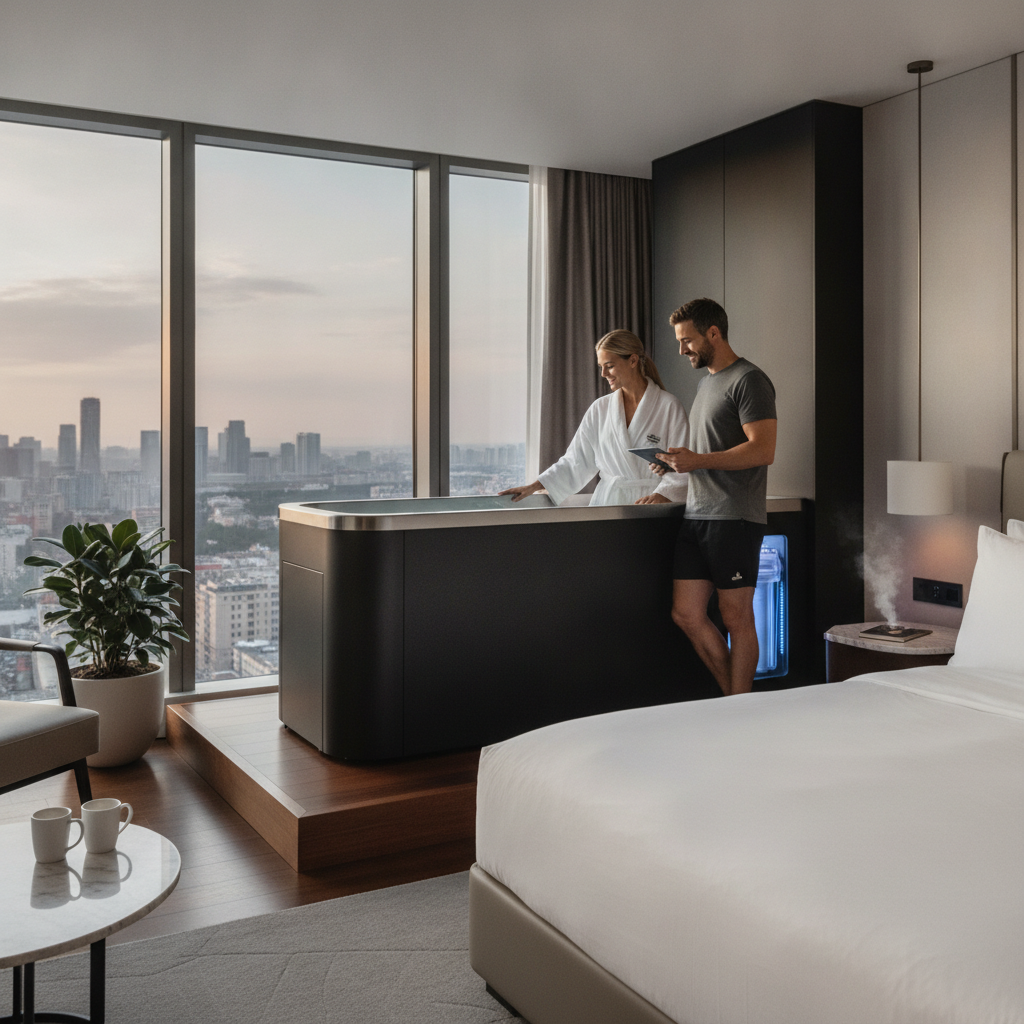
Guests are asking for cold plunge access more than ever, but most GMs assume the only path forward is a costly spa renovation with new drains, waterproofing, and permits. The good news: how to add cold plunge to hotel room without plumbing is now a solved engineering problem, not a construction project. Plug-in chiller systems, portable tubs, and smart temporary drainage let properties launch a true cold-plunge amenity in days, not months, using the electrical and water infrastructure already in every guest bathroom.
TL;DR — The Bottom Line
You can add a cold plunge to a hotel room without plumbing by pairing a plug-in chiller-and-filtration unit with either the existing bathtub or a self-contained portable tub. These systems fill from a standard tap, run on a 110–120V GFCI outlet, and drain through a hose, submersible pump, or the existing tub drain — eliminating the need for new water lines, floor cuts, or permits in most jurisdictions.
Quick Facts
- Power requirement: Standard 110–120V GFCI outlet within 6–8 ft of the unit
- Typical filled weight: 1,000–2,000+ lbs, requiring floor-load verification
- Operating temperature range: 38–55°F (3–13°C) for guest recovery use
- Drainage method: Existing tub drain, drain hose, or $30–$50 submersible pump
- Typical setup time: Under 60 minutes per room with no contractor required
What "No Plumbing" Actually Means for a Hotel Cold Plunge Install
When owners first hear "cold plunge," many picture a plumbed hydrotherapy pool with dedicated supply lines, a floor drain, and a waterproofed enclosure — the kind of build-out reserved for a spa renovation. That is one path, but it is not the only one, and for most guest-room applications it is not the right one either.
The practical answer to how to add cold plunge to hotel room without plumbing lies in decoupling the cold-therapy function from the building's water and drainage system. Instead of a permanent connection, the unit itself becomes the plumbing: a self-contained loop of chiller, pump, and filter that draws water in, cools it, and pushes it back out, all while sitting beside or inside a standard bathtub.
This distinction matters commercially. A plumbed cold-pool installation typically requires architectural drawings, a licensed plumber, local permitting, and days of guest-room downtime. A no-plumbing cold plunge system, by contrast, is closer in complexity to installing a mini-fridge — it needs power, a level surface, and a way to fill and empty water using fixtures that already exist in the room.
Yes. Commercial-grade plug-in chiller units typically regulate water between 38°F and 55°F (3–13°C), which is the range most sports medicine and recovery protocols recommend, and they do so without any connection to a building's water supply beyond the initial fill.
Step-by-Step: How to Add Cold Plunge to Hotel Room Without Plumbing
Whether you're piloting a single suite or rolling out an amenity across a wing of rooms, the installation sequence for a no-plumbing cold plunge is remarkably consistent across manufacturers. Here is the process most properties follow.
- Verify floor load and surface. Confirm the bathroom floor or a designated in-room spot can support a filled unit, which can weigh 1,000–2,000+ lbs with a guest inside. This is especially important on upper floors of older buildings.
- Confirm electrical access. Locate a 110–120V GFCI outlet within 6–8 ft of the intended placement. Most systems draw modest current, but a lightly loaded or dedicated circuit is best practice for continuous operation.
- Position the unit. For bathtub-retrofit systems, roll the chiller unit beside the existing tub. For standalone portable tubs, place the unit on a protected, level surface in the bathroom or a dedicated wellness nook.
- Fill with existing fixtures. Use the room's tap, a hose, or a shower diverter to fill the tub — no new water line is required.
- Connect the circulation loop. Drop the intake/return hose or circulation arm into the water and power on the chiller and filtration system.
- Set the temperature. Dial in the target range, typically 38–55°F, using the unit's digital or app-based controls.
- Plan the drain cycle. Between guest stays, drain via the existing tub drain, a hose routed to a nearby fixture, or a small submersible pump for units without a direct drain path.
Followed in order, this sequence is how hotels answer the operational question of how to add cold plunge to hotel room without plumbing in under an hour per room, with no contractor visit required.
Equipment Options: Bathtub Retrofit vs. Standalone Portable Units
Not every property will choose the same hardware path. The two dominant categories each solve the no-plumbing requirement differently, and the right choice depends on your room mix, ceiling of guest demand, and housekeeping bandwidth.
| Factor | Bathtub-Retrofit Chiller | Standalone Portable Tub |
|---|---|---|
| Best for | Rooms with an existing bathtub | Rooms without a tub, or dedicated wellness suites |
| Footprint | Sits beside existing tub | Requires its own floor space |
| Fill method | Existing tub tap | Hose, sink adapter, or shower diverter |
| Drain method | Existing tub drain | Integrated drain plus hose or submersible pump |
| Relative footprint impact | Minimal — reuses bathroom fixtures | Moderate — needs a dedicated placement zone |
For most properties exploring how to add cold plunge to hotel room without plumbing for the first time, the bathtub-retrofit approach offers the fastest path to a pilot because it leverages a fixture that is already installed, plumbed, and waterproofed. Standalone tubs make more sense in rooms with walk-in showers only, or when a hotel wants a more prominent, purpose-built plunge experience as a suite upsell. HotelPlunge works with properties to match the right configuration to each room type — you can review current system options at HotelPlunge.
Electrical, Floor Load, and Drainage Requirements Without New Plumbing
Even without construction, a no-plumbing cold plunge still has real infrastructure requirements that GMs and engineering teams need to check before committing to a rollout. Overlooking any of these three areas is the most common reason a pilot stalls after installation.
Electrical Capacity
Most systems run on a standard 110–120V GFCI-protected outlet, similar to what's already required in hotel bathrooms by code. Engineering teams should confirm the outlet is on a circuit that isn't already near capacity with other in-room electronics, and that GFCI protection is functioning, since these units run continuously to maintain temperature and filtration.
Structural Load
A filled cold plunge unit with a guest inside can weigh 1,000 to 2,000+ pounds. This is rarely an issue on ground-floor slabs but deserves a quick review from a structural engineer or facilities director for upper-floor installations in older buildings, particularly before scaling from a single pilot room to a full wing.
Fill and Drain Logistics
Because there is no permanent plumbing tie-in, fill and drain become an operational routine rather than a fixed system. Housekeeping or engineering typically fills the unit from the room's existing tap before a guest's stay and drains it afterward using the tub drain, a routed hose to a nearby fixture, or an inexpensive submersible pump. Properties that standardize this into a checklist avoid the two biggest failure points: incomplete draining between stays and water left stagnant without filtration running.
A small submersible pump, typically $30–$50, can move water through a hose to a distant drain, a utility sink, or even outdoors, which is why a lack of a floor drain does not rule out a no-plumbing cold plunge installation.
Cost and ROI Considerations for GMs and Owners
Because the question of how to add cold plunge to hotel room without plumbing is fundamentally an equipment decision rather than a construction project, the cost structure looks very different from a spa build-out. There is no permitting timeline, no plumber's invoice, and no lost room-nights during construction.
Instead, the primary cost inputs are the unit itself, any minor electrical verification, and staff time for fill/drain routines. Compared with a plumbed hydrotherapy installation — which can involve tens of thousands of dollars in waterproofing, drainage, and permitting per location — a no-plumbing system is typically a fraction of that cost per room, and it can be piloted in a single suite before a property-wide rollout.
On the revenue side, cold plunge access is increasingly cited as a differentiator in wellness travel, supporting premium rates on suites marketed with in-room recovery amenities and creating a bookable upsell for guests who would otherwise never use a shared spa facility. A no-plumbing approach lets a property test guest demand and pricing sensitivity before committing capital to a permanent installation.
The core commercial insight is simple: how to add cold plunge to hotel room without plumbing is no longer a technical barrier for hotels — it's a purchasing decision.
Common Mistakes Hotels Make When Going Plumbing-Free
Even with straightforward hardware, properties run into avoidable issues when they treat a no-plumbing cold plunge like a minibar rather than a wellness appliance. The most frequent mistakes include:
- Skipping the floor-load check. Assuming any bathroom can handle a filled unit without verifying live-load capacity, especially in pre-war or converted buildings.
- Ignoring filtration maintenance. Treating the unit as a one-time fill rather than running continuous filtration, which can lead to water quality complaints between guest stays.
- No standardized drain protocol. Leaving turnover teams to improvise fill and drain steps instead of building it into the standard housekeeping checklist for that room type.
- Underestimating guest education. Not providing simple in-room instructions or a QR-code guide, leading to guests unsure how to safely use the temperature controls.
- Choosing the wrong unit for the room. Installing a standalone tub in a tight bathroom layout when a bathtub-retrofit system would have used space already allocated to plumbing fixtures.
Avoiding these five issues is largely what separates a smooth answer to how to add cold plunge to hotel room without plumbing from a pilot that generates maintenance tickets instead of guest reviews.
Frequently Asked Questions
Can hotels really add a cold plunge without any plumbing work?
Yes. Plug-in chiller systems and standalone portable tubs are designed specifically to avoid new plumbing, using existing taps to fill and a hose, tub drain, or submersible pump to empty — all powered by a standard electrical outlet.
How much does a no-plumbing cold plunge cost per room?
Costs vary by unit type and features, but a no-plumbing setup is generally a fraction of the cost of a plumbed spa installation, since it eliminates permitting, waterproofing, and contractor labor associated with new water lines.
How do you drain a cold plunge tub without a floor drain?
A small submersible pump, typically costing $30–$50, can route water through a hose to a nearby tub, shower, utility sink, or even an exterior drain point, making a dedicated floor drain unnecessary.
Is a permit required to install a plumbing-free cold plunge?
In most jurisdictions, because no permanent water or drain line is being added, a no-plumbing cold plunge does not require the same permitting as a built-in spa installation, though properties should confirm local codes for their specific municipality.
Will a cold plunge damage hotel room floors?
Not if floor load and moisture protection are addressed upfront. Confirming structural capacity for the filled unit's weight and using a water-resistant mat or tray under the unit prevents both structural and cosmetic issues.
Getting Started With a No-Plumbing Cold Plunge Pilot
The technical case for how to add cold plunge to hotel room without plumbing is now well established: plug-in chillers, portable tubs, standard outlets, and simple fill-and-drain routines replace what used to require a full plumbing crew. For GMs and owners, the real decision isn't whether it's possible — it's which rooms, which unit type, and which guest segment to pilot first.
Start small. Choose one or two suites, verify electrical and floor-load readiness, and build a simple housekeeping checklist for fill, filtration, and drain cycles. Track guest feedback and usage before scaling property-wide. HotelPlunge specializes in exactly this kind of phased, no-plumbing rollout for hospitality properties — visit HotelPlunge to explore systems built specifically for hotel guest rooms and to talk through which configuration fits your property's floor plans and guest demand.