Hotel Wellness Equipment In-Suite: A GM's Buyer Guide
July 28, 2026 · 13 min read
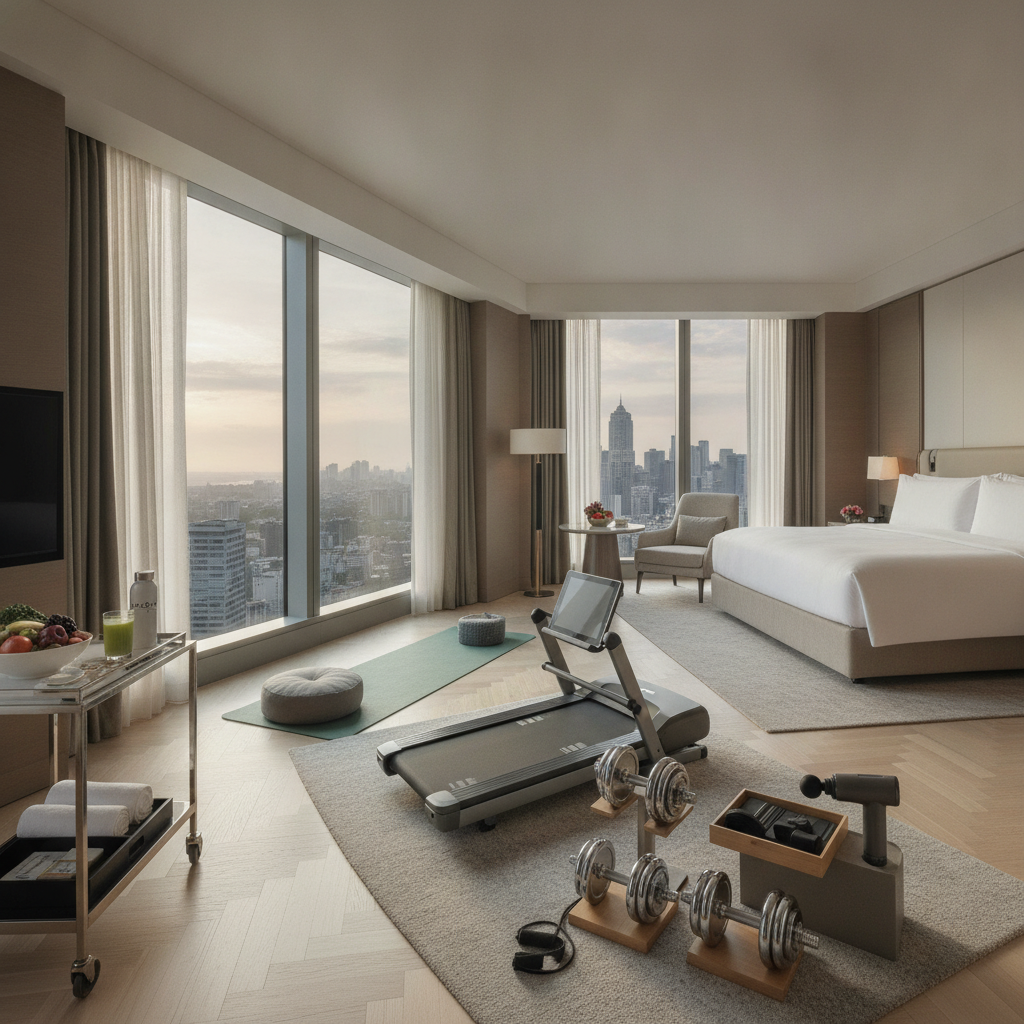
Guests no longer see the gym downstairs as enough. From boutique lifestyle hotels to full-service luxury flags, hotel wellness equipment in-suite has become one of the fastest-growing amenity categories in hospitality — and one of the clearest ways to differentiate a property, lift ADR, and build loyalty with wellness-minded travelers. This guide breaks down what belongs in a modern in-suite wellness program, how to budget and procure it, and how GMs, Spa Directors, and owners are turning guestrooms into revenue-generating wellness destinations.
TL;DR — The Bottom Line
Hotel wellness equipment in-suite now spans four categories — movement, recovery, sleep, and mindfulness — and leading properties like The Mark Hotel, Kempinski, and Santa Monica Proper are bundling these into premium, shoppable room tiers. Done well, in-suite wellness equipment can support 15–30% ADR premiums, reduce dependency on shared fitness space, and create a retail revenue stream. The winning approach isn't buying every gadget; it's matching equipment to your guest profile, space constraints, and brand positioning, then partnering with vendors who handle installation, service, and liability.
Quick Facts
- Global wellness tourism market: valued at over $830 billion, among the fastest-growing travel segments (Global Wellness Institute, https://globalwellnessinstitute.org)
- Hilton's Five Feet to Fitness rooms: feature 11+ pieces of in-room equipment, including Gym Rax stations and digital workout kiosks
- Kempinski FitRooms: powered by Technogym, designed around bespoke in-room training and on-demand content
- Typical ADR premium: properties report 15–30% higher rates for wellness-equipped suites versus standard rooms
- Four core pillars: movement, recovery, sleep, and mindfulness now define a complete in-suite wellness ecosystem
What Is Hotel Wellness Equipment In-Suite, Exactly?
Hotel wellness equipment in-suite refers to any fitness, recovery, sleep, or mindfulness technology installed directly inside a guestroom or suite — rather than in a shared gym or spa. It's the shift from "the hotel has a fitness room" to "my room is a wellness room." This can range from a simple yoga mat and resistance band kit to a fully outfitted performance suite with a Peloton bike, percussive massage tools, and a smart mattress.
What separates this from a traditional in-room amenity kit is intentionality: hotels are now designing entire room categories — sometimes entire floors — around wellness equipment, marketing them as distinct, bookable products rather than incidental perks. The Mark Hotel in New York, for example, partnered with Technogym to offer private in-room training in its penthouse alongside a 24-hour connected fitness center, while Kempinski's FitRooms concept lets guests book rooms built specifically around in-room training and on-demand workout content.
No. While ultra-luxury properties pioneered fully shoppable wellness suites, mid-scale and upper-upscale hotels are adopting scaled-down versions — a smart mirror, a set of recovery tools, or a compact cardio unit — as a lower-cost way to compete on the same guest expectation.
Why In-Suite Wellness Equipment Is Reshaping Hotel Revenue
The business case for hotel wellness equipment in-suite goes well beyond guest satisfaction scores. Three revenue levers are driving adoption across the industry:
- ADR and rate segmentation: Wellness-equipped rooms are being sold as a distinct, higher-margin category. Santa Monica Proper's Wellness Suites — split into "restorative" and "performance" tiers — command premium rates precisely because the equipment is the product, not a bonus.
- Ancillary and retail revenue: Several properties now sell the recovery tools guests use in-room — mouth tape, resistance bands, meditation devices — turning the suite into a showroom. This shoppable model converts trial into purchase.
- Loyalty and repeat bookings: Guests who use in-suite wellness equipment during a stay are more likely to seek out that same brand or property again, particularly business and long-stay travelers who value consistency in training and recovery routines.
There's also a defensive angle: as wellness tourism has grown into an $830 billion-plus global market according to the Global Wellness Institute, hotels that don't offer meaningful in-room wellness options risk losing bookings to competitors who do — especially among Gen Z and millennial travelers who increasingly research wellness amenities before booking.
The Four Pillars of a Modern In-Suite Wellness Ecosystem
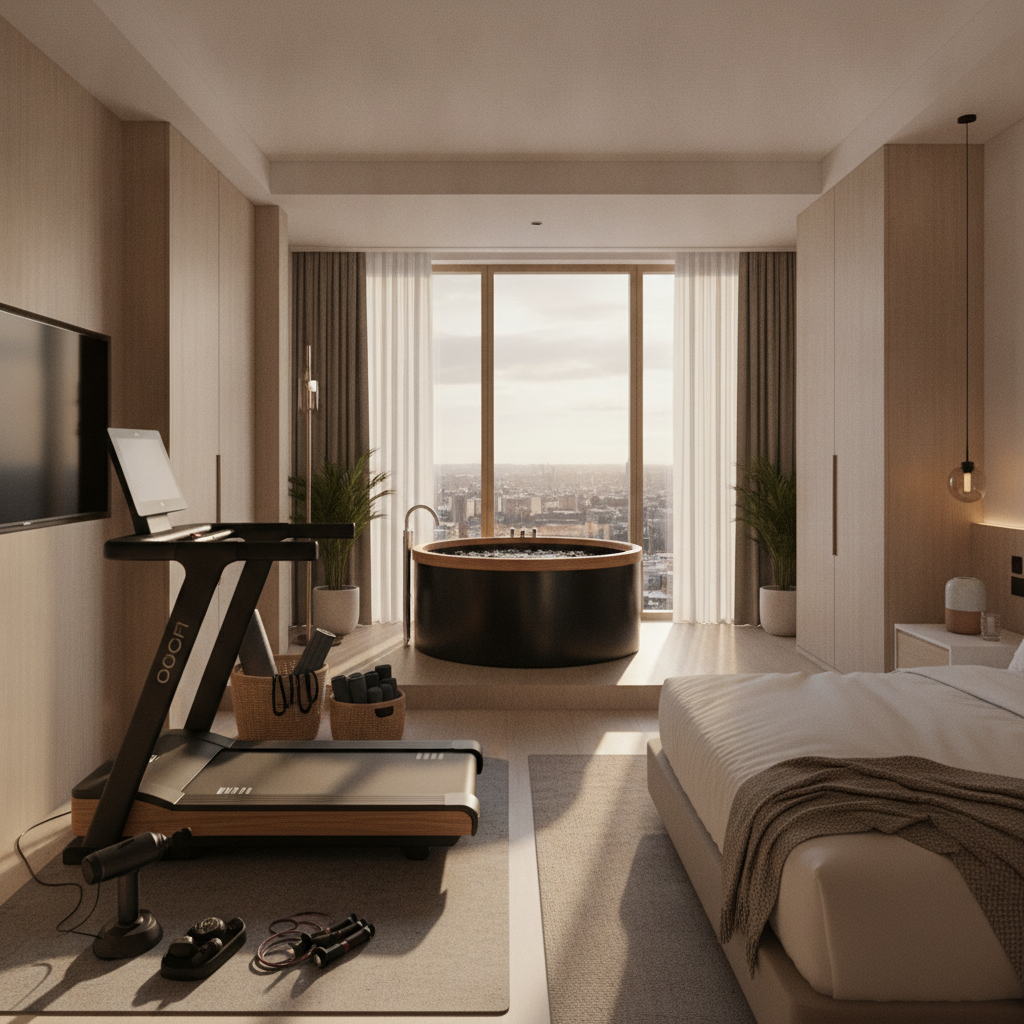
Hotel wellness equipment in-suite has matured into four distinct pillars. Understanding each helps GMs and Spa Directors decide where to invest first.
1. Movement & Fitness
This includes cardio (treadmills, stationary and interactive bikes like Peloton or Echelon), strength and functional training gear (dumbbells, TRX straps, Gym Rax stations, resistance bands, compact benches), and guided digital training via smart mirrors or on-demand kiosks. Hilton's fitness-forward guestrooms, for instance, pack 11+ equipment options plus a kiosk offering 200+ guided workout videos into a single room footprint.
2. Recovery & Performance
Recovery has become the fastest-growing subcategory of hotel wellness equipment in-suite. This includes compression therapy (Hyperice Normatec boots), percussive massage devices (Theragun, Hypervolt), foam rollers, and red light therapy towers. Hotel Commonwealth in Boston brought pro-level recovery into guestrooms with commercial-grade systems, red light towers, and compression boots designed to mirror what professional athletes use.
3. Sleep & Restoration
Smart mattresses with dual-zone temperature control (like Eight Sleep), advanced air and water purification, sunrise alarm clocks, and PEMF (pulsed electromagnetic field) devices fall under this pillar. Restorative rooms increasingly position sleep quality as a measurable, trainable outcome rather than a passive amenity.
4. Mindfulness & In-Room Services
Guided meditation content, on-demand instructor sessions, and app-based in-room massage or beauty services (such as those delivered through platforms like PRIV) round out the ecosystem. Shoppable wellness accessories — mouth tape, journals, recovery tools — often accompany this pillar as low-cost, high-margin retail add-ons.
Choosing the Right Hotel Wellness Equipment In-Suite for Your Property
Not every property needs a Peloton bike and a red light tower in every room. The right hotel wellness equipment in-suite mix depends on guest profile, brand tier, and available space.
| Property Type | Best-Fit In-Suite Equipment | Typical Investment Level |
|---|---|---|
| Boutique / lifestyle | Compact recovery tools, resistance bands, smart mirror, aromatherapy | Low–Medium |
| Upper-upscale full-service | Cardio unit, functional training station, compression boots, sleep tech | Medium |
| Luxury / resort | Full performance and restorative suites, red light therapy, smart mattress, in-room training | Medium–High |
| Extended-stay / wellness retreat | Multi-modal ecosystem across all four pillars, retail integration | High |
A useful rule of thumb: start with the pillar your existing guest data already signals demand for. If wellness-focused guests frequently book spa treatments, recovery equipment is a natural extension. If your fitness center usage skews high among long-stay guests, in-suite cardio and strength options reduce crowding while adding a premium tier.
A functional starter setup — resistance bands, a compact recovery device, and a yoga mat — can fit in a corner of a standard king room. Full performance or restorative suites typically require a junior suite or larger footprint to accommodate cardio equipment, recovery devices, and dedicated storage.
Procurement, Space, and Budget Considerations
Rolling out hotel wellness equipment in-suite is as much an operational project as a design one. GMs should plan around five practical considerations:
- Liability and guest safety: Any equipment with moving parts (cardio, recovery devices) needs clear usage instructions, waiver language where appropriate, and a maintenance schedule.
- Space and plumbing/electrical requirements: Recovery and sleep tech often need dedicated outlets, ventilation, or drainage. Assess this before committing to a room category.
- Vendor partnerships vs. in-house purchasing: Working with a specialized hospitality wellness equipment partner — rather than buying consumer-grade products piecemeal — typically includes installation support, staff training, and ongoing service, which matters far more at scale than at the single-unit level.
- Housekeeping and turnover impact: Equipment that requires sanitizing between stays (cardio machines, massage tools) adds time to turnover; factor this into housekeeping SOPs and staffing.
- Depreciation and refresh cycles: Fitness and recovery technology evolves quickly. Budget for a 3–5 year refresh cycle rather than treating equipment as a one-time capital purchase.
Properties exploring recovery-focused hotel wellness equipment in-suite programs — particularly those building out performance or restorative suites — often start by evaluating turnkey partners who specialize in hospitality-grade installations. HotelPlunge works with hotel owners and GMs to source and install recovery equipment designed specifically for the demands of guestroom environments, from space planning through ongoing maintenance support.
Case Studies: How Leading Hotels Are Deploying In-Suite Wellness Equipment
A handful of properties illustrate just how far hotel wellness equipment in-suite has evolved beyond the basic fitness kit:
- The Mark Hotel (New York): Partnered with Technogym to offer private in-room training in its penthouse alongside a 24-hour connected fitness center, positioning in-room training as a premium, bookable experience rather than a standard amenity.
- Kempinski FitRooms: Powered by Technogym, these rooms are designed around bespoke in-room training and on-demand workout content, effectively making the room itself a fitness product.
- Santa Monica Proper: Launched fully shoppable Wellness Suites split into "restorative" rooms (smart mattresses, PEMF, red light chambers, advanced air/water filtration) and "performance" rooms (cardio bikes, percussive massage tools, stretching zones), with access to a dedicated Recovery Suite.
- Hotel Commonwealth (Boston): Introduced in-room recovery suites with commercial-grade recovery systems, full-body red light towers, and compression boots — bringing professional-athlete-level recovery tools directly into the guestroom.
- Hilton "Five Feet to Fitness": Created guestrooms with 11+ pieces of equipment, including Gym Rax functional stations and digital kiosks with 200+ guided workouts, scaling the concept across a broader portfolio.
The common thread across all five examples: hotel wellness equipment in-suite works best when it's positioned as a distinct product — a bookable room type or upsell — rather than an unadvertised bonus buried in a room description.
Yes. Properties offering dedicated wellness or recovery suites report ADR premiums in the range of 15–30% over standard rooms, driven by both the equipment itself and the marketing positioning around it as a specialized, limited-inventory room category.
Measuring ROI on Hotel Wellness Equipment In-Suite
Before scaling any program, GMs should define what success looks like beyond guest satisfaction scores. Useful metrics include:
- Rate premium capture: Compare ADR for wellness-equipped rooms against standard inventory over a full booking cycle, not just peak season.
- Attach rate on retail/ancillary offers: If equipment is paired with shoppable products or add-on services, track conversion from in-room trial to purchase.
- Utilization vs. shared fitness space: Track whether in-suite equipment reduces crowding complaints or overflow requests at the shared gym — a strong signal the investment is easing operational pressure.
- Repeat booking rate: Segment repeat guests who booked wellness-equipped rooms versus standard rooms to gauge loyalty impact over 12–24 months.
- Review sentiment: Mentions of specific equipment ("loved the recovery tools," "great in-room workout setup") in guest reviews are a leading indicator of amenity-driven satisfaction.
As one hospitality wellness consultant put it: "The hotels winning with in-suite wellness aren't the ones with the most equipment — they're the ones that turned equipment into a rate strategy." That distinction is the difference between a cost center and a revenue driver.
Frequently Asked Questions
What is hotel wellness equipment in-suite?
Hotel wellness equipment in-suite refers to fitness, recovery, sleep, and mindfulness technology installed directly inside a guestroom or suite, allowing guests to train, recover, and restore without visiting a shared gym or spa area.
What equipment should a hotel include in a wellness suite?
A well-rounded program typically includes at least one item from each of the four pillars: movement (cardio or strength equipment), recovery (compression or massage tools), sleep (smart mattress or air/water filtration), and mindfulness (meditation content or aromatherapy). Property type and guest profile should guide the exact mix.
Is in-suite wellness equipment worth the investment for smaller or boutique hotels?
Yes, when scaled appropriately. Boutique properties don't need a full performance suite; a curated selection of two or three high-impact items — such as a recovery tool and a smart mirror — can still support a premium room tier and differentiate the property without a large capital outlay.
How do hotels maintain and service in-suite wellness equipment?
Most hotels rely on vendor service agreements rather than in-house maintenance for specialized equipment. Partnering with a hospitality-focused wellness equipment provider typically includes installation, staff training, and scheduled servicing as part of the package.
Which hotel brands are leading in in-suite wellness equipment?
The Mark Hotel and Kempinski (via Technogym partnerships), Santa Monica Proper (shoppable Wellness Suites), Hotel Commonwealth (recovery suites), and Hilton (Five Feet to Fitness rooms) are among the most cited examples of hotels deploying comprehensive in-suite wellness equipment programs.
Bringing In-Suite Wellness Equipment to Your Property
Hotel wellness equipment in-suite is no longer a fringe amenity reserved for five-star flagships — it's becoming a baseline expectation among wellness travelers and a proven lever for ADR growth, retail revenue, and loyalty. The properties succeeding with it treat equipment selection as a strategic decision tied to guest data and brand positioning, not a one-off purchase. Whether you're starting with a single recovery-focused suite or planning a full wellness floor, the goal is the same: equipment that guests notice, use, and remember.
If you're evaluating recovery-focused hotel wellness equipment in-suite for an upcoming renovation or new room category, HotelPlunge can help you plan, source, and install equipment built for hospitality environments — from space assessment through guest-ready installation. Reach out to explore how in-suite wellness equipment can fit your property's brand and budget.