Hotel Improvement Ideas: 12 Wellness Upgrades for 2026
August 31, 2026 · 13 min read
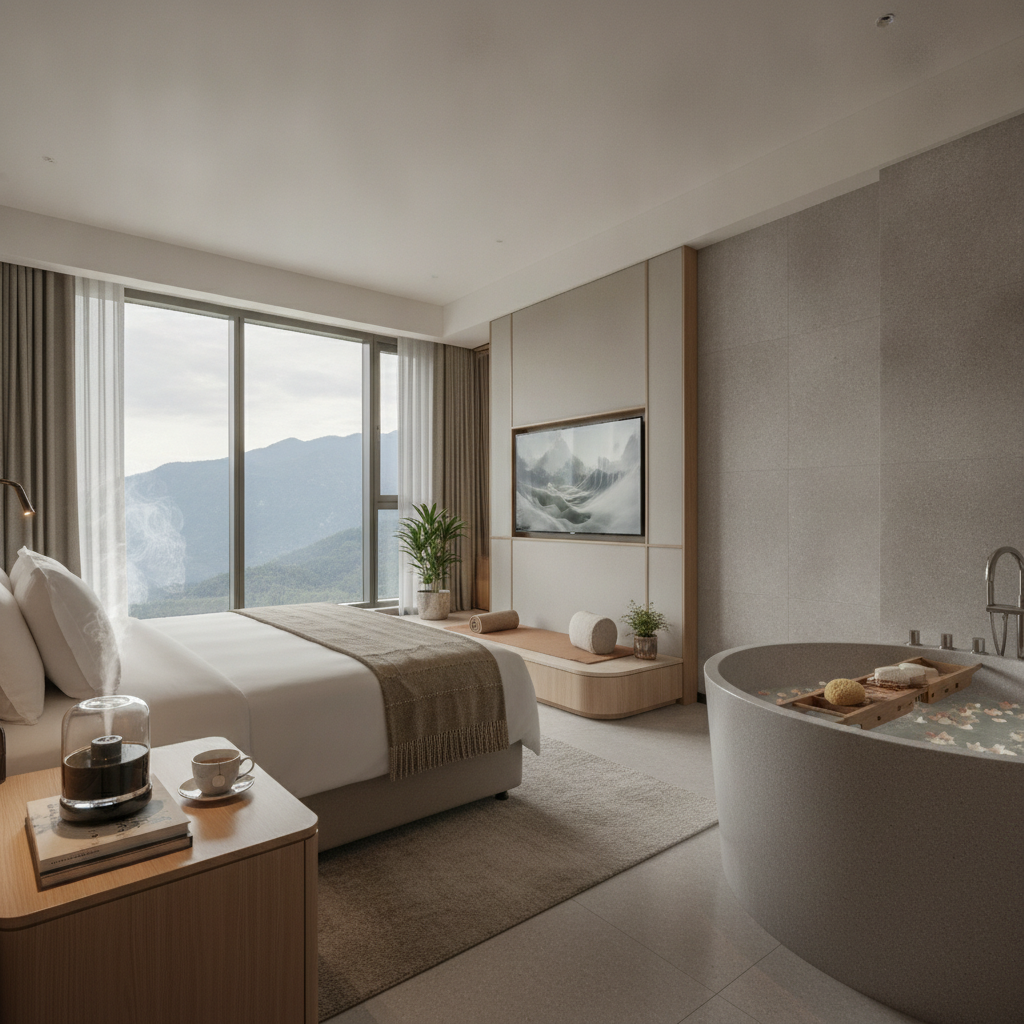
Guests no longer judge a property by thread count alone. The most effective hotel improvement ideas in 2026 revolve around recovery, sleep, and restorative experiences that guests can feel within minutes of check-in. For General Managers, Spa & Wellness Directors, and property owners weighing capital budgets, the challenge isn't finding trends — it's separating durable, revenue-generating hotel improvement ideas from decorative fads that drain capex without moving guest satisfaction scores.
TL;DR — The Bottom Line
The strongest hotel improvement ideas for 2026 center on recovery-first wellness: full wellness centers instead of basic gyms, thermal bathing circuits, in-room wellness kits, and touchless personalization. Equipment should be commercial-grade, budgeted on a 5–10 year replacement cycle, and selected for its ability to generate ancillary revenue — not just guest goodwill.
Quick Facts
- Cardio equipment replacement cycle: every 5–7 years
- Free weight equipment replacement cycle: every 8–10 years
- Typical wellness capex for a 50-room hotel: roughly 300,000–800,000 TL
- Luxury spa equipment market by 2033: USD 6.42 billion, 7.2% CAGR (2026–2033)
- Fastest-growing region for spa equipment demand: Asia-Pacific, 9.4% CAGR through 2033
Why Hotel Improvement Ideas Now Center on Wellness Infrastructure
A decade ago, hotel improvement ideas mostly meant new carpet, a lobby refresh, or an extra treadmill. Today, guests actively research a property's wellness offering before booking, and hotels that treat wellness as core infrastructure — not a spa add-on — are the ones winning repeat bookings and higher ADR. Hotel gyms are being redesigned as full wellness centers that combine strength training, recovery tools, and mindfulness spaces rather than rows of cardio machines. Recovery areas with stretching zones, foam rolling stations, percussive therapy devices, and sometimes cold plunge access are becoming a near-standard expectation at upper-midscale and luxury properties.
This shift matters for anyone evaluating hotel improvement ideas because it changes the ROI calculation. A property that upgrades its fitness center into a genuine recovery destination isn't just refreshing an amenity — it's creating a new reason for guests to book directly, extend their stay, or pay a premium rate. That reframing is the single most important mental shift decision-makers need to make in 2026.
What Counts as a Smart Hotel Improvement Idea in 2026?
Not every renovation qualifies as a genuinely useful hotel improvement idea. The properties seeing the best results are filtering every proposed upgrade through three questions: Does it improve the guest experience in a way guests will talk about? Is it commercial-grade and low-maintenance enough to survive daily high-traffic use? And does it create a path to ancillary revenue, whether through spa packages, day-pass sales, or premium room tiers?
A cosmetic upgrade changes appearance only (new paint, furniture, signage), while a genuine hotel improvement idea changes guest behavior — it gets referenced in reviews, drives repeat bookings, or opens a new revenue stream such as a wellness package or day-use membership.
Hotel operators increasingly want equipment that is commercial-grade, easy to maintain, and revenue-generating rather than purely decorative. That single filter eliminates a surprising number of trendy but low-impact hotel improvement ideas that look great in a rendering but underperform once real guest traffic hits them.
Top Hotel Improvement Ideas for Fitness and Recovery Zones
Fitness centers are one of the highest-traffic, lowest-differentiated spaces in most hotels — which is exactly why they're a prime target for improvement. Consider these hotel improvement ideas specifically for fitness and recovery areas:
- Convert unused square footage into a recovery zone with stretching mats, foam rollers, and percussive massage devices adjacent to the weight area.
- Add compact cold-water and heat contrast options where plumbing and space allow, positioned as an athletic recovery amenity rather than a spa luxury.
- Replace aging cardio equipment on a 5–7 year cycle rather than waiting for breakdowns, since guest-facing downtime damages review scores disproportionately.
- Introduce app-connected or touchless equipment so guests can start a guided recovery session without needing staff assistance.
- Bring in biophilic design elements — natural light, greenery, and sound-dampening materials — so the recovery zone feels calming rather than clinical.
Each of these hotel improvement ideas can be phased. A property doesn't need to renovate an entire gym in one capital cycle; even converting one corner into a recovery zone signals to guests that wellness is a genuine priority, not an afterthought.
Thermal Bathing Circuits: A High-ROI Hotel Improvement Idea
Luxury properties are increasingly adopting thermal bathing suites that combine sauna, steam, and cold-water elements into a single circuit rather than a single-purpose spa room. This is one of the most quotable hotel improvement ideas in current industry conversation: multi-room thermal circuits consistently outperform single-modality spa rooms on both guest satisfaction scores and per-visit revenue, because they encourage longer dwell time and higher package pricing.
| Amenity Model | Typical Guest Dwell Time | Upsell Potential |
|---|---|---|
| Single spa room (one modality) | 20–30 minutes | Low — hard to bundle |
| Sauna + steam combo | 40–60 minutes | Moderate — pairs with massage |
| Full thermal circuit (sauna, steam, cold plunge, transition space) | 60–90+ minutes | High — supports day passes, memberships, packages |
For owners weighing capital priorities, this table illustrates why thermal circuits are frequently ranked among the top hotel improvement ideas for 2026: the incremental construction cost of adding a second or third modality is often modest compared to the revenue lift from longer guest visits and higher-margin package sales.
In-Room Wellness: Smaller-Footprint Hotel Improvement Ideas
Not every property has room for a thermal suite, and that's where smaller-footprint hotel improvement ideas earn their keep. In-room wellness is moving toward modular amenity kits, short guided rituals, and portable recovery tools that guests can trial during their stay and purchase at checkout. Think sleep-support kits with blackout enhancements and white-noise devices, portable percussion massagers available for in-room rental, or curated aromatherapy and stretch-band sets positioned as premium minibar alternatives.
These in-room hotel improvement ideas are attractive for three reasons: they require no plumbing or structural work, they can be piloted in a handful of rooms before a property-wide rollout, and they create a direct upsell path since guests can purchase the item rather than just experience it. For teams exploring hotel improvement ideas focused on guest rooms specifically, HotelPlunge works with properties to identify which in-room wellness formats fit a given footprint and guest profile — you can review current offerings at HotelPlunge.
No. Most in-room wellness hotel improvement ideas — sleep kits, portable recovery devices, ambient lighting adjustments — are designed to be added without plumbing changes or structural renovation, making them ideal for properties with limited capital cycles.
How to Prioritize Hotel Improvement Ideas With a Limited Budget
Most GMs and owners aren't choosing between doing everything and doing nothing — they're choosing which two or three hotel improvement ideas to fund this fiscal year. A simple, repeatable prioritization process helps:
- Audit current guest feedback for wellness-related complaints or requests across the last 12 months of reviews.
- Map equipment age against replacement cycles — cardio equipment at 5–7 years and free weights at 8–10 years should move up the priority list automatically.
- Score each idea on revenue potential, not just guest satisfaction — does it support a paid package, membership, or premium room tier?
- Pilot before scaling — test an in-room kit in 10–15 rooms or a recovery zone in one gym corner before committing to a full property rollout.
- Reassess annually, since wellness expectations are shifting quickly enough that a three-year-old plan may already be outdated.
This process keeps hotel improvement ideas grounded in data rather than trend-chasing, which matters most for owners accountable to a board or ownership group.
Revenue-Generating Hotel Improvement Ideas
Hotel operators increasingly want equipment that pays for itself, and the best hotel improvement ideas for 2026 are explicit about the revenue model attached to them. Consider these approaches:
- Day passes and local memberships for non-guests to use upgraded fitness or thermal facilities during off-peak hours.
- Tiered room categories that bundle in-room wellness kits or priority spa access at a premium nightly rate.
- Retail add-ons where in-room wellness items (sleep masks, recovery tools, aromatherapy kits) are available for purchase, not just use.
- Wellness packages that combine spa credit, a recovery-zone session, and a curated in-room amenity as a single bookable product.
A quotable takeaway for owners: hotel improvement ideas that generate ancillary revenue tend to get re-funded in future capital cycles, while purely cosmetic upgrades often compete for budget every year without ever proving their value.
Common Mistakes That Undermine Hotel Improvement Ideas
Even well-funded hotel improvement ideas can underperform when a few avoidable mistakes creep in:
- Buying residential-grade equipment for commercial traffic, leading to premature breakdowns and guest-facing downtime.
- Skipping staff training on new wellness equipment, which reduces guest usage and increases liability risk.
- Ignoring maintenance contracts at the time of purchase, which turns a promising hotel improvement idea into a recurring cost center.
- Chasing trends without a revenue plan, resulting in beautiful but financially unaccountable amenities.
- Failing to market the new amenity internally and externally, so occupancy-driving upgrades go unnoticed by the very guests they were built for.
Avoiding these pitfalls is often what separates hotel improvement ideas that get funded again next year from ones that quietly disappear from the capex plan.
Frequently Asked Questions About Hotel Improvement Ideas
What are the best hotel improvement ideas for 2026?
The strongest hotel improvement ideas for 2026 include converting fitness centers into full recovery zones, adding multi-room thermal bathing circuits, introducing modular in-room wellness kits, and building touchless, app-connected personalization into wellness spaces.
How much should a hotel budget for wellness equipment improvements?
Industry guides estimate wellness equipment investment for a 50-room property at roughly 300,000–800,000 TL, though phased hotel improvement ideas — starting with a single recovery zone or in-room kit — allow smaller properties to spread that investment over multiple budget cycles.
How often should hotel fitness and wellness equipment be replaced?
Cardiovascular equipment should generally be renewed every 5–7 years, and free weights every 8–10 years, according to hotel fitness strategy guidance. Falling behind this cycle is one of the most common reasons hotel improvement ideas underperform on guest satisfaction scores.
Which hotel improvements generate the most revenue?
Hotel improvement ideas tied to a clear monetization plan — day passes, wellness packages, tiered room categories, and retail add-ons — consistently outperform purely cosmetic upgrades because they create a repeatable revenue stream rather than a one-time guest-satisfaction bump.
Do small or mid-sized hotels need a full spa to compete on wellness?
No. Many effective hotel improvement ideas require no plumbing or major construction, including in-room wellness kits, recovery-zone corners in existing gyms, and touchless personalization features that can be piloted in a small number of rooms first.
Bringing Hotel Improvement Ideas to Life
The properties winning guest loyalty in 2026 aren't necessarily the ones spending the most — they're the ones matching hotel improvement ideas to their specific guest profile, budget cycle, and revenue goals. Whether that means converting a gym corner into a recovery zone, piloting an in-room wellness kit, or planning a multi-year thermal circuit build-out, the common thread across every successful project is a clear link between the improvement and a measurable outcome, whether that's a review score, a repeat booking, or a new revenue line.
If your team is evaluating hotel improvement ideas around recovery and wellness equipment specifically, HotelPlunge works directly with General Managers, Spa Directors, and property owners to match equipment choices to real guest demand and realistic capital budgets. Start by auditing your current amenities against the prioritization steps in this guide, then reach out to discuss which hotel improvement ideas make sense for your property's next budget cycle.