Hotel Things List: The 2026 Wellness Equipment Checklist
August 25, 2026 · 6 min read
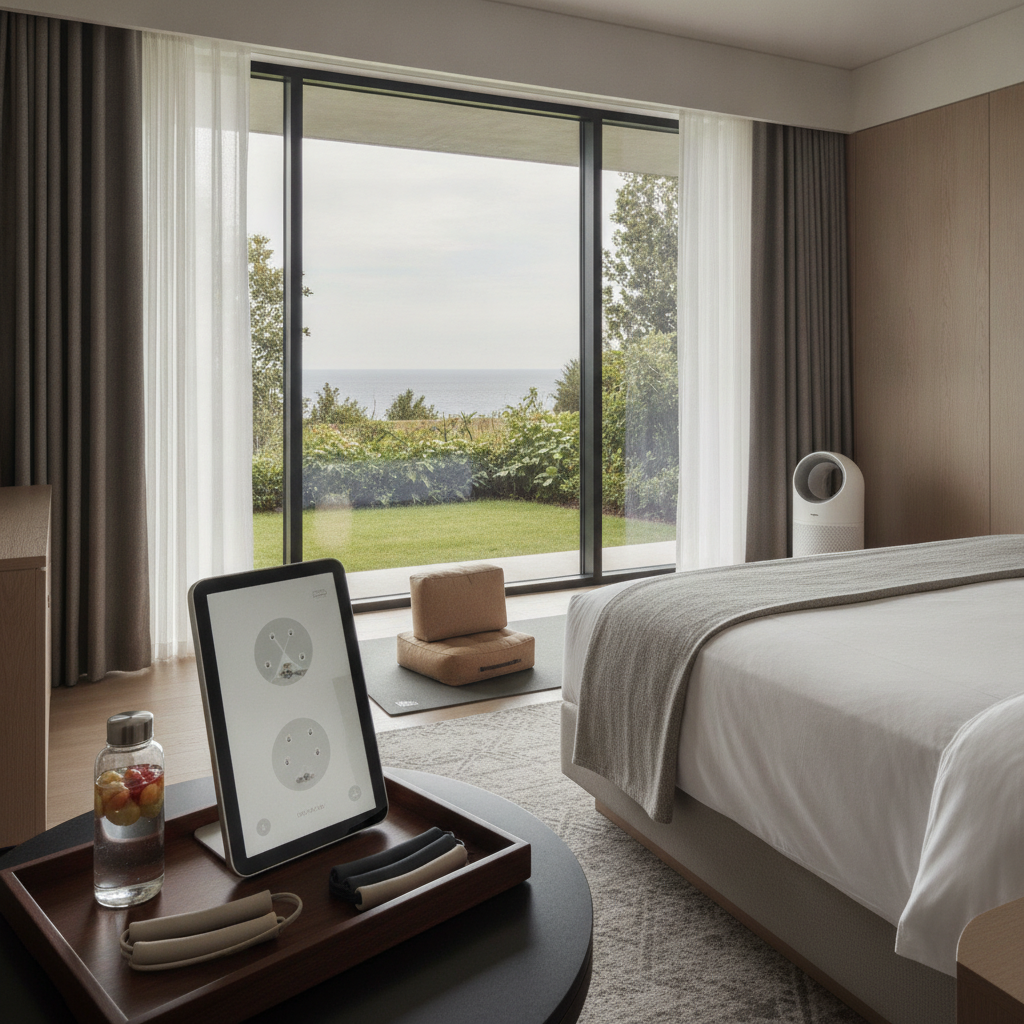
Every property, from a 40-room boutique inn to a 500-room resort, keeps some version of a hotel things list—the master inventory of equipment, amenities, and hardware a property needs to compete for modern guests. But the contents of that list have changed dramatically. What used to be a spreadsheet of bedding, toiletries, and mini-fridges has evolved into a strategic document that increasingly includes wellness hardware: saunas, connected fitness gear, recovery tools, and in-room cold immersion systems. For General Managers, Spa & Wellness Directors, and property owners, understanding what belongs on today's hotel things list—and why—is now a competitive necessity, not a housekeeping formality.
TL;DR — The Bottom Line
A modern hotel things list has expanded well beyond linens and toiletries to include wellness hardware such as saunas, connected fitness equipment, and in-room cold plunge systems. The global spa equipment market alone is projected to nearly double from $34.0 billion in 2024 to $67.9 billion by 2035, and connected in-room fitness tech is growing even faster. Hotels that treat their hotel things list as a living, tiered, budget-aligned document—rather than a static checklist—capture more upsell revenue and stronger guest satisfaction scores.
Quick Facts
- Global spa equipment market (2024): approximately $34.0 billion, projected to reach $67.9 billion by 2035
- Global fitness equipment market (2024): approximately $14.43 billion, growing at a 5.4% CAGR toward $18.5 billion by 2029
- Commercial fitness equipment (hotels included): roughly $12.77 billion in 2024, rising to $19.29 billion by 2035
- Connected in-room fitness equipment market: around $1.24 billion in 2024, projected to reach $3.11 billion by 2033
- Wellness hardware categories now common on a hotel things list: saunas, cold plunges, connected fitness mirrors, aromatherapy systems, recovery tools
What Is a Hotel Things List Today?
Ten years ago, a hotel things list was largely operational: sheets, towels, shampoo, hangers, an iron, maybe a yoga mat tucked in the closet. Today, the same document increasingly reads like a wellness equipment procurement plan. Guests now arrive with expectations shaped by boutique gyms, medical spas, and at-home wellness routines, and they expect hotels to match or exceed that experience.
This shift shows up clearly in the numbers. The global spa equipment market reached roughly $34.0 billion in 2024 and is expected to climb to $67.9 billion by 2035, a 6.5% compound annual growth rate driven substantially by hotel and resort spa build-outs.[9] Meanwhile, connected fitness equipment designed specifically for hotel rooms—think app-linked bikes, mirrors, and recovery devices—was valued at approximately $1.24 billion in 2024 and is projected to nearly triple to $3.11 billion by 2033. That growth trajectory tells hotel operators something important: a hotel things list that stops at bathrobes and coffee makers is already behind the curve.
For General Managers and property owners, this means the hotel things list is no longer just a housekeeping and procurement tool—it's a revenue and positioning document. Every category added or upgraded on the list is a potential differentiator in a crowded booking environment where guests filter by amenities before they filter by price.
Not exactly. An amenities list is guest-facing and describes what's available; a hotel things list is the internal operational and procurement document that determines what equipment, hardware, and consumables must be sourced, budgeted, installed, and maintained to deliver those amenities.
Core Categories on a Modern Hotel Things List
A well-organized hotel things list is typically broken into categories so that General Managers and Spa & Wellness Directors can budget, procure, and audit each segment independently. Below is a structure many wellness-forward properties now use.
| Category | Traditional Items | 2026 Additions |
|---|---|---|
| Room Basics | Bedding, towels, hangers, iron | Blackout smart shades, air quality monitors |
| Bath & Body | Shampoo, soap, lotion | Aromatherapy diffusers, CBD-infused body care, recovery balms |
| Fitness | In-room yoga mat, resistance bands | Connected fitness mirrors, compact smart equipment |
| Recovery & Hydrotherapy | Standard bathtub | In-room cold plunge systems, contrast therapy tools |
| Sleep Tech | Extra pillows, white noise machine | Smart mattresses, sleep-tracking devices |
| Spa Infrastructure | Massage tables, steam room | Cryotherapy chambers, infrared saunas, red light therapy panels |
Notice the pattern: nearly every legacy category now has a modern, tech-enabled or wellness-oriented counterpart. This is precisely why a hotel things list needs regular review—an item that felt premium in 2022 (a simple in-room yoga mat, for example) can look dated by 2026 next to a connected fitness screen or an in-suite cold immersion unit.
Wellness Hardware: The Fastest-Growing Line Item
Of every category on a hotel things list, wellness hardware is expanding the fastest—and it's the category most likely to influence a guest's booking decision. Three data points explain why property owners are paying attention:
- The commercial fitness equipment segment, which includes hotel gyms and in-room setups, was valued at roughly $12.77 billion in 2024 and is expected to grow to $19.29 billion by 2035.
- Spa equipment—covering hydrothermal features like saunas, jacuzzis, and cold plunge infrastructure—is one of the largest and fastest-growing subsegments of hospitality capital spending, nearly doubling in market size over the next decade.[9]
- Connected, in-room wellness tech is shifting guest expectations away from shared, communal facilities toward private, on-demand experiences they can access without leaving their suite.
This is where a company like HotelPlunge fits into the broader hotel things list conversation: as properties look to add recovery-oriented hardware without major renovations, in-suite cold immersion solutions that work with existing bathtub infrastructure are increasingly treated as a standard line item rather than a novelty.
Wellness hardware is no longer luxury-exclusive. Midscale and upscale properties are adding compact, lower-cost items—resistance bands, aromatherapy diffusers, portable recovery tools—while luxury and boutique hotels are investing in saunas, connected fitness, and in-room cold plunge systems. The right mix depends on guest profile and average daily rate, not just star rating.