Hotel General Manager Wellness Amenity Decision Guide
August 17, 2026 · 13 min read
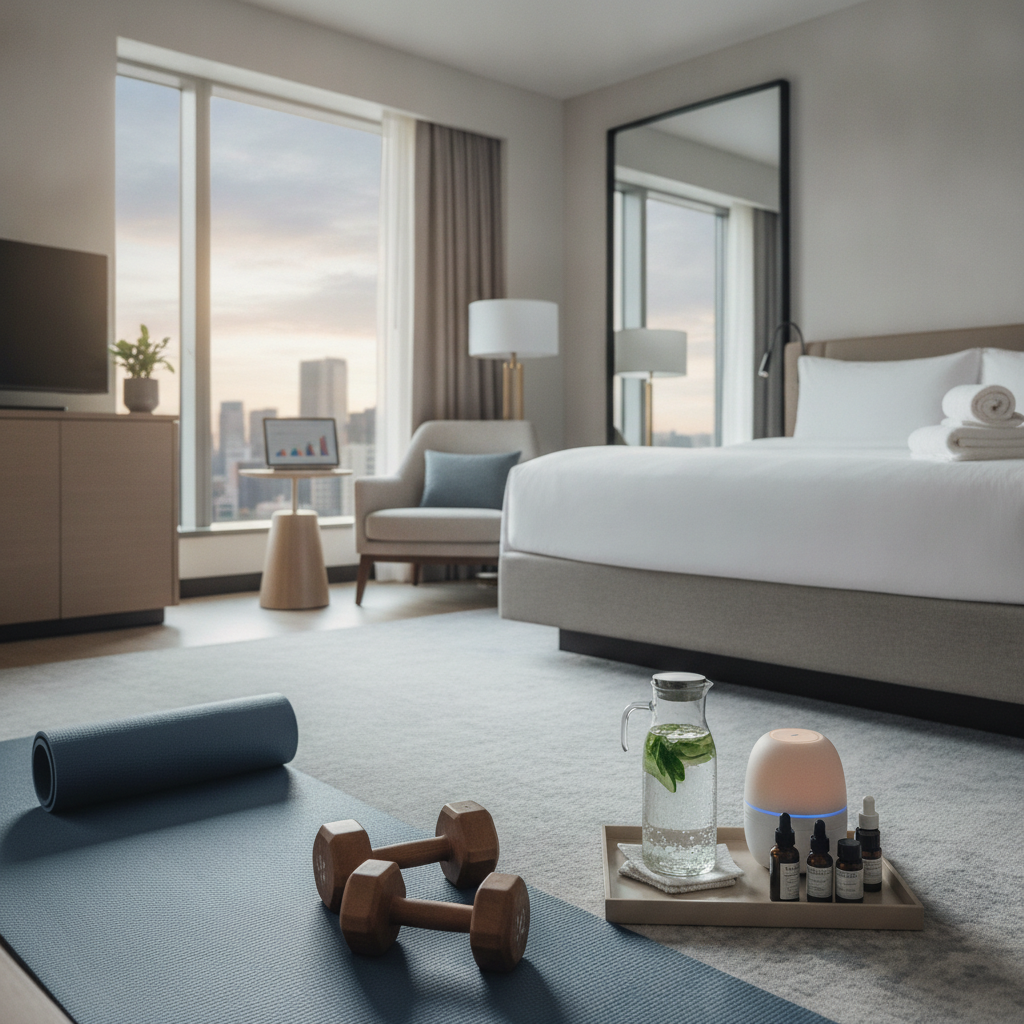
Every hotel general manager wellness amenity decision now carries real P&L weight. What used to be a design-team afterthought — a sauna here, a few yoga mats there — has turned into a line item that owners scrutinize alongside ADR and GOPPAR. For general managers, spa directors, and property owners trying to figure out which wellness investment actually moves the needle, the stakes of getting the hotel general manager wellness amenity decision right have never been higher.
TL;DR — The Bottom Line
A hotel general manager wellness amenity decision should be treated as a capital allocation decision, not a design preference. The data shows that properties with even minor wellness offerings saw roughly 26% higher TRevPAR growth than non-wellness peers, and hotels with dedicated wellness amenities posted measurable GOPPAR gains. The strongest decisions weigh guest demand, operating cost, space footprint, and staffing burden — and increasingly favor compact, low-opex, high-visibility assets like recovery and contrast therapy equipment over sprawling, labor-heavy spa expansions.
Quick Facts
- TRevPAR uplift for minor wellness hotels: ~26% higher than non-wellness peers (RLA Global / HotStats, 2024 Wellness Real Estate Report)
- GOPPAR growth for major wellness properties: 4–6% year-over-year (HotStats, 2024–2025)
- Profit per available room for minor wellness offerings: ~6% higher than non-wellness competitors
- Spa treatment revenue per occupied room: up in the mid-to-upper 30% range versus 2019
- Cold plunge and contrast therapy installation growth: ~15% across U.S. luxury hotels and spas, 2021–2023
What Is a Hotel General Manager Wellness Amenity Decision?
Unlike a routine FF&E refresh, a hotel general manager wellness amenity decision typically involves competing priorities: capital budgets are finite, ownership groups want measurable returns, and guests are increasingly vocal about what they expect from a property's wellness offering. The decision is rarely just "do we want a wellness amenity" — it's "which wellness amenity, at what footprint, and at what ongoing cost, will actually pay for itself."
This matters because wellness spending patterns have shifted. Guests aren't just asking for a gym with a few dumbbells anymore; they're asking about recovery, sleep, thermal therapy, and stress reduction. That shift changes the calculus behind every hotel general manager wellness amenity decision, pushing GMs to think less like facilities managers and more like revenue strategists.

Why Wellness Amenities Have Become a Bottom-Line Priority
The financial case behind the hotel general manager wellness amenity decision is no longer theoretical. According to the 2024 Wellness Real Estate Report published by RLA Global in partnership with HotStats, hotels with wellness offerings outperformed non-wellness peers in 2023 — and the gains were strongest among properties where wellness contributed less than $1 million or under 10% of total revenue. These "minor wellness" hotels posted an approximate 26% increase in total revenue per available room (TRevPAR), a figure that should reframe how owners think about smaller-footprint wellness investments.
Upper-upscale hotels with wellness amenities also outperformed both luxury and standard upscale competitors in ADR and TRevPAR growth, even though full-scale luxury "major wellness" properties still generated more absolute TRevPAR in dollar terms. The takeaway for most GMs: you don't need a five-star spa budget to see outsized relative gains from the right wellness amenity.
At the same time, HotStats data from 2024–2025 shows hotels with major wellness facilities achieving 4–6% GOPPAR growth and 2–3% ADR growth year-over-year, while properties with minor wellness offerings — think aromatherapy, circadian lighting, guided programming, or compact recovery equipment — posted roughly 6% higher profit per available room than non-wellness competitors. That's a meaningful signal: smaller, targeted wellness investments can outperform larger ones on a profit-per-room basis.
No. Data from RLA Global and HotStats shows that hotels with minor wellness offerings — under $1M or 10% of total revenue — saw some of the strongest relative TRevPAR and profit-per-room gains, often outperforming larger, full-spa properties on a relative basis.
There's a margin story here too. Profitability in ultra-luxury health club and spa operations has actually slipped in some segments, with GOP per occupied room declining from 26.8% to 24.6% despite roughly 5% revenue growth, largely due to staffing and treatment-delivery costs. That's pushing GMs toward leaner, lower-opex wellness formats — compact fitness upgrades, self-guided recovery stations, and equipment that doesn't require a dedicated therapist on payroll. Every hotel general manager wellness amenity decision now has to account for labor cost, not just installation cost.
The 5-Point Framework Behind Every Hotel General Manager Wellness Amenity Decision
Talk to enough GMs and a pattern emerges: the strongest wellness amenity decisions consistently run through the same five filters before a purchase order gets signed.
- Guest demand signal. Are guests actually asking front desk, concierge, or spa staff about a specific amenity? Review requests and social mentions are a leading indicator that outperforms generic market trend reports.
- Capital cost vs. available budget cycle. Does the amenity fit within the current capex cycle, or does it require a multi-year renovation budget that ownership hasn't approved?
- Ongoing operating cost and staffing burden. Will this amenity require a dedicated attendant, specialized training, or ongoing maintenance contracts — or can it run with minimal staff oversight?
- Space footprint and existing infrastructure. Can the amenity be added to existing space (a bathroom, a corner of the fitness center, an underused pool deck) or does it require new construction?
- Measurable revenue or retention impact. Can the amenity be tied to ADR premiums, length-of-stay increases, loyalty enrollment, or direct-booking incentives?
Every experienced GM applies some version of this filter, whether informally or through a formal capex review. The point of formalizing it is consistency: a hotel general manager wellness amenity decision made on gut feel alone is far more likely to get shelved by ownership than one backed by a clear cost-to-revenue narrative.
Comparing Wellness Amenity Categories: Cost, Space, and Revenue Potential
Not all wellness amenities carry the same cost-to-benefit profile. Before finalizing any hotel general manager wellness amenity decision, it helps to see the major categories side by side.
| Amenity Category | Typical Capital Cost | Staffing Requirement | Space Needed | Revenue Signal |
|---|---|---|---|---|
| Full-service spa expansion | High ($500K+) | High (therapists, front desk) | Large, dedicated wing | Strong absolute revenue, thinner margins |
| Fitness center upgrade | Moderate | Low to none | Existing footprint | Retention and guest satisfaction driver |
| Recovery / contrast therapy equipment | Low to moderate | Low, often self-service | Compact — in-suite or small zone | High relative TRevPAR and profit-per-room impact |
| Ambient wellness (aromatherapy, circadian lighting) | Low | Minimal | Minimal | Incremental satisfaction gains |
The pattern that stands out to most owners reviewing this table: recovery and contrast therapy equipment sits in a sweet spot — low staffing burden, compact footprint, and outsized relative revenue signal. That's part of why demand for cold plunge and recovery-oriented equipment has grown roughly 15% across U.S. luxury hotels and spas between 2021 and 2023, and why vitality pools and contrast water features now appear in about 40% of both completed and pipeline wellness real estate projects. For many GMs, a hotel general manager wellness amenity decision increasingly lands on this category precisely because it avoids the margin compression seen in full-service spa operations.
Common Mistakes That Derail a Hotel General Manager Wellness Amenity Decision
Even with good data available, plenty of wellness amenity decisions still go sideways. The most frequent missteps GMs and owners report include:
- Chasing trend headlines instead of guest data. Approving an amenity because a competitor property has it, without checking whether the target guest segment actually wants it.
- Underestimating ongoing operating cost. Capital budgets get approved, but nobody models the annual maintenance, water treatment, or staffing cost — and the amenity quietly becomes a margin drag.
- Treating the decision as purely a design choice. Handing the wellness amenity decision entirely to the design or architecture team without revenue management or ownership input.
- Ignoring space efficiency. Committing to a large-footprint amenity when a compact, in-suite, or self-service alternative could deliver similar guest satisfaction at a fraction of the space and cost.
- Skipping a pilot phase. Rolling out a wellness amenity property-wide instead of testing it in a limited number of rooms or a single wellness zone first to validate demand before scaling.
Avoiding these mistakes is often less about finding a "perfect" amenity and more about building a repeatable evaluation process — the same five-point framework outlined earlier — so that every hotel general manager wellness amenity decision gets the same level of financial scrutiny as a room renovation or F&B concept change.
Most GMs weigh capital availability against operating margin risk. Full spa expansions carry higher absolute revenue potential but thinner margins due to staffing costs, while compact, low-opex amenities like recovery equipment tend to deliver stronger relative profit-per-room gains with far less staffing burden — making them a common first step for properties without luxury-tier capex budgets.
Building Stakeholder Buy-In: Aligning Owners, GMs, and Spa Directors
Even a well-researched hotel general manager wellness amenity decision can stall if ownership, the GM, and the spa or wellness director aren't aligned on priorities. Ownership groups typically want a clear payback period and comparable-property benchmarks. GMs need the amenity to be operationally manageable without adding significant labor cost. Spa and wellness directors want the amenity to genuinely enhance the guest experience, not just check a box on a competitive set report.
The properties that move fastest from decision to installation tend to follow a simple three-step alignment process:
- Present the data first. Lead conversations with occupancy, ADR, and guest satisfaction data tied to comparable wellness amenities — not aesthetic mockups.
- Quantify the ongoing cost side. Give ownership a full annual operating cost estimate, including staffing, maintenance, and utilities, alongside the capital ask.
- Propose a phased rollout. Suggest piloting the amenity in a limited number of suites or a single wellness zone before committing to a full property rollout.
This approach turns the hotel general manager wellness amenity decision into a shared business case rather than a single stakeholder's pet project — which is usually what gets capital approved quickly. Vendors like HotelPlunge that specialize in hospitality-specific recovery equipment can also help GMs model realistic operating costs upfront, since hospitality-grade equipment is engineered differently than consumer-grade versions and carries different maintenance profiles.
It's also worth noting that guest-facing communication matters just as much as the internal business case. Once an amenity is approved, spa directors and GMs need a consistent story for how it's marketed — whether it's positioned as a recovery feature for athletic travelers, a stress-relief amenity for business guests, or a differentiator in a competitive leisure market. A hotel general manager wellness amenity decision that isn't paired with a marketing plan often underperforms its own projections simply because guests don't know it exists.
Frequently Asked Questions
What factors should a hotel GM weigh before approving a wellness amenity?
The core factors are guest demand signals, capital cost versus available budget, ongoing staffing and maintenance cost, space footprint, and measurable impact on revenue metrics like ADR and TRevPAR. A sound hotel general manager wellness amenity decision weighs all five together rather than focusing on any single factor in isolation.
Which wellness amenities deliver the best ROI for hotels?
Data from RLA Global and HotStats suggests smaller-footprint, lower-opex wellness offerings — including compact recovery equipment and ambient wellness features — often deliver stronger relative profit-per-room gains than large, staffing-heavy spa expansions, even though full spas can generate more absolute revenue at luxury properties.
How much does a hotel wellness amenity typically cost?
Costs vary widely by category. Full spa expansions can run into the hundreds of thousands or millions of dollars with ongoing staffing costs, while compact recovery or fitness upgrades often carry moderate capital costs with minimal staffing requirements, making them accessible to upper-upscale and select-service properties, not just luxury resorts.
Do smaller hotels benefit from wellness amenities, or is it only worthwhile for luxury properties?
Smaller and upper-upscale hotels often see the strongest relative gains. The 2024 Wellness Real Estate Report found that hotels with minor wellness offerings — under $1M or 10% of total revenue — posted roughly 26% higher TRevPAR growth than non-wellness competitors, showing that scale of investment matters less than fit with guest demand.
How long does a typical hotel general manager wellness amenity decision take from evaluation to installation?
Timelines vary by amenity complexity, but most GMs report a three- to six-month process for compact, low-construction amenities (evaluation, stakeholder buy-in, procurement, and installation), while full spa or major renovation-dependent amenities can take a year or more due to construction and permitting requirements.
Conclusion: Making the Hotel General Manager Wellness Amenity Decision With Confidence
Wellness has moved from the margins of hotel operations to the center of the capital planning conversation. The data is consistent across multiple studies: hotels that add the right wellness amenity — even a modest one — tend to outperform peers on TRevPAR, GOPPAR, and guest satisfaction. But "the right one" is the operative phrase. A well-structured hotel general manager wellness amenity decision balances guest demand, capital availability, staffing realities, and measurable revenue impact, rather than chasing whatever amenity is trending in a competitor's press release.
For GMs and owners evaluating recovery-focused options as part of that decision, working with a hospitality-specific partner can shorten the evaluation cycle considerably. HotelPlunge works directly with general managers, spa directors, and ownership groups to model realistic costs and guest impact before a single unit is installed — helping turn the next hotel general manager wellness amenity decision into a confident, data-backed call rather than a guess.