Spa Director Cold Plunge Implementation Guide 2026
August 4, 2026 · 13 min read

Rolling out a cold plunge program is no longer a fringe wellness experiment — it's a core operational project that touches design, staffing, safety, and guest experience all at once. This spa director cold plunge implementation guide is built specifically for the person who has to make it work day-to-day: the spa or wellness director tasked with turning a purchase order into a safe, profitable, guest-ready amenity. Unlike ROI or design guides, this article focuses on the operational backbone — protocols, training, screening, and maintenance — that determines whether a cold plunge becomes a beloved ritual or a liability headache.
TL;DR — The Bottom Line
A successful spa director cold plunge implementation guide covers six operational pillars: readiness assessment, written protocols and SOPs, staff training and certification, guest screening and liability management, water quality and equipment maintenance, and a phased launch plan. Properties that skip protocol development or staff training see the highest rate of guest incidents and negative reviews, while those that follow a structured rollout typically reach full operational stability within 60–90 days.
Quick Facts
- Recommended session length: 2–5 minutes per immersion, 15–20 minutes for a full guided session
- Typical throughput: 6–8 guests per hour per single cold plunge unit
- Ideal water temperature range: 50–59°F (10–15°C) for wellness-grade immersion
- Staff training window: 2–4 weeks before soft launch is standard for hotel spas
- Cleaning/reset time between guests: 5 minutes minimum for shared-use units
What Does a Spa Director Cold Plunge Implementation Guide Actually Cover?
A true spa director cold plunge implementation guide is not a purchasing checklist — it's an operations playbook. Where equipment guides focus on tub materials or chiller specs, this guide addresses the human and procedural side: who supervises sessions, how guests are screened, what happens in a medical event, and how the amenity fits into daily staffing rhythms. For most hotel spas, this means building four core documents before opening day: a Standard Operating Procedure (SOP), a guest waiver and screening form, a staff training and certification checklist, and a water quality/maintenance log.
Spa directors who treat cold plunge implementation as a one-time installation event — rather than an ongoing operational discipline — are the ones most likely to encounter guest safety issues, inconsistent service quality, or premature equipment failure. This guide is designed to prevent that by walking through each operational stage in sequence.
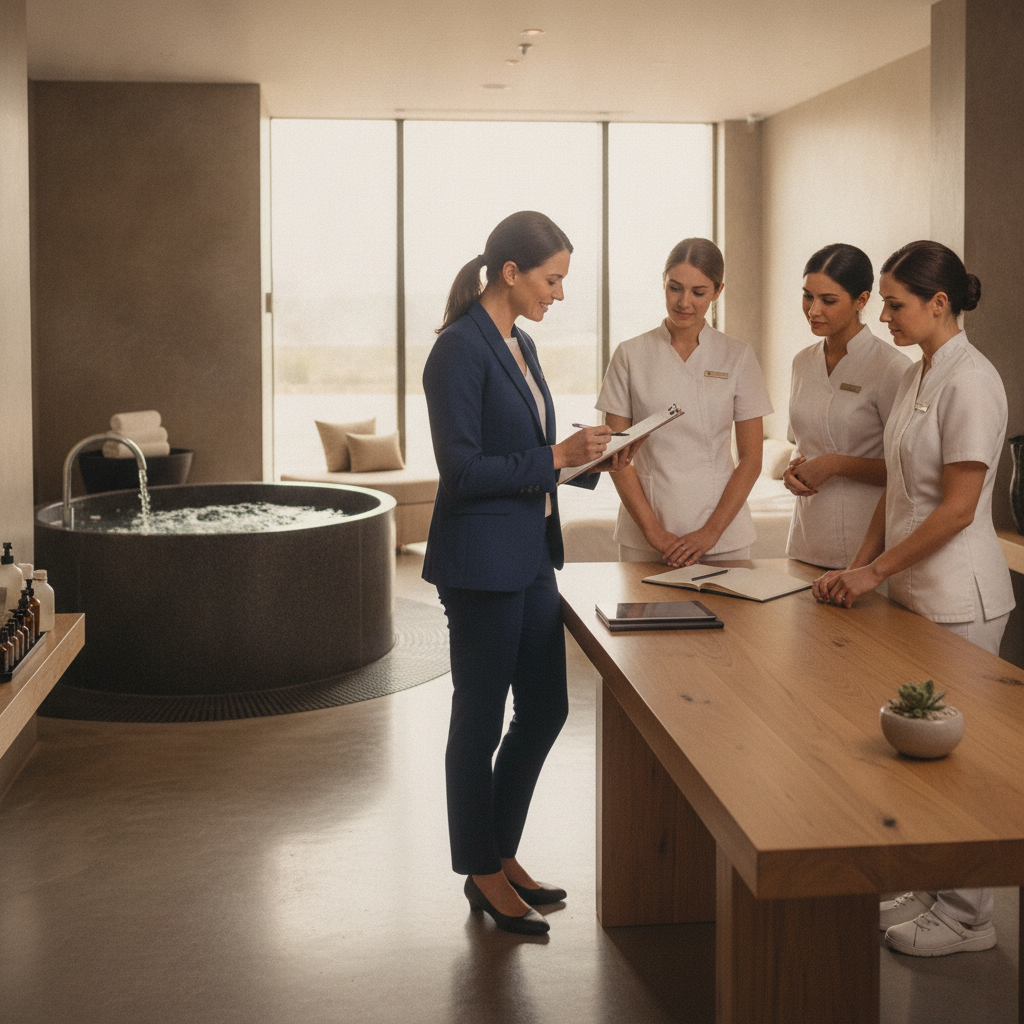
Step 1: Conduct a Readiness Assessment Before Installation
Before a single tub arrives, a spa director should complete a readiness assessment covering four areas: staffing capacity, physical space constraints, guest demographic fit, and regulatory requirements in the local jurisdiction. Many health departments now treat cold plunge pools similarly to spa pools or hot tubs for licensing purposes, which means water testing frequency, signage, and depth restrictions may already be dictated by local code before you design your own protocol.
A practical readiness checklist includes:
- Confirming which existing staff (spa therapists, lifeguards, fitness attendants) will supervise sessions
- Reviewing local health code requirements for water testing and posted signage
- Assessing guest traffic patterns to estimate realistic daily usage volume
- Identifying insurance and liability waiver requirements with your risk management team
The spa director should own the guest-facing protocol, staff training, and screening process, while facilities or engineering typically owns equipment servicing, chiller maintenance, and water chemistry logs. Clear division of responsibility prevents gaps in accountability.
Step 2: Build Your Cold Plunge Protocol and Standard Operating Procedures
The heart of any spa director cold plunge implementation guide is the written SOP. This document should specify session duration limits, maximum occupancy, temperature ranges, cleaning cadence, and emergency response steps. Most hotel spas set wellness-grade water temperatures between 50–59°F (10–15°C), reserving colder temperatures below 50°F for supervised, athlete-focused programs only.
| SOP Element | Recommended Standard |
|---|---|
| Max session duration | 2–5 minutes per immersion |
| Water temperature range | 50–59°F (10–15°C) |
| Cleaning/reset time | 5 minutes between guests |
| Staff supervision ratio | 1 attendant per plunge station |
| Water testing frequency | Daily minimum, more often at high volume |
Every spa director cold plunge implementation guide should also define an escalation path — what a staff member does the moment a guest shows signs of shivering distress, dizziness, or cardiac symptoms. This should mirror existing sauna or steam room emergency procedures already in place at most hotel spas.
Step 3: Staff Training and Certification Requirements
No spa director cold plunge implementation guide is complete without a training plan for the team who will run the amenity daily. At minimum, staff should be trained on guest intake screening questions, correct session timing, water temperature verification, and basic emergency response including CPR/AED familiarity. Many hotel spas budget 2–4 weeks of training and shadowing before a public soft launch, layering in cross-training so multiple shifts have at least one certified attendant on duty.
Training should also cover soft skills: how to explain the ritual to first-time guests, how to set expectations around breathing and duration, and how to guide guests calmly out of the water if they become uncomfortable. A well-trained team is often the single biggest differentiator between a five-star cold plunge experience and a one-star review citing confusion or discomfort.
Step 4: Guest Screening, Safety, and Liability Management
Guest screening is arguably the most legally significant piece of any spa director cold plunge implementation guide. A short intake form — verbal or written — should ask about cardiovascular conditions, pregnancy, Raynaud's disease, recent surgery, and alcohol consumption before a guest enters the water. Properties should also require a signed waiver acknowledging the risks of cold water immersion, consistent with waivers already used for sauna and steam services.
Most hotel spas do not require formal medical clearance for healthy adults, but best practice is a self-reported health screening form combined with a signed liability waiver, plus clear signage listing contraindications such as heart conditions, pregnancy, and open wounds.
Liability management also extends to signage at the plunge station itself: posted maximum duration, temperature, and a list of contraindications should be visible at all times. This protects both the guest and the property, and it's a standard element every spa director cold plunge implementation guide should include before opening day.
Step 5: Water Quality, Maintenance, and Equipment Servicing
Water quality is where many otherwise well-designed cold plunge programs fail. Chillers, filtration systems, and sanitation (typically chlorine, bromine, or ozone-based) require daily testing logs, not just periodic checks. A practical maintenance rhythm includes:
- Daily: Test and log pH, sanitizer levels, and water temperature
- Daily: Skim debris and check filtration flow
- Weekly: Deep-clean surfaces and inspect chiller performance
- Monthly: Full water change or system flush depending on unit type
- Quarterly: Professional servicing of chiller and pump components
Assigning clear ownership — spa attendants for daily checks, facilities/engineering for chiller servicing — prevents the common failure mode where nobody is quite sure whose job it is to log the numbers. This operational discipline is a defining feature of a mature spa director cold plunge implementation guide versus an ad hoc one.
Step 6: Launch Plan, Timeline, and Change Management
Most successful rollouts follow a phased launch rather than a hard opening. A typical timeline looks like this:
| Phase | Duration | Focus |
|---|---|---|
| Pre-launch prep | Weeks 1–2 | SOPs, waivers, signage, water testing baseline |
| Staff training | Weeks 2–4 | Certification, shadowing, mock emergency drills |
| Soft launch | Weeks 4–6 | Limited hours, staff-only or VIP guest testing |
| Full launch | Week 6+ | Full hours, marketing push, membership integration |
Communicating this timeline to ownership and front-desk teams matters as much as the technical work itself. Front-desk and concierge staff should know how to describe the ritual, quote session length, and direct guests to the correct booking channel well before the amenity goes live. For properties sourcing commercial-grade units and support during this process, resources like HotelPlunge can help spa directors align equipment specifications with the operational protocols outlined in this guide.
Common Implementation Mistakes Spa Directors Should Avoid
Even experienced spa directors run into predictable pitfalls when executing a cold plunge program:
- Skipping the written SOP: Verbal-only protocols lead to inconsistent guest experiences across shifts.
- Under-training seasonal or part-time staff: Cold plunge requires the same rigor as pool lifeguarding, not casual oversight.
- Ignoring water testing logs: Health inspectors increasingly request documented testing history, not just current readings.
- Underestimating throughput needs: A single unit handling 6–8 guests per hour can become a bottleneck during peak spa hours without a reservation system.
- Failing to loop in front-desk and concierge teams: Guests often ask about the amenity before ever reaching the spa.
Every spa director cold plunge implementation guide should treat these as checklist items during the pre-launch phase, not lessons learned after a guest complaint.
Frequently Asked Questions
How long does it take to implement a cold plunge program at a hotel spa?
Most hotel spas need 6–8 weeks from equipment arrival to full public launch, accounting for staff training, protocol development, and a soft-launch testing period.
What should be included in a cold plunge SOP for hotel spas?
An effective SOP includes maximum session duration, water temperature range, staff supervision requirements, cleaning cadence, water testing frequency, and emergency response steps.
Do spa staff need special certification to supervise cold plunge sessions?
There is no universal certification requirement, but staff should be trained in guest screening, session timing, water testing basics, and CPR/AED response as part of internal certification before supervising sessions unsupervised.
How often should cold plunge water be tested and changed?
Water should be tested daily for pH and sanitizer levels, with a full water change or system flush on a monthly basis depending on usage volume and filtration system type.
What guest screening questions are essential before cold plunge use?
Screening should cover cardiovascular conditions, pregnancy, Raynaud's disease, recent surgery, and recent alcohol consumption, paired with a signed liability waiver.
Conclusion: Turning This Guide Into Action
A cold plunge amenity succeeds or fails on operational execution, not just equipment quality. This spa director cold plunge implementation guide gives you the six-step framework — readiness assessment, SOP development, staff training, guest screening, water quality management, and phased launch — needed to bring the amenity to life safely and profitably. Spa directors who follow this structure consistently report smoother launches, fewer guest incidents, and faster staff confidence in running the program independently.
If you're preparing to implement a cold plunge program at your property, start by drafting your SOP and training timeline this week, and consider partnering with an experienced commercial supplier to ensure your equipment specifications match your operational plan. Visit HotelPlunge to explore commercial-grade cold plunge solutions built for hotel spa environments.