Boosting Guest Satisfaction with Hotel Wellness Offerings
September 26, 2026 · 13 min read
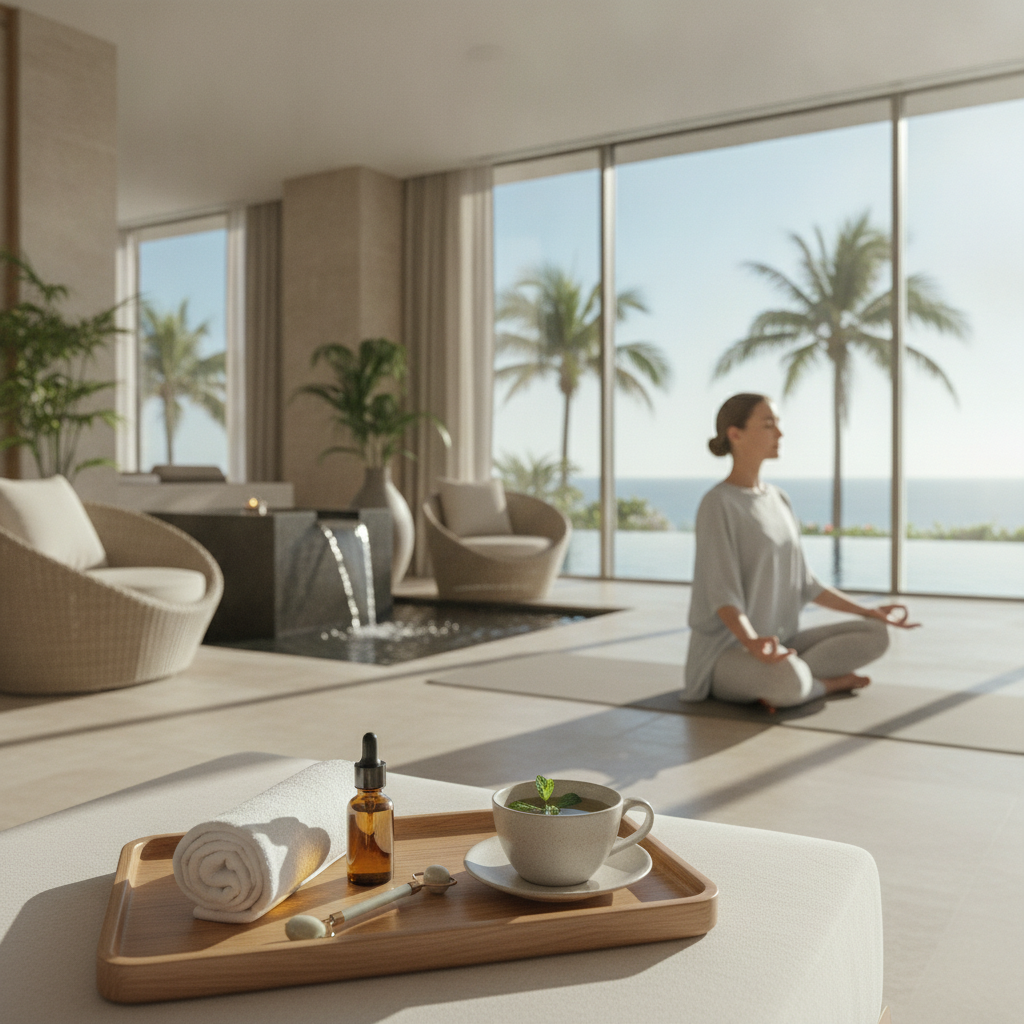
Guest satisfaction with hotel wellness offerings has moved from a nice-to-have amenity conversation to a core revenue and reputation strategy. As travelers increasingly choose properties based on recovery, sleep, and stress-reduction experiences rather than square footage or thread counts, hotel general managers, spa directors, and property owners need a clear framework for designing, staffing, and measuring wellness programs that actually move the needle on satisfaction scores, online reviews, and repeat bookings.
TL;DR — The Bottom Line
Guest satisfaction with hotel wellness offerings depends less on having the fanciest equipment and more on how well the experience is designed, staffed, and communicated. Hotels that build accessible, guided hydrothermal rituals — rather than unattended equipment rooms — see stronger review sentiment, higher perceived value, and greater ancillary revenue. Properties with major wellness offerings generated more than twice the Total Revenue per Available Room of non-wellness properties in 2024, and wellness tourism is growing faster than travel overall.
Why Guest Satisfaction with Hotel Wellness Offerings Is Reshaping Hospitality
The global wellness economy hit $6.8 trillion in 2024, up 7.9% from the prior year, and the Global Wellness Institute projects it will approach $9.8 trillion by 2029.1 Wellness tourism alone generated roughly $900 billion in 2024, with travelers taking an estimated 1.24 billion wellness trips — a figure well above pre-pandemic levels.1 Those numbers matter to hoteliers because they represent a structural shift in what guests expect from a stay, not a passing trend.
For property owners and general managers, this shift creates both an opportunity and a risk. The opportunity is clear: guest satisfaction with hotel wellness offerings is now a measurable differentiator that shows up in review language, direct booking rates, and length of stay. The risk is equally clear: guests who encounter a poorly maintained, unstaffed, or confusing wellness area often report lower overall satisfaction than if the amenity did not exist at all. A half-hearted wellness program can do more reputational damage than no program.
This article focuses specifically on the guest experience and satisfaction side of the equation — how to design, staff, segment, and measure wellness programming so that it consistently improves guest satisfaction with hotel wellness offerings, rather than simply installing equipment and hoping guests find value in it.
What Does Guest Satisfaction with Hotel Wellness Offerings Actually Mean?
Satisfaction is not the same as amenity count. A property with a single, beautifully designed and well-staffed sauna-and-plunge circuit can outperform a competitor with a larger but poorly maintained spa. Guest satisfaction with hotel wellness offerings is built from five components:
- Accessibility: Can guests easily book or walk into the experience without excessive friction?
- Clarity: Do guests understand how to use the amenity safely and effectively, especially first-time users?
- Comfort and safety: Is the environment clean, temperature-controlled, and supervised appropriately?
- Perceived value: Does the experience feel proportionate to, or better than, what the guest paid?
- Emotional payoff: Does the guest leave feeling measurably better — more relaxed, recovered, or energized — than before?
Hotels that treat wellness as a designed guest journey, rather than a room full of equipment, consistently score higher on guest satisfaction with hotel wellness offerings across review platforms and post-stay surveys.
Not automatically. Equipment alone rarely moves satisfaction scores. Improvement comes from pairing the equipment with clear guidance, safety protocols, staff availability, and simple booking access, so guests feel confident and supported using it.
The Data: How Wellness Amenities Move Satisfaction and Revenue Metrics
Quantifying guest satisfaction with hotel wellness offerings requires looking at both experience metrics and revenue metrics, because the two are closely linked. A 2025 analysis cited by HospitalityNet found that hotels with major wellness offerings generated more than twice the Total Revenue per Available Room of hotels without such offerings in 2024.2 This is a strong commercial association rather than proof of direct causation, but it aligns with what spa directors and general managers observe anecdotally: wellness guests spend more, stay longer, and rate their experience higher when the offering is well executed.
Tourism-related wellness categories are also recovering faster than travel overall. Between 2023 and 2024, wellness tourism grew 13.8%, spa spending grew 14.6%, and thermal and mineral springs grew 11.1%.3 These growth rates outpace general leisure travel, suggesting that guests are actively selecting properties based on wellness credibility — and that satisfaction with those offerings directly shapes repeat visitation and referral behavior.
Quick Facts
- Global wellness economy (2024): $6.8 trillion, up 7.9% year over year
- Wellness tourism spend (2024): approximately $900 billion, 13.2% of global wellness spending
- Wellness trips taken (2024): approximately 1.24 billion, above pre-pandemic levels
- Revenue gap: Hotels with major wellness offerings generated more than 2x the TRevPAR of non-wellness hotels in 2024
- Category growth (2023–2024): Spa spending up 14.6%, thermal/mineral springs up 11.1%
Quotable insight: "Guest satisfaction with hotel wellness offerings is no longer a spa-department metric — it is a property-wide revenue and reputation indicator that general managers should track alongside ADR and occupancy."
Designing a Guest Journey That Maximizes Wellness Satisfaction
The strongest driver of guest satisfaction with hotel wellness offerings is journey design, not device selection. Guests move through a sequence: discovery, booking, arrival, use, and reflection. Weaknesses at any stage reduce satisfaction, even if the equipment itself is excellent.
Discovery
Guests should learn about the wellness offering before or immediately upon arrival — through pre-arrival emails, in-room materials, or a brief mention at check-in. Hotels that bury the amenity in a spa menu PDF see far lower usage and satisfaction than those that actively introduce it.
Booking and access
Friction kills satisfaction. Whether the experience is a shared thermal circuit or a private plunge, guests expect a simple reservation process — ideally digital, with clear time slots and capacity limits so the space never feels crowded or rushed.
Arrival and orientation
First-time users of cold exposure or thermal circuits need brief, friendly orientation: how long to stay in, how to exit safely, what sensations are normal, and when to stop. Properties that skip this step see more complaints and, occasionally, safety incidents — both of which sharply reduce guest satisfaction with hotel wellness offerings.
The experience itself
Consistency matters more than luxury. A modest but reliably clean, temperature-accurate, and well-lit space consistently outperforms a visually stunning but poorly maintained one in guest satisfaction surveys.
Reflection and follow-up
A short post-use touchpoint — a text message, a comment card, or a staff check-in — gives hotels a chance to catch dissatisfaction before it becomes a public review, and reinforces the guest's positive emotional association with the stay.
Matching Wellness Offerings to Guest Segments
Guest satisfaction with hotel wellness offerings varies significantly by traveler type. A single, undifferentiated wellness offering will satisfy some segments and underwhelm others. Understanding who is actually using the amenity — and why — allows hotels to tailor programming, packaging, and communication.
| Guest Segment | Primary Motivation | What Drives Their Satisfaction |
|---|---|---|
| Business travelers | Stress relief, jet lag recovery, sleep quality | Fast access, minimal scheduling friction, quiet environment |
| Fitness and outdoor travelers | Muscle recovery, soreness reduction | Sauna-cold contrast circuits, flexible hours around activity schedules |
| Luxury leisure guests | Indulgence, exclusivity, aesthetics | Design quality, privacy, personalized attention |
| Wellness-focused couples | Shared relaxation experience | Private-use options, ambiance, ease of co-booking |
| Corporate and group travelers | Team bonding, stress reduction | Group-friendly scheduling, clear group protocols |
Hotels that map their wellness programming against these segments — rather than assuming one design fits everyone — see measurably stronger guest satisfaction with hotel wellness offerings across review platforms, because guests feel the experience was built with their specific needs in mind.
Simple booking systems that capture room type, stay purpose (business vs. leisure), and time of use provide enough data to identify patterns without requiring a full analytics platform. Even basic sign-in logs, reviewed monthly, reveal which segments engage most and where satisfaction gaps exist.
Five Steps to Improve Guest Satisfaction with Hotel Wellness Offerings
- Audit the current guest journey. Walk through discovery, booking, orientation, use, and follow-up as if you were a first-time guest, and note every point of friction or confusion.
- Simplify access. Reduce the number of steps between a guest's intent to use the amenity and actually using it — ideally to one tap or one phone call.
- Standardize orientation. Create a short, consistent script or signage system so every guest, regardless of which staff member greets them, receives the same safety and usage guidance.
- Collect structured feedback. Add two or three wellness-specific questions to post-stay surveys, separate from general property satisfaction, to isolate what is actually driving guest satisfaction with hotel wellness offerings.
- Review and adjust quarterly. Use booking data, survey responses, and review-site language to identify recurring themes and make incremental design or staffing changes.
Staff Training and Safety: The Hidden Driver of Wellness Satisfaction Scores
Even the best-designed hydrothermal circuit will underperform if staff are not confident explaining it. Spa directors consistently report that the single biggest predictor of guest satisfaction with hotel wellness offerings is whether front-line staff — not just spa specialists — can answer basic questions about safety, duration, and contraindications.
Training should cover:
- Basic physiological guidance for cold and heat exposure (duration ranges, warning signs, when to advise a guest to stop)
- Clear escalation protocols for guests with health concerns or discomfort
- Cleaning and maintenance schedules that are visible or communicated to guests, which reassures them about hygiene
- Consistent, calm language that frames the experience as approachable rather than extreme
Properties that treat wellness safety training as a one-time onboarding item rather than an ongoing practice tend to see satisfaction scores erode over time, particularly as seasonal staff turnover introduces inconsistency. Building a repeatable training framework protects both guest safety and long-term guest satisfaction with hotel wellness offerings. For operators evaluating equipment and support partners, HotelPlunge works directly with hospitality teams to align product selection with the operational and training realities of a hotel environment.
Common Mistakes That Quietly Undermine Guest Satisfaction with Hotel Wellness Offerings
Several recurring mistakes appear across properties struggling with wellness satisfaction, regardless of budget size:
- Treating wellness as unattended infrastructure. A sauna or plunge with no staff presence, signage, or booking system often feels neglected rather than premium.
- Overpromising in marketing. Describing a modest amenity in resort-spa language sets expectations the physical experience cannot meet, which directly damages guest satisfaction with hotel wellness offerings even when the amenity itself is perfectly adequate.
- Ignoring maintenance visibility. Guests notice when water looks cloudy or equipment appears worn, even if it is technically clean and functional.
- Failing to segment programming. A one-size-fits-all approach leaves business travelers, couples, and fitness guests all mildly underwhelmed instead of any single segment being genuinely delighted.
- Not closing the feedback loop. Collecting survey data but never acting on it signals to staff and, eventually, to guests, that wellness is not a real operational priority.
Focus on the guest journey rather than the physical footprint: simplify booking, standardize staff orientation scripts, and add a short post-use feedback touchpoint. These operational changes often produce measurable satisfaction gains faster than adding new equipment.
Frequently Asked Questions
What is guest satisfaction with hotel wellness offerings?
It refers to how well a hotel's wellness amenities — such as saunas, cold plunges, and thermal circuits — meet guest expectations for accessibility, safety, staff support, and value relative to price, as reflected in reviews and post-stay surveys.
Do wellness amenities actually increase hotel revenue, not just satisfaction?
Data suggests a strong association: hotels with major wellness offerings generated more than twice the Total Revenue per Available Room of hotels without such offerings in 2024, according to a HospitalityNet analysis.2 This reflects both direct ancillary spend and higher perceived value driving room rate premiums.
How do hotels measure guest satisfaction with hotel wellness offerings specifically, rather than overall stay satisfaction?
Adding two or three dedicated wellness questions to post-stay surveys, monitoring review-site language for wellness-specific keywords, and tracking booking/usage data separately from general amenity usage all help isolate wellness satisfaction from broader stay satisfaction.
Is extreme cold exposure necessary for high guest satisfaction with wellness offerings?
No. Industry guidance in 2025 favored gentler, more accessible cooling rituals over extreme cold exposure, since accessible experiences serve a wider range of guest tolerance levels and health profiles while still delivering strong satisfaction outcomes.4
Which guest segments care most about hotel wellness offerings?
Business travelers seeking recovery and sleep quality, fitness and outdoor travelers seeking muscle recovery, luxury leisure guests seeking indulgence, and wellness-focused couples all represent strong segments, though their specific expectations and satisfaction drivers differ meaningfully.
Conclusion: Turning Wellness Into a Measurable Satisfaction Advantage
Guest satisfaction with hotel wellness offerings is now a strategic lever, not a spa-department side project. The properties winning on review scores, direct bookings, and repeat visitation are the ones treating wellness as a designed guest journey — with clear access, trained staff, segmented programming, and a consistent feedback loop — rather than simply installing equipment and hoping for the best. As the wellness economy continues its rapid growth toward an estimated $9.8 trillion by 2029, the gap between properties that get this right and those that don't will only widen.
If you're a general manager, spa director, or property owner evaluating how to strengthen guest satisfaction with hotel wellness offerings at your property, HotelPlunge partners with hospitality teams to align equipment, guest experience design, and staff training with real operational needs. Explore how a thoughtfully designed hydrothermal program can become your property's next signature guest experience.
Sources:
1. Global Wellness Institute, "Global Wellness Economy Monitor," https://globalwellnessinstitute.org
2. HospitalityNet, "Wellness Amenities and Hotel Revenue Performance Analysis," https://www.hospitalitynet.org
3. Global Wellness Institute, Wellness Tourism sector data, https://globalwellnessinstitute.org
4. Industry hydrotherapy safety guidance, 2025 hospitality wellness reporting.