Cold Plunge for Boutique Hotels: A Positioning Guide
August 9, 2026 · 7 min read
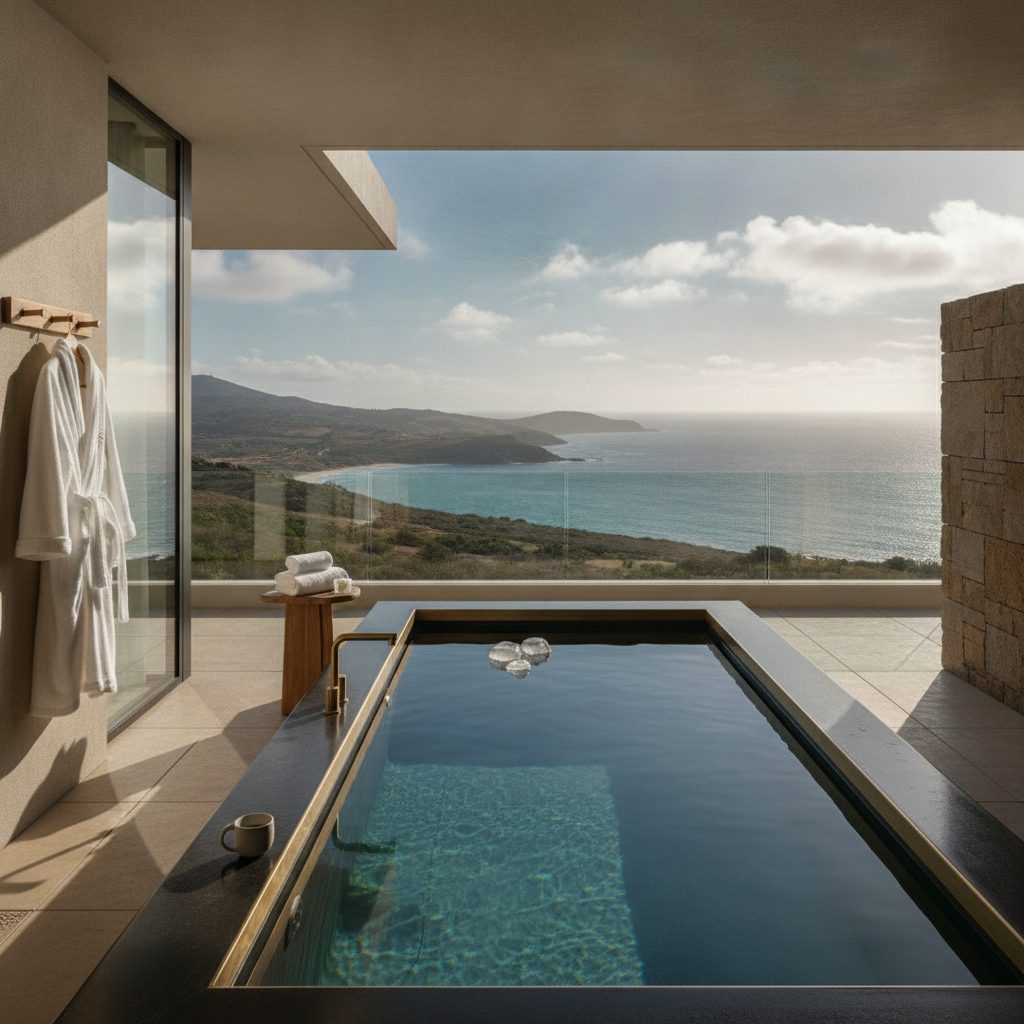
Cold plunge for boutique hotels has moved well past the point of being a trendy add-on for spa menus. For general managers, wellness directors, and owners running independent or small-flag properties, the real question is no longer whether to install a cold plunge — it's how to position it so it strengthens brand identity, drives guest loyalty, and stands apart from the standardized wellness offerings found at larger luxury chains. This guide focuses specifically on that positioning and strategy layer: what makes boutique properties different, how to choose a format that fits a small footprint and lean team, and how to turn cold plunge into a story guests actually tell their friends.
TL;DR — The Bottom Line
Cold plunge for boutique hotels works best as a signature, story-driven experience rather than a generic spa fixture. Because boutique properties are smaller, more design-led, and more dependent on word-of-mouth than big-box luxury chains, the winning approach is a compact, well-branded format tied to a clear guest ritual — not the largest or most expensive installation. Get the format, staffing model, and brand narrative right, and cold plunge becomes a differentiator that supports rate, loyalty, and social visibility.
Quick Facts
- Global wellness economy: $6.3 trillion in 2023, projected to reach nearly $9.0 trillion by 2028 (Global Wellness Institute)
- Wellness tourism: forecast to exceed $1 trillion in 2024 (Global Wellness Institute)
- Cold plunge installation growth: a reported 15% rise in U.S. luxury hotel installations between 2021 and 2023 (supplier industry data)
- Typical plunge temperature: roughly 46–54°F (8–12°C), with some properties running as low as 42°F (5°C)
- Recommended immersion time: 30 seconds to 2 minutes for healthy adults in most hotel wellness programs
- Installation cost range: commonly cited between $15,000 and $80,000, depending on format and scope (directional, varies widely by property)
What Is Cold Plunge for Boutique Hotels, and Why Now?
Cold plunge for boutique hotels refers to the practice of offering a dedicated cold-water immersion experience — typically a small pool, tub, or barrel chilled to therapeutic temperatures — as part of a smaller, independently branded property's wellness or spa program, rather than as part of a large-scale luxury resort spa.
The timing matters. The global wellness economy was valued at $6.3 trillion in 2023 and is projected to approach $9.0 trillion by 2028, according to the Global Wellness Institute, with wellness tourism alone expected to surpass $1 trillion in 2024.[1] Guests who travel specifically for recovery, fitness, and self-care are increasingly boutique-hotel travelers — they favor independent, design-conscious properties over uniform big-brand resorts. That shift is exactly why cold plunge for boutique hotels is gaining traction faster in this segment than almost any other part of the hospitality market.
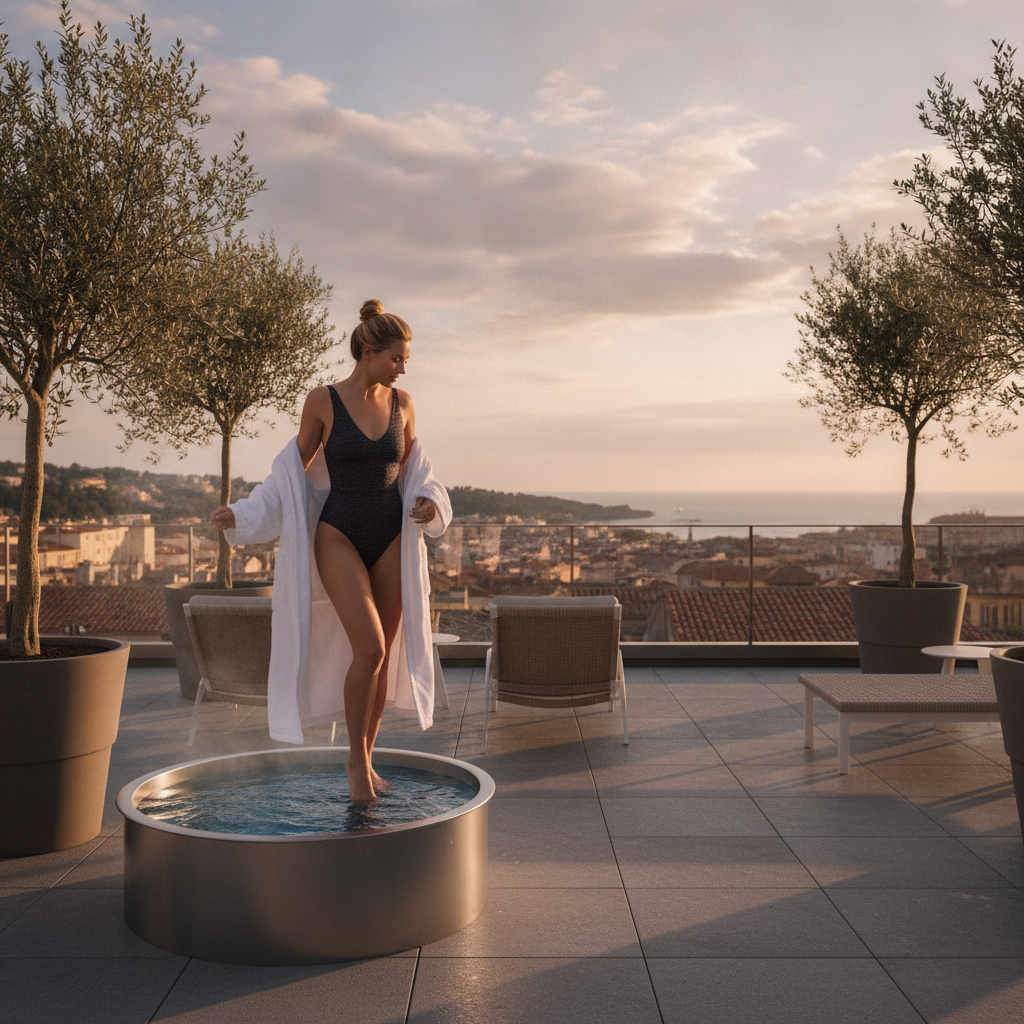
Why Boutique Hotels Are Uniquely Positioned for Cold Plunge
Large luxury resorts often add cold plunge as one line item among dozens of spa offerings — a sauna here, a steam room there, a plunge pool tucked into a much larger thermal circuit. Boutique hotels have a different advantage: fewer amenities competing for attention, which means cold plunge can become a headline feature rather than a footnote.
This is one of the clearest reasons cold plunge for boutique hotels performs so well as a marketing and guest-experience tool. A 20- to 40-room property with a single, beautifully designed plunge and a strong narrative around it can generate more social sharing and guest conversation than a resort spa with fifteen features and no single hero moment.
No. Unlike large resort spas that build multi-room contrast circuits, many boutique properties succeed by offering a single, well-branded cold plunge experience — sometimes paired with just one hot element like a sauna barrel or hot tub — rather than a full wet-area buildout.
Boutique hotels also tend to have more flexibility in guest access models. Rather than folding cold plunge into a paid spa membership or treatment menu, independent properties can offer it as a signature included amenity, a bookable private session, or a rooftop or courtyard feature open to all guests — decisions that are easier to make quickly without layers of brand-standard approval.
How Cold Plunge Strategy Differs Between Boutique Hotels and Large Resorts
Understanding this difference is central to getting cold plunge for boutique hotels right. Large resort chains typically standardize wellness offerings across dozens of properties, prioritizing consistency and predictable guest experience. Boutique hotels compete on the opposite principle: distinctiveness.
| Factor | Large Luxury Resort | Boutique Hotel |
|---|---|---|
| Typical footprint | Large dedicated spa wing with multiple wet areas | Compact rooftop, courtyard, or single spa room |
| Guest access model | Spa membership, treatment bundles, resort fee | Included amenity, private bookable session, or à la carte |
| Brand role | One feature among many standardized offerings | Signature, story-driven hero amenity |
| Decision speed | Slower, brand-standard driven | Faster, owner/GM-led |
| Marketing angle | Comprehensive wellness resort positioning | Distinct ritual tied to property identity |
These structural differences explain why a one-size-fits-all approach doesn't work. Cold plunge for boutique hotels needs to be scaled and branded intentionally for a smaller, more design-conscious property rather than copied directly from a resort spa blueprint.
A Practical Framework for Choosing the Right Cold Plunge Format
Because boutique properties vary so much in size, layout, and guest profile, there's no universal answer for which cold plunge format is right. Instead, general managers and owners evaluating cold plunge for boutique hotels should work through a short decision framework before committing capital.
- Define the guest ritual first. Decide whether cold plunge will stand alone, pair with a sauna or hot soak, or serve as a post-fitness recovery moment — the ritual shapes the format more than the equipment does.
- Audit available space honestly. Rooftops, courtyards, underused storage rooms, and even oversized bathrooms can all work; boutique properties rarely have spare square footage for a large multi-room circuit.
- Match format to guest volume. A 15-room boutique inn has very different throughput needs than a 60-room urban boutique hotel — this affects tank size, turnover, and whether private booking makes more sense than open access.
- Decide on the access model. Choose between an included amenity, a bookable private session, or a spa-package add-on based on your existing revenue structure and staffing capacity.
- Confirm operational fit before purchase. Water treatment, cleaning downtime, and staff oversight requirements should be mapped to your actual team size, not an idealized spa staffing model.
Working through this sequence keeps the decision grounded in what a specific property can realistically support, rather than importing assumptions from a much larger resort's wellness program. HotelPlunge works with boutique properties to align format choice with exactly these constraints — you can learn more about compact, hospitality-ready systems at HotelPlunge.
Turning Cold Plunge Into a Brand Story Guests Share
The single biggest advantage boutique hotels have over larger competitors is narrative control. A resort chain's wellness amenity is one of many uniform features; a boutique hotel's cold plunge can be woven directly into the property's identity — the name of the ritual, the design of the space, the way staff introduce it at check-in.
Cold plunge for boutique hotels performs best commercially when it's treated as a branded ritual, not a piece of equipment. Properties that name their plunge experience, photograph it distinctly, and mention it in pre-arrival communication see stronger guest engagement than those that simply list