Cold Plunge for Luxury Resorts: Elevating Guest Experience
September 29, 2026 · 13 min read
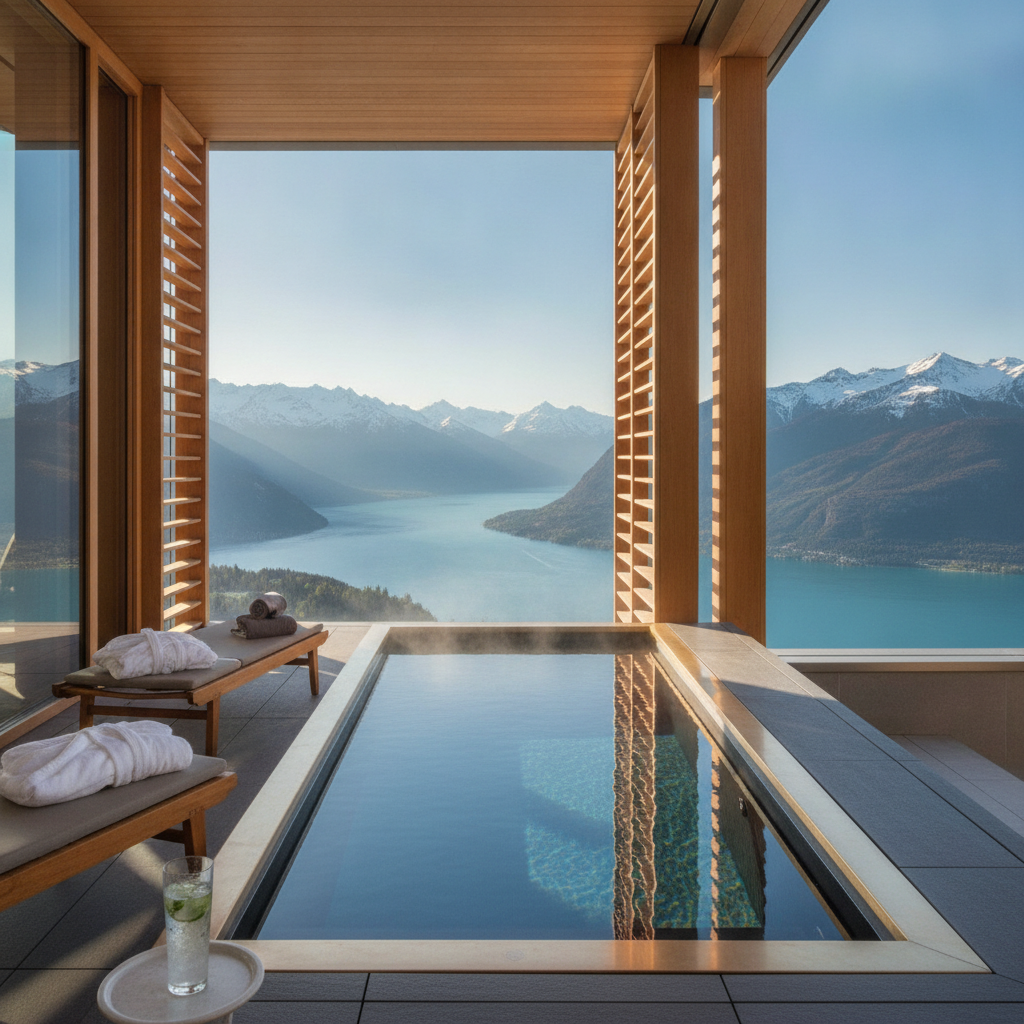
Luxury resorts are under constant pressure to create wellness experiences that feel exclusive, effective, and effortless. Among the fastest-growing additions to five-star spa menus is the cold plunge for luxury resorts category — a niche recovery tool that has evolved into a headline wellness amenity expected by discerning travelers. For general managers, spa directors, and property owners evaluating this investment, the question is no longer whether to offer cold therapy, but how to design, position, and operate a cold plunge for luxury resorts so it matches the standards guests already associate with the brand.
TL;DR — The Bottom Line
A well-designed cold plunge for luxury resorts is no longer an optional recovery tool — it is a visible, photographable, revenue-supporting wellness feature that differentiates a property in a crowded market. Success depends less on temperature and more on architectural integration, ritual design, and reliable commercial-grade equipment. Properties that pair cold plunges with sauna circuits, spa programming, and staff-guided rituals see the strongest guest engagement and the clearest brand differentiation.
Quick Facts
- Global cold-plunge tub market (2025): $362.96 million, projected to reach $739.96 million by 2034 at an 8.24% CAGR
- Commercial share of the market: as high as 81.4% of total demand, according to Grand View Research
- Hotel-specific cold-plunge pod market (2025): estimated at $1.8 billion, growing to $4.2 billion by 2034 (10.3% CAGR)
- Built-in installations: represent roughly 40.8% of the hotel cold-plunge pod segment, reflecting demand for permanent spa integration
- Luxury hotel share of the pod market: approximately 38.5%, with wellness resorts adding another 26.3%
- Regional leadership: North America holds about 42.3% of the hotel cold-plunge pod market, followed by Europe at 28.7%
What Is a Cold Plunge for Luxury Resorts, Exactly?
At its simplest, a cold plunge is a vessel of chilled water used for short, controlled immersion. But a cold plunge for luxury resorts is a different product category from the plunge tub sold to a home gym or boutique fitness studio. It is engineered for continuous multi-guest use, filtered and sanitized to hospitality standards, and finished to match the design language of a five-star property. The distinction matters because guests at luxury resorts expect the same polish from a wellness feature that they expect from the lobby, the restaurant, or the suite.
For spa directors evaluating a cold plunge for luxury resorts, the equipment decision is really three decisions bundled together: the mechanical system (chiller, filtration, sanitation), the architectural integration (placement, materials, sightlines), and the service model (how staff introduce, supervise, and program the experience). Properties that treat these as one decision tend to end up with a feature that looks impressive on opening day and becomes a maintenance liability within a year.
Answer: No. A standard ice bath is typically a single-use, manually filled container. A cold plunge for luxury resorts is a commercial-grade, continuously chilled and filtered system built for repeated daily use by dozens of guests, with sanitation and safety standards appropriate for a hospitality environment.
Why Luxury Resorts Are Investing in Cold Plunge Experiences
Three forces are driving adoption. First, differentiation: in a crowded luxury wellness market, a cold plunge is highly visible and easy for guests to understand and photograph, which makes it an effective marketing asset as well as a treatment. Second, wellness tourism growth is pushing resorts toward more participatory, measurable experiences rather than passive spa treatments. Third, guests increasingly arrive already familiar with cold exposure through fitness and biohacking culture, which lowers the education burden on staff and increases uptake.
Recent hospitality examples illustrate the trend. Meru Hotel in Bali converted an underused massage room into a wellness space pairing a teak ice bath with a dry sauna, repositioning an unused asset into a signature amenity. Glenapp Castle in Scotland is developing a private wellness accommodation concept that combines a sauna, cold plunge, and terrace with lodging — treating cold therapy as part of the accommodation product itself, not just the spa menu (Skift, hospitality wellness reporting). These examples reflect a broader pattern: the strongest positioning for a cold plunge for luxury resorts is experiential, built around a ritual, rather than treating the tub as an isolated piece of gym equipment.
The Business Case: Revenue, Margins, and Guest Retention
While detailed ROI modeling deserves its own analysis, general managers evaluating a cold plunge for luxury resorts should understand the broad revenue mechanics. Commercial market commentary suggests five-star properties can charge roughly $50–$150 per day for standalone cold-therapy sessions, though actual pricing varies widely by market, brand positioning, and whether the experience is bundled into a spa package or membership. More commonly, resorts are folding cold plunge access into existing spa day-pass pricing, thermal circuit fees, or recovery-focused suite upgrades rather than selling it as an à la carte line item.
The more durable revenue driver is indirect: guest retention, review sentiment, and booking influence. A cold plunge for luxury resorts frequently appears in guest reviews and social content, functioning as an acquisition tool for wellness-motivated travelers who are actively searching for properties offering cold therapy, contrast bathing, or recovery-focused amenities. For property owners, this makes the amenity a marketing investment as much as a spa investment.
Designing a Cold Plunge for Luxury Resorts That Feels Seamless
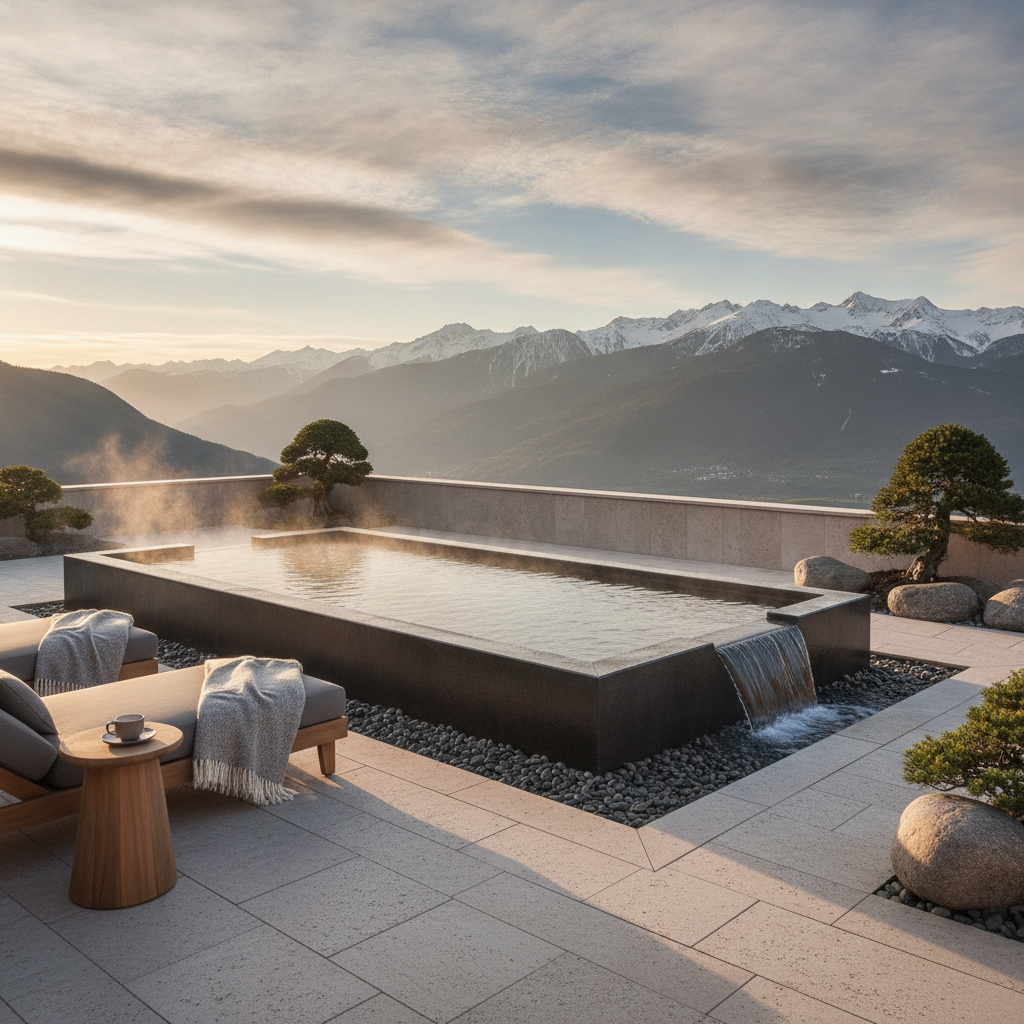
Design integration is where most properties either succeed or fail. A cold plunge for luxury resorts should read as an extension of the architecture — stone, teak, or tiled finishes that match the spa's material palette, discreet mechanical housing, and thoughtful placement near natural light, water features, or outdoor terraces. Resorts that place the plunge as an afterthought in a mechanical room or repurposed closet undermine the perceived value of the entire wellness program.
Placement also affects guest flow. The most successful layouts position the cold plunge at the natural endpoint of a sauna, steam, or hydrotherapy sequence, allowing guests to move through a contrast-therapy circuit without backtracking through public corridors in robes. Outdoor placements with privacy screening or elevated views tend to generate the strongest guest engagement and photography, reinforcing the amenity's marketing value.
Cold Plunge for Luxury Resorts vs. Standard Hotel Wellness Amenities
Not every property needs — or benefits from — the same level of investment. The table below compares how a cold plunge for luxury resorts typically differs from a more basic hotel wellness offering.
| Feature | Standard Hotel Amenity | Cold Plunge for Luxury Resorts |
|---|---|---|
| Equipment tier | Portable or residential-grade tub | Commercial chiller with continuous filtration and sanitation |
| Placement | Fitness center corner or storage area | Integrated into spa architecture, terrace, or thermal circuit |
| Guest guidance | Minimal or self-serve signage | Staff-guided rituals, safety briefing, and programming |
| Design finish | Generic plastic or acrylic shell | Custom stone, tile, teak, or architectural finish matching property aesthetic |
| Positioning | Optional add-on | Signature wellness feature tied to brand identity |
Building the Ritual: Pairing Cold Plunge With Sauna and Spa Programming
The single most effective way to increase perceived value of a cold plunge for luxury resorts is to stop treating it as a standalone product and start treating it as one step in a guided ritual. Contrast therapy — alternating heat exposure (sauna or steam) with cold immersion — has strong guest recognition and pairs naturally with existing spa infrastructure. Resorts that train spa therapists to introduce the sequence, explain breathing technique, and set expectations around duration see meaningfully higher repeat usage than properties that leave guests to self-navigate.
Programming can also extend beyond the spa itself. Fitness and endurance travelers respond well to post-workout recovery framing; wellness-tourism guests respond to stress-management and sleep-quality framing; and couples or groups respond to shared-experience framing. A single cold plunge for luxury resorts can support all three narratives depending on how the concierge, spa menu, and in-room materials describe it.
Answer: Most commercial hospitality installations operate in the 39–55°F (3–13°C) range, with the specific temperature and session length determined by the spa's medical or wellness guidance and adjusted for guest experience level rather than pushed to the coldest possible setting.
Choosing a Partner for Your Cold Plunge for Luxury Resorts
The equipment market supporting hotels is fragmented. Consumer-facing brands have strong name recognition but were not necessarily built around hospitality procurement cycles, multi-property servicing, or architectural customization. Premium commercial specialists offer robust chillers and hotel references but often require significant buyer education. Ultra-premium performance brands deliver very low temperatures but can be excessive for a general resort guest population. Traditional spa and hydrotherapy integrators can deliver full thermal suites but often lack a focused cold-plunge operating playbook.
For property owners and spa directors, the practical evaluation criteria should include: proven commercial-use reliability, filtration and sanitation compliance, design flexibility to match architectural finishes, service and maintenance infrastructure across time zones, and a vendor's track record with hospitality clients specifically — not just consumer or athletic-facility deployments. HotelPlunge works specifically within this hospitality-first lens, focusing on the intersection of commercial reliability and luxury design integration rather than treating hotels as an extension of a consumer product line.
Answer: Prioritize commercial-use references from comparable hospitality properties, documented filtration and water-quality compliance, and a service model that supports ongoing maintenance — not just initial installation.
Positioning the Amenity for Different Guest Segments
A cold plunge for luxury resorts rarely serves a single guest type, and the strongest properties acknowledge this in their marketing and staff training rather than defaulting to a single athletic-recovery narrative.
- Fitness and endurance travelers — position the plunge around recovery, inflammation management, and post-activity ritual.
- Biohacking and performance guests — offer data-informed programming, session tracking, and optional guided protocols.
- Spa and thermal-circuit users — integrate the plunge as the cold phase of a contrast-therapy sequence.
- Stress-management and sleep-focused guests — emphasize nervous-system regulation and evening ritual framing.
- Couples and groups — highlight shared, novel experience value and social-media-friendly design.
Segmenting the narrative allows a single physical asset — the cold plunge for luxury resorts — to justify inclusion in multiple spa packages, retreat offerings, and marketing campaigns without additional capital investment.
Frequently Asked Questions
What makes a cold plunge for luxury resorts different from a residential model?
Commercial installations use continuous chilling, filtration, and sanitation systems built for repeated multi-guest use, along with design finishes matched to the property's architecture — features residential or portable tubs typically lack.
How much does a cold plunge for luxury resorts typically cost guests?
Some five-star properties price standalone cold-therapy access at roughly $50–$150 per day, though most resorts bundle the amenity into existing spa day passes, thermal circuit fees, or wellness package pricing rather than charging separately.
Where should a resort place its cold plunge?
The strongest placements sit at the natural endpoint of a sauna or steam sequence, ideally with outdoor access, natural light, or a scenic view, since this reinforces both guest flow and the amenity's marketing value.
Do guests need staff supervision to use a cold plunge for luxury resorts?
Most hospitality operators recommend at least an initial staff-guided introduction covering duration, safety guidance, and technique, even if guests use the plunge independently afterward.
Is demand for cold plunge for luxury resorts growing?
Yes. Market estimates place the hotel-specific cold-plunge pod segment at roughly $1.8 billion in 2025, growing toward $4.2 billion by 2034, with luxury hotels and wellness resorts representing the largest hospitality demand categories.
Conclusion: Making Cold Plunge for Luxury Resorts Work for Your Property
A cold plunge for luxury resorts succeeds when it is treated as hospitality infrastructure rather than gym equipment — designed into the architecture, supported by trained staff, and positioned around a ritual guests can understand and repeat. Properties that get the integration right gain a highly visible differentiator in a wellness-tourism market that continues to expand year over year. Properties that treat it as an isolated purchase risk an expensive amenity that underperforms both operationally and in guest perception.
For general managers, spa directors, and property owners ready to evaluate a cold plunge for luxury resorts that matches your property's design standards and service expectations, HotelPlunge can help you assess the right configuration, finish, and integration approach for your spa or wellness program.