How Do Amenities Differ Between Boutique Hotels: Guide
September 5, 2026 · 13 min read
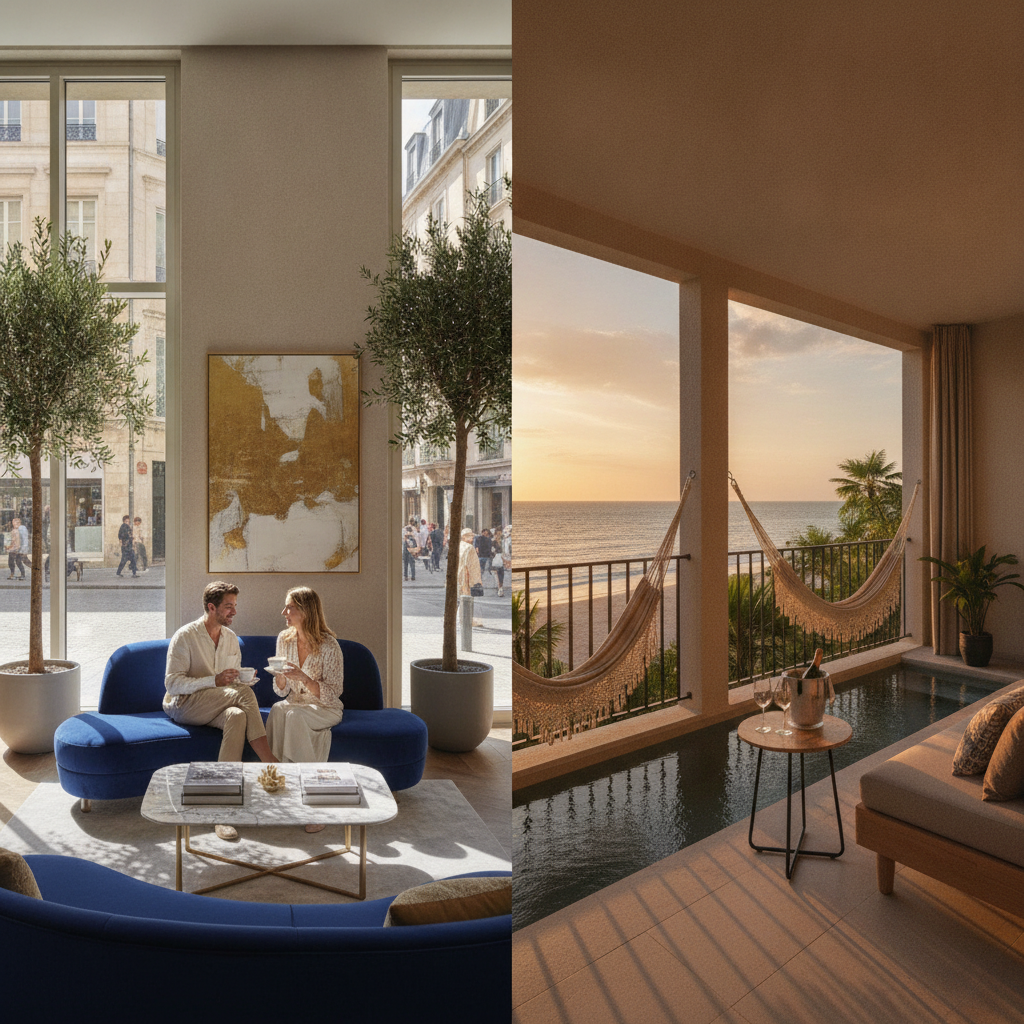
How do amenities differ between boutique hotels and their large-chain counterparts? The short answer: boutique properties trade scale for intentionality, replacing sprawling standardized facilities with curated, design-integrated experiences that reflect a property's identity. For general managers, spa directors, and owners trying to plan capital investments, understanding this distinction is the difference between buying equipment guests scroll past and installing amenities guests write reviews about.
TL;DR — The Bottom Line
Boutique hotels differ from traditional properties by prioritizing curated, space-efficient, and personalized amenities over large, standardized facilities. Instead of full-size gyms, generic pools, and one-size-fits-all spa menus, boutique properties invest in intimate wellness spaces, in-room features, and design-led equipment that reinforce brand identity. Understanding how amenities differ between boutique hotels and chain properties helps operators allocate limited capital toward features that actually drive occupancy, rate premiums, and guest loyalty.
Quick Facts
- Typical boutique hotel size: Under 100 rooms, versus 100–1,000+ for traditional/chain hotels
- Amenity philosophy: Curated and personalized (boutique) vs. standardized and uniform (traditional)
- Wellness positioning: Boutique hotels treat wellness as a design principle; chains often treat it as a separate department
- Space efficiency: Boutique wellness amenities favor compact, in-room, or micro-space solutions over large gyms and pools
- Guest expectation shift: Sleep tourism, recovery, and sensory design are increasingly standard boutique amenity categories
How Do Amenities Differ Between Boutique Hotels and Traditional Chain Properties?
The most direct way to answer how amenities differ between boutique hotels and traditional hotels is to look at philosophy first, then scale. Traditional and chain hotels are built for consistency across dozens or hundreds of properties. A guest checking into a 400-room branded hotel in Dallas expects roughly the same gym, the same breakfast buffet, and the same pool deck they'd find in Denver. That predictability is the product.
Boutique hotels flip this model. With typically fewer than 100 rooms, they are designed to deliver what industry researchers describe as a "complete sensory experience" rather than simply lodging, food, and basic services.[1] Amenities are refined and specific: artisanal toiletries, pillow menus, unusual in-room features like vinyl players or cedar soaking tubs, and mini-bars stocked with hyper-local products.[2] Nothing is generic by design.
This is the core of how amenities differ between boutique hotels and larger properties: boutique amenities are chosen to reinforce a specific identity, while traditional amenities are chosen to satisfy the broadest possible audience at the lowest operational complexity.
Scale Changes What's Possible
Because boutique properties operate at a smaller footprint, they simply don't have room for a 5,000-square-foot fitness center or a resort-style pool complex. That constraint, counterintuitively, is often what makes boutique amenities feel more premium—every square foot has to earn its place, so operators choose fewer, higher-impact features instead of broad, underused ones.
Boutique hotels typically operate at a smaller scale and focus on intimate, design-integrated amenities tied to a single property's identity, while luxury resorts often build destination-scale wellness ecosystems—full spa villages, multiple pools, and medical-grade recovery centers—supported by much larger footprints and budgets.
The Wellness Amenity Gap: Spa Department vs. Design Principle
One of the clearest ways to see how amenities differ between boutique hotels and traditional properties is in wellness programming. In most traditional hotels, wellness is a department: a spa with a printed treatment menu, a gym with cardio machines, maybe a sauna. It exists alongside the rest of the property but rarely shapes it.
In boutique hotels, wellness is increasingly a design principle that runs through the entire guest journey. Instead of a generic spa menu, boutique properties are shifting toward holistic, personalized wellness—tailored fitness classes, mindfulness sessions, nutritional guidance, and "social wellness" experiences like group retreats or communal wellness dining designed to foster connection among guests.[3]
Rather than sprawling spa complexes, boutique operators favor intimate wellness spaces with specialized treatments and locally inspired rituals, often built as multi-sensory experiences layering lighting, scent, sound, and texture into a single cohesive space.[1][4] This is a meaningful part of how amenities differ between boutique hotels and chains: the unit of measurement isn't square footage, it's how memorable the experience feels.
"Wellness is moving from a spa department to a design principle—circadian lighting, recovery-focused fitness, and sleep optimization are becoming room features, not just gym amenities."
Culinary Wellness as an Amenity Category
Food is another area where the gap shows up. Traditional hotels tend to offer broad, familiar dining formats. Boutique properties are increasingly folding wellness into the menu itself—farm-to-table dining, personalized nutrition consultations, and dishes built around plant-based, allergen-free, or low-sugar profiles.[3] This reinforces how amenities differ between boutique hotels and larger competitors: even a breakfast buffet becomes an opportunity for brand storytelling rather than a commodity service.
In-Room vs. Communal Amenities: Where Boutique Budgets Go
Capital allocation is another lens for understanding how amenities differ between boutique hotels and traditional properties. Traditional hotels typically pour amenity budget into communal, revenue-generating facilities: pools, banquet space, large restaurants, and full-service business centers. Boutique hotels, constrained by smaller floor plates, tend to push amenity investment into the guest room itself.
| Amenity Category | Traditional Hotel Approach | Boutique Hotel Approach |
|---|---|---|
| Fitness | Large shared gym with standard cardio/weight equipment | Compact studio spaces or in-room fitness accessories |
| Recovery & Wellness | Generic spa department, à la carte treatments | Intimate wellness spaces, personalized rituals, in-room wellness features |
| Dining | Full-service restaurant, standardized menu | Curated, locally sourced menu with wellness-forward options |
| Bathroom/In-Suite Extras | Standard toiletries and fixtures | Artisanal products, statement fixtures, elevated bath experiences |
| Guest Personalization | Limited, brand-standard offerings | Pillow menus, tailored wellness plans, bespoke touches |
This table captures the practical answer to how amenities differ between boutique hotels and chains at the operational level: chains scale amenities across a portfolio, while boutique hotels concentrate amenity investment where the guest spends the most time—the room.
Design-Led Wellness Equipment: The Boutique Amenity Differentiator
Perhaps the most operationally important part of understanding how amenities differ between boutique hotels and traditional properties is equipment selection. Traditional hotels buy wellness equipment for function: treadmills, ellipticals, standard sauna cabins. Boutique hotels evaluate equipment on two criteria simultaneously—does it work, and does it look like it belongs in this specific property?
This is why boutique operators gravitate toward compact, visually refined wellness equipment that can be integrated into a suite or a small footprint without disrupting the property's design language. A piece of wellness equipment in a boutique property has to double as a design statement, not just a fitness tool.[4] This is a defining part of how amenities differ between boutique hotels and larger chains: the equipment itself becomes part of the brand narrative, not a backstage utility.
For general managers and spa directors evaluating new equipment purchases, this means prioritizing vendors and products built specifically for space-constrained, design-forward hospitality settings rather than adapting commercial gym or clinical spa equipment that was never designed to sit inside a guest suite. HotelPlunge works specifically in this niche—hotel wellness equipment engineered for boutique-scale spaces—so operators can add wellness amenities without sacrificing design integrity. You can explore the full range of options at HotelPlunge.
Not necessarily less—just different. Boutique hotels often need fewer total units but higher design integration per unit, since each piece of equipment is more visible and more closely tied to the property's identity than in a large, anonymous fitness center.
Food, Beverage & Lifestyle Amenities Compared
Beyond wellness, how amenities differ between boutique hotels and traditional properties also shows up in food, beverage, and lifestyle touches. Traditional hotels lean on scale efficiencies: centralized kitchens, standardized minibars, predictable room service menus. Boutique hotels use food and beverage as a storytelling tool.
- Minibars: Traditional hotels stock national snack brands; boutique hotels often stock local producers, small-batch spirits, or artisanal snacks.[2]
- Coffee & bar service: Boutique properties frequently add artisan coffee bars or wine boutiques instead of a generic lobby coffee station.[1]
- Free amenities: Complimentary bottled water or snacks are more likely to appear with local or artisanal branding in boutique settings.[2]
- Bedding & comfort: Pillow menus and sleep-focused amenities are more common in boutique properties positioning themselves around sleep quality.[2]
None of these differences are accidental. They're evidence of how amenities differ between boutique hotels and chains at every touchpoint, not just the headline features like spas or gyms.
How to Audit and Upgrade Your Boutique Hotel's Amenity Mix
If you manage or own a boutique property, understanding how amenities differ between boutique hotels and chains is only useful if it translates into decisions. Here's a practical process for auditing your current amenity mix.
- Map your current amenities against guest expectations. List every amenity you offer and note whether it feels standardized (generic) or curated (specific to your brand).
- Identify low-impact, high-footprint amenities. Large facilities that see low utilization are prime candidates for reallocation toward more curated, compact alternatives.
- Prioritize in-room and micro-space wellness features. These tend to generate stronger guest reviews and rate justification than shared facilities in properties under 100 rooms.
- Evaluate equipment vendors built for hospitality, not clinical or commercial gym settings. Design integration matters as much as function in a boutique context.
- Test before scaling. Pilot a new amenity in a handful of suites before rolling it out property-wide, tracking guest feedback and rate impact.
This process gives owners and GMs a repeatable framework for deciding, on an ongoing basis, how amenities differ between boutique hotels they manage and the competitive set they're benchmarked against.
Frequently Asked Questions
How do amenities differ between boutique hotels and traditional hotels overall?
Boutique hotels favor curated, personalized, and design-integrated amenities scaled to smaller properties, while traditional hotels rely on standardized, large-scale facilities like generic gyms, pools, and full-service restaurants designed for consistency across many locations.
Why don't boutique hotels have the same size gyms and spas as big chains?
Boutique hotels typically operate under 100 rooms with limited floor plates, so they intentionally trade large shared facilities for compact, high-design wellness features that fit smaller spaces without compromising the guest experience.
What wellness amenities are most common in boutique hotels today?
Common boutique wellness amenities include intimate spa spaces with locally inspired treatments, personalized wellness plans, sleep-focused room features, farm-to-table or nutrition-forward dining, and increasingly, compact in-room recovery equipment.
Is it more expensive to run boutique-style amenities than standardized chain amenities?
Not necessarily. Boutique amenities often cost less in total facility footprint but require more curation and higher-quality individual products, shifting spend from square footage to design and personalization rather than increasing overall amenity budgets.
How can a boutique hotel add wellness amenities without a full renovation?
Many boutique operators add compact, design-forward wellness equipment directly into existing suites or small footprints, allowing them to expand their wellness amenity mix without the cost or disruption of a full facility build-out.
Conclusion: Turning Amenity Differences Into a Competitive Advantage
Understanding how amenities differ between boutique hotels and traditional properties isn't just an academic exercise—it's a roadmap for smarter capital allocation. Chains win on scale and consistency; boutique hotels win on intention, identity, and experience. Every amenity decision, from the minibar to the wellness suite, is an opportunity to reinforce what makes your property different.
For general managers, spa directors, and owners ready to act on how amenities differ between boutique hotels and their competitive set, the next step is choosing wellness equipment built specifically for boutique-scale spaces. Explore compact, design-integrated hotel wellness solutions at HotelPlunge and start turning your amenity mix into a genuine point of differentiation rather than a line item.