Installing Cold Plunge in Hotel Spa: Seamless Setup Guide
September 28, 2026 · 13 min read
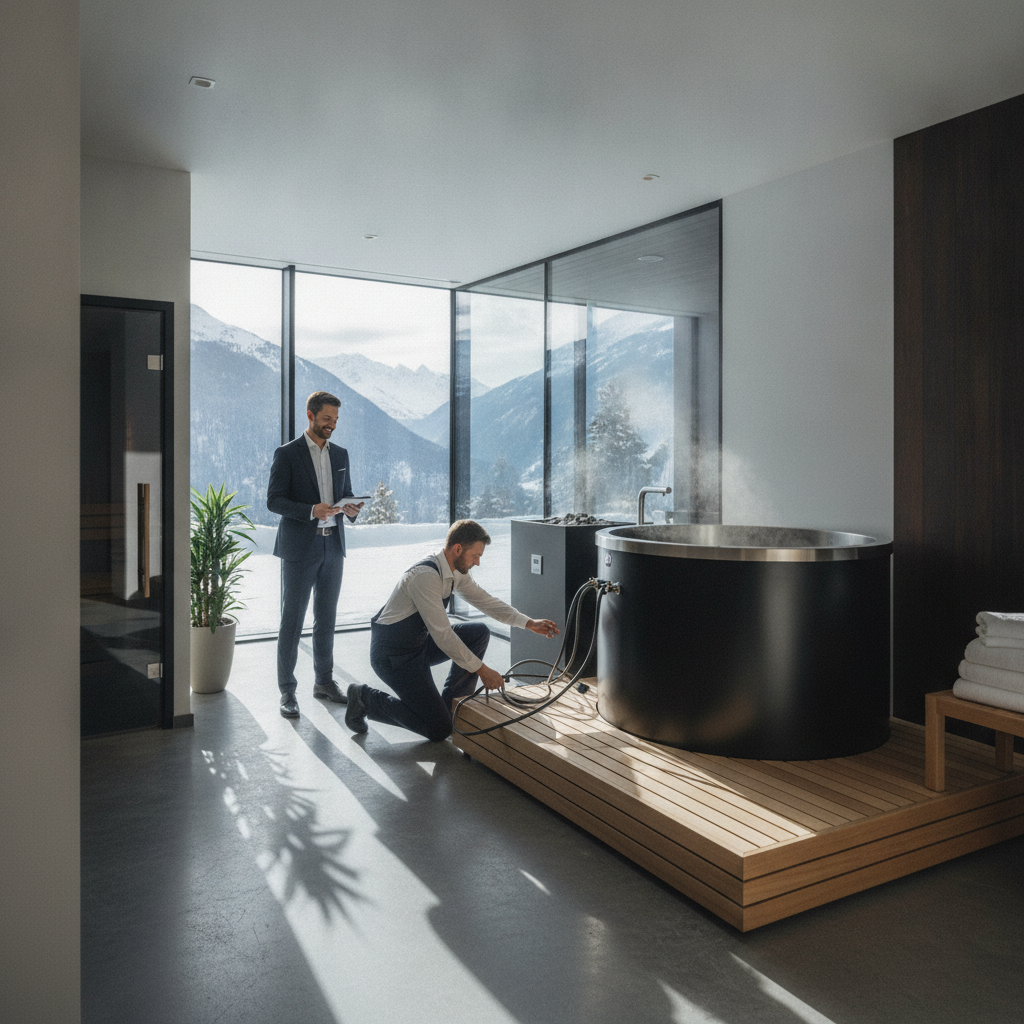
Installing cold plunge in hotel spa facilities has shifted from a novelty request into a serious facilities and operations project. Unlike a single in-room tub or a portable unit tucked into a corner, a spa-based cold plunge must be engineered into the building's plumbing, drainage, ventilation, and guest-flow systems — and it must satisfy health codes that govern shared water. This guide focuses specifically on the physical and operational mechanics of installing cold plunge in hotel spa environments: the engineering blueprint, compliance checkpoints, layout decisions, staffing model, and vendor selection process that determine whether the finished installation feels seamless or becomes a maintenance headache.
TL;DR — The Bottom Line
Installing cold plunge in hotel spa facilities requires coordinated planning across structural engineering, plumbing and drainage, electrical capacity, water filtration/health-code compliance, and guest-flow design — not just purchasing a tub. A phased approach (pilot in an existing wet area, then permanent build) reduces risk, while working with a hospitality-specific vendor who understands commercial water treatment, ADA access, and spa circuit design shortens timelines and prevents costly rework. Budget for both capital cost and ongoing operational requirements: filtration maintenance, water testing, and trained attendant staffing.
Quick Facts
- Global wellness economy (2024): approximately $6.8 trillion, projected to reach $9.8 trillion by 2029 (Global Wellness Institute)
- Wellness real estate (2025): $876 billion, projected to exceed $1.8 trillion by 2030 (Global Wellness Institute)
- Typical permanent build timeline: around six weeks of construction versus roughly three minutes to deploy a portable unit
- Capital cost range: approximately $2,999 for a portable system up to $18,500–$35,000+ for a built-in commercial installation
- Usage pattern reported by HotelPlunge: spa-located plunges average 0.8 sessions per stay versus 4.3 sessions for in-room placement, underscoring why spa layout and accessibility matter
What Does Installing Cold Plunge in Hotel Spa Space Actually Involve?
At its simplest, installing cold plunge in hotel spa facilities means integrating a chilled-water vessel into an existing wet area — typically alongside a sauna, steam room, or relaxation lounge — so it functions as part of a shared thermal circuit rather than an isolated feature. This is fundamentally different from placing a unit in a guest suite. A spa installation must accommodate continuous multi-guest use, commercial water treatment, ADA-compliant access, and staff oversight, all while fitting into the existing architectural envelope of the building.
Three factors distinguish a spa-facility installation from other approaches: shared-use water chemistry (requiring filtration and sanitation systems rated for commercial, not residential, use), structural load considerations for a fixed, water-filled vessel, and integration with the spa's existing mechanical systems — drainage, dehumidification, and electrical circuits that were likely designed before cold therapy was part of the program. Getting these right is what separates a seamless installation from a retrofit that fights the building.
Yes, in most cases. A spa installation typically involves commercial water filtration, higher guest throughput, ADA accessibility requirements, and health-department oversight because the water is shared among many guests rather than cleaned between individual stays.
The Facilities and Engineering Blueprint
A seamless spa installation begins long before the vessel arrives on-site. The project team — ideally including an architect, mechanical engineer, electrical engineer, pool/aquatic consultant, and the local authority having jurisdiction — should complete a site assessment covering:
- Floor loading: A water-filled plunge, especially a permanent stone or tiled build, can weigh several thousand pounds when full. Confirming structural capacity, particularly on upper floors, prevents costly reinforcement work later.
- Drainage and waterproofing: Spa-level installations need floor drains, sloped substrates, and waterproof membranes rated for continuous wet-area exposure, not just splash resistance.
- Electrical capacity: Chillers, filtration pumps, and UV or ozone sanitation systems draw continuous power. An electrical load study should confirm the circuit can handle 24/7 operation without tripping shared panels.
- Ventilation and dehumidification: Cold plunge areas paired with sauna or steam create significant humidity swings; HVAC systems often need supplemental dehumidification to protect finishes and air quality.
- Delivery and service access: Confirm doorway widths, elevator capacity, and corridor clearances for both initial installation and future equipment replacement.
Every one of these items should be resolved on paper before construction begins. Property teams that skip this step frequently discover mid-project that a load-bearing wall, an undersized drain, or an insufficient electrical panel forces a redesign — adding weeks and unplanned cost to what should be a straightforward build.
Choosing the Right Installation Model for Your Spa Layout
Not every property needs — or can support — a fully custom, permanently plumbed build on day one. When installing cold plunge in hotel spa facilities, owners generally choose among four models, each suited to different budgets and spa configurations.
| Model | Best fit | Advantages | Main limitations |
|---|---|---|---|
| Portable or semi-portable plunge | Pilot programs, fitness areas, smaller spas | Lower capital cost, fast deployment, repositionable | Lower design integration and capacity than a permanent build |
| Permanently installed indoor plunge | Full-service spas, thermal suites | Stronger architectural integration, better guest flow | Requires structural, plumbing, and permitting coordination |
| Outdoor plunge | Resorts, pool decks, wellness gardens | High visual appeal, nature connection | Weather exposure, freeze protection, seasonal maintenance |
| In-room or private-suite plunge | Luxury suites, villas | Maximum privacy, premium pricing potential | Not applicable to shared spa-facility planning covered here |
For most general managers, the pragmatic path is a controlled pilot: install a commercial-grade portable or semi-portable unit within an existing wet area, measure utilization and guest feedback over 60–90 days, and only then commit capital to a permanent, architecturally integrated build. This phased approach to installing cold plunge in hotel spa facilities significantly reduces the risk of over-building a feature guests may use differently than projected.
Industry reporting suggests roughly six weeks of construction for a permanent, plumbed installation, compared to about three minutes to deploy a portable unit — a gap that makes pilot testing an attractive first step for many properties.
Water Safety, Filtration, and Compliance Requirements
Because a spa-based plunge serves many guests in the same water, health-department compliance is non-negotiable. Requirements vary by jurisdiction, but most authorities having jurisdiction over pools and spas will expect:
- Continuous filtration and sanitation — typically chlorine, bromine, UV, or ozone systems rated for the plunge's volume and turnover rate.
- Water testing logs — documented pH, sanitizer level, and temperature checks on a defined schedule, often multiple times daily during operating hours.
- Signage and depth markings — clear posting of water temperature, maximum recommended immersion time, and health warnings for guests with cardiovascular conditions.
- ADA-compliant access — step design, handrails, or lift access depending on vessel depth and configuration.
- Emergency protocols — trained staff response plans for cold shock or slip incidents, consistent with the facility's broader spa safety program.
Because these requirements differ by state and municipality, the engineering and compliance review should happen in parallel with, not after, equipment selection. A vendor experienced in installing cold plunge in hotel spa environments — as opposed to residential settings — should be able to supply documentation showing their filtration and sanitation systems meet local commercial pool and spa codes.
Designing Guest Flow and Thermal Contrast Circuits
One advantage of installing cold plunge in hotel spa facilities rather than guest rooms is the ability to design a full thermal contrast circuit — the sauna-to-plunge-to-rest sequence that anchors many European and Nordic spa traditions and is now a defining feature of premium American wellness programs. Placement matters: the plunge should sit within a short, clearly marked path from the heat source, with a slip-resistant transition zone and a nearby relaxation area for guests to recover.
Spatial planning should also consider acoustic separation from treatment rooms and quiet lounges, since cold plunge areas tend to generate more guest activity and conversation than a typical relaxation space. Sightlines matter too — many brands prefer a plunge that is visible enough to signal the amenity's presence without compromising guest privacy, a balance best resolved during design development rather than after construction is complete.
"A cold plunge that isn't integrated into the spa's circulation and thermal circuit is just an isolated tub — the guest experience, and the revenue potential, comes from the sequence, not the vessel alone," is a principle increasingly echoed by hospitality wellness consultants shaping 2026 spa programs.
Staffing, Protocols, and Daily Operations
Even a beautifully engineered installation underperforms without an operating protocol. When installing cold plunge in hotel spa facilities, plan for:
- Attendant coverage during peak spa hours to monitor immersion times and assist guests unfamiliar with cold therapy.
- Pre-use guest screening, typically a signed waiver or verbal check for cardiovascular conditions, pregnancy, or recent illness.
- Daily and weekly maintenance logs covering water chemistry, filtration performance, and equipment inspection.
- Staff training on cold shock response, safe entry/exit technique, and communicating recommended immersion durations (commonly two to four minutes).
- Scheduled deep cleaning aligned with the spa's broader housekeeping calendar to avoid closing the amenity during high-occupancy periods.
Properties that treat staffing as an afterthought often see utilization stall even after a well-engineered build, because guests hesitate to use unfamiliar equipment without guidance. A brief attendant orientation script — explaining benefits, safe duration, and post-plunge recovery — meaningfully increases repeat use.
Selecting a Vendor and Managing the Installation Timeline
Vendor selection is where many installing cold plunge in hotel spa projects succeed or stall. The market includes consumer cold-plunge brands, premium commercial manufacturers, and custom architectural hydrotherapy contractors — each suited to different project types. A hospitality-specific partner should bring more than a product catalog; they should manage engineering coordination, compliance documentation, and lifecycle service.
A Practical Vendor Evaluation Checklist
- Confirm commercial-grade certification — ask for documentation that filtration and sanitation systems meet your state's pool/spa code, not just residential standards.
- Request hospitality references — prior installations in hotel or resort spas, not only residential or boutique studio settings.
- Clarify project management scope — does the vendor coordinate with your architect and MEP engineer, or only supply equipment?
- Review service and warranty terms — commercial units run far more hours than residential equipment; confirm parts availability and response times.
- Compare capital cost against operating cost — a lower upfront price with expensive filtration consumables can erode savings within a year or two.
HotelPlunge works with hotel ownership groups and spa directors specifically on the hospitality layer of this process — from initial facilities assessment through commissioning — recognizing that hotel wellness equipment decisions carry different technical and compliance requirements than a residential purchase. Property teams evaluating installing cold plunge in hotel spa facilities are encouraged to request a facilities walkthrough before finalizing equipment specifications, since layout constraints often narrow the realistic options faster than budget does.
Common Pitfalls When Installing Cold Plunge in Hotel Spa Facilities
Even well-funded projects run into avoidable problems. The most frequent issues include:
- Underestimating drainage needs, leading to standing water and slip hazards around the vessel.
- Choosing residential-grade filtration for a commercial-volume, high-turnover environment, causing water quality issues within weeks.
- Ignoring acoustic and visual separation from treatment rooms, disrupting the spa's premium quiet-zone experience.
- Skipping the pilot phase and building a permanent installation before confirming guest demand and preferred placement.
- Insufficient staff training, resulting in low utilization despite a technically sound build.
Each of these is preventable with early engineering review, a phased rollout, and a vendor who understands hospitality-specific requirements rather than residential installations alone.
Frequently Asked Questions
What is the difference between installing cold plunge in hotel spa facilities versus guest rooms?
A spa installation serves multiple guests using shared, continuously filtered water, requiring commercial-grade sanitation and health-department compliance. An in-room unit typically serves one guest party per stay and follows different plumbing, drainage, and cleaning protocols.
How much does installing cold plunge in hotel spa facilities typically cost?
Costs range widely depending on the model chosen: portable commercial units can start near $2,999, while permanent, architecturally integrated builds often run from roughly $18,500 to $35,000 or more, depending on finishes, filtration systems, and structural work required.
Do hotel spas need special permits for cold plunge installations?
In most jurisdictions, yes. Because the plunge is treated as a shared pool or spa vessel, it typically falls under local health-department and building-code requirements covering water treatment, signage, drainage, and accessibility, similar to a hot tub or whirlpool.
How long does it take to install a cold plunge in a hotel spa?
A portable unit can be operational within hours of delivery, while a permanent, plumbed installation commonly takes around six weeks of construction, depending on structural modifications, permitting timelines, and finish work.
Can an existing hotel spa be retrofitted for a cold plunge without major renovation?
Many spas can accommodate a semi-portable or freestanding commercial unit within an existing wet area with modest plumbing and electrical modifications, making a full renovation unnecessary for an initial pilot phase.
Conclusion: Building a Seamless Cold Plunge Experience
Installing cold plunge in hotel spa facilities is ultimately a facilities and operations project as much as a wellness one. The properties that get it right treat the plunge as an integrated part of the spa's architecture, mechanical systems, and guest journey — supported by commercial-grade filtration, trained staff, and a phased rollout that validates demand before committing to permanent construction. Get the engineering, compliance, and staffing foundations right, and the cold plunge becomes a durable, revenue-supporting amenity rather than a costly experiment.
If your property is evaluating installing cold plunge in hotel spa facilities, HotelPlunge can help assess your existing layout, compliance requirements, and equipment options before you commit capital. Visit HotelPlunge to start a facilities consultation tailored to your spa's structure, staffing model, and guest experience goals.