Cold Plunge Benefits for Hotels: A Wellness Strategy Guide
September 27, 2026 · 13 min read
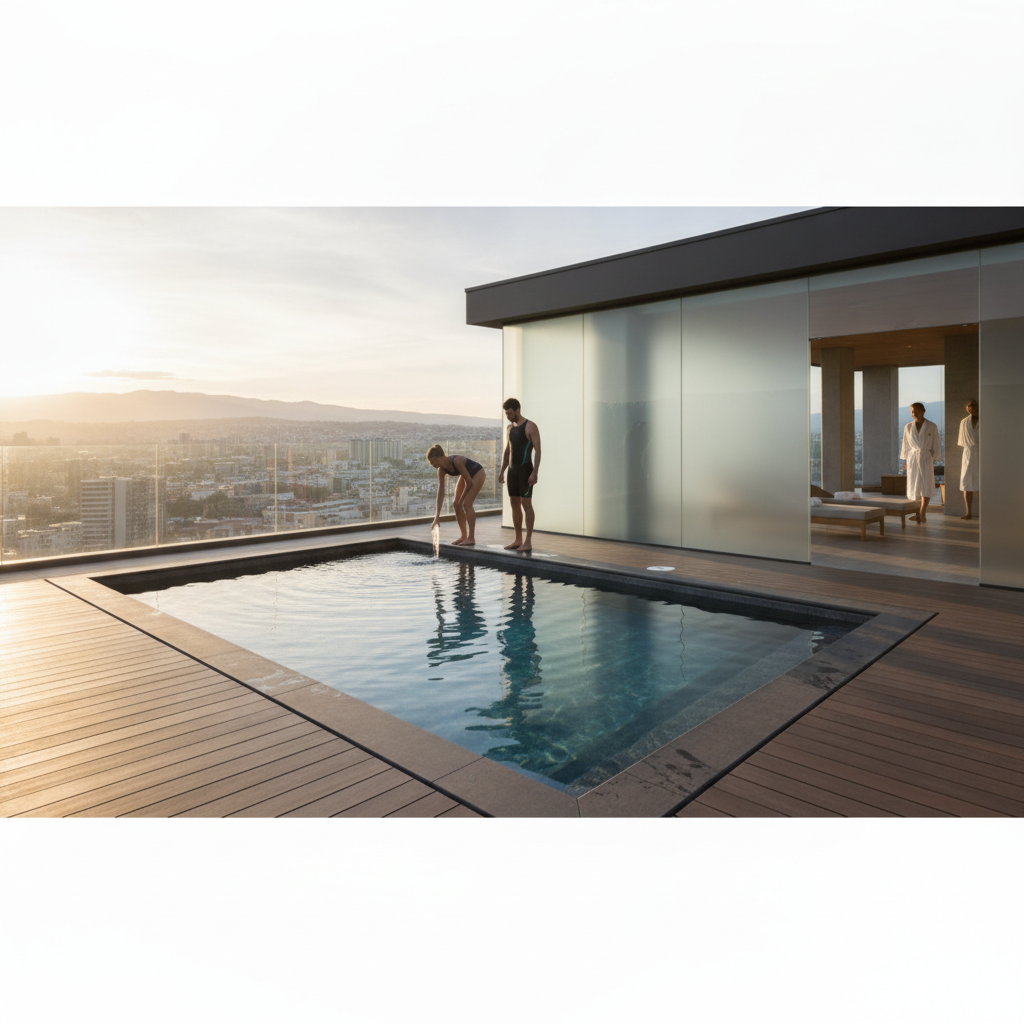
Cold plunge benefits for hotels have moved well beyond a fringe wellness trend into a legitimate strategic consideration for general managers, spa and wellness directors, and property owners evaluating their next amenity investment. As cold-water immersion transitions from elite athletic recovery rooms into mainstream hospitality programming, understanding the real, evidence-based cold plunge benefits for hotels — rather than hype-driven claims — is essential for making sound decisions about capital, staffing, and guest experience design.
This guide takes a step back from product specs and ROI spreadsheets to focus on the bigger strategic question: why do cold plunges matter to hospitality businesses at all, and how should decision-makers think about the category as it matures? We'll look at the research, the market data, the positioning opportunities, and the operational realities that determine whether a cold plunge program becomes a signature amenity or an underused liability.
TL;DR — The Bottom Line
Cold plunge benefits for hotels center on three pillars: differentiated guest experience, evidence-based (but modest) wellness outcomes like stress reduction and improved sleep quality, and ancillary revenue through packages, day passes, and cross-selling. The strongest programs frame cold plunge as part of a supervised thermal circuit alongside sauna and steam, not as an isolated extreme-wellness gimmick. The global cold-plunge-tub market is projected to grow from roughly $354.6 million in 2025 to $659.9 million by 2033, and hotels already represent over a third of the broader sauna and spa market — signaling that this is a durable category, not a fad.
Quick Facts
- Global cold-plunge-tub market (2025): approximately $354.6 million
- Projected market size (2033): approximately $659.9 million (8.1% CAGR)
- Hotel and resort share of sauna/spa market (2025): approximately 35.78%
- Stress reduction window in research: effects observed roughly 12 hours post-immersion
- Effective recovery protocol in studies: 10–15 minutes at 5–15°C for post-exercise soreness
- Commercial unit pricing range: roughly $5,000–$26,000 depending on capacity and features
Understanding Cold Plunge Benefits for Hotels: A Data-Driven Overview
Before investing in equipment or renovation, most operators want a clear-eyed answer to one question: does cold water immersion actually deliver enough value to justify the investment? The honest answer, based on current research and market data, is nuanced. Cold plunge benefits for hotels are real but should be framed conservatively — as recovery and relaxation enhancements, not as medical treatments.
A 2025 systematic review and meta-analysis covering 11 studies and 3,177 participants found that cold-water immersion may reduce stress approximately 12 hours after exposure and may improve sleep quality and quality of life. Evidence for improved mood and immune function remained inconclusive, and some studies even found short-term increases in inflammatory markers immediately after immersion (Source: 2025 systematic review and meta-analysis on cold-water immersion, published via PubMed/PMC). This matters enormously for how hotels should market the amenity: claims about stress relief and better sleep are reasonably well supported, while claims about immunity boosts or guaranteed mood transformation are not.
Separately, a 2025 dosing review focused specifically on post-exercise recovery found that protocols of roughly 10–15 minutes at 5–15°C produced significant reductions in delayed-onset muscle soreness (Source: 2025 review of cold-water immersion dosing in exercise recovery). This gives resorts, golf properties, ski destinations, and sports-oriented hotels a much stronger evidence base for marketing cold plunges specifically as a recovery amenity for active guests, compared to general wellness claims aimed at leisure travelers.
Taken together, the research supports a simple operating principle: the strongest cold plunge benefits for hotels are those tied to short-term recovery, relaxation, and sleep — not sweeping preventive-health promises.
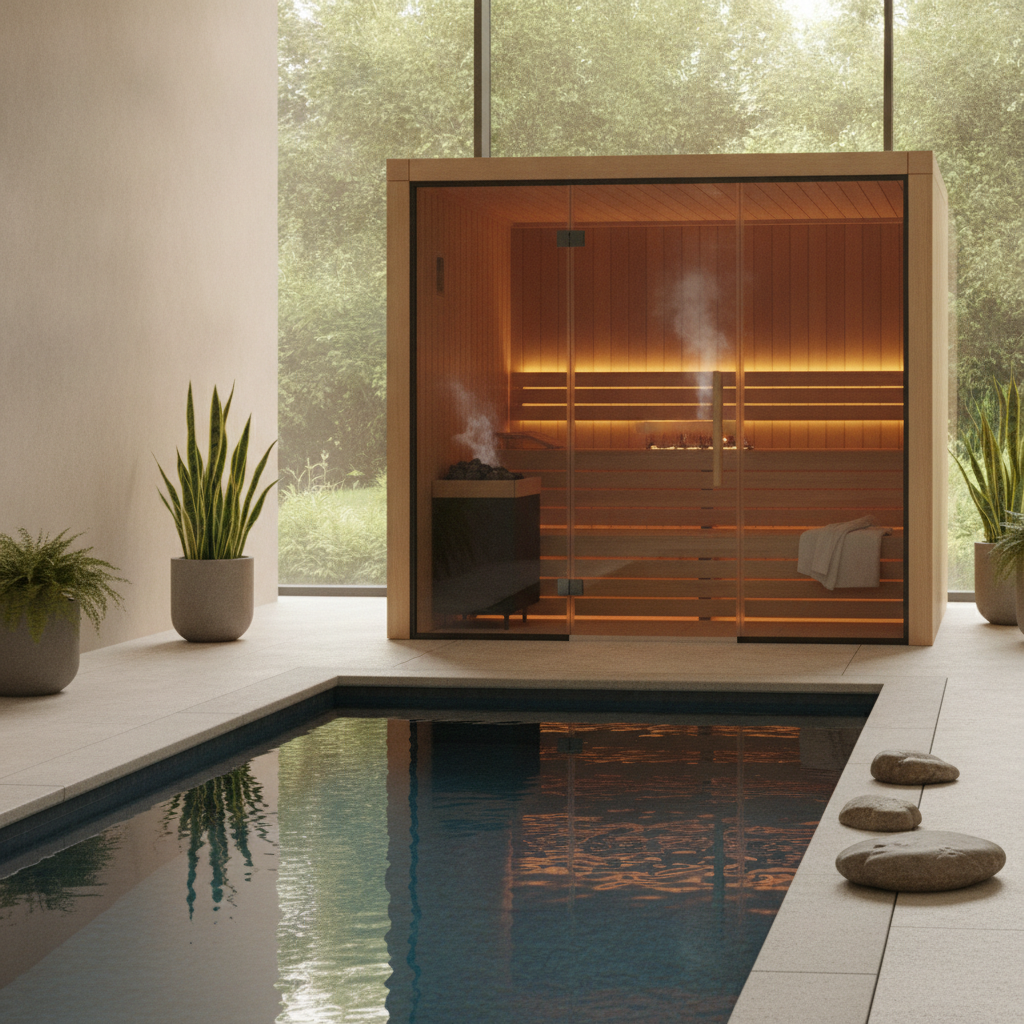
What the Research Says About Cold Water Immersion
Hotel decision-makers are often pitched cold plunges using bold, unqualified wellness language. It's worth separating what is well-supported from what is still speculative, because overpromising creates guest expectations that the amenity cannot meet — and that undermines the very cold plunge benefits for hotels that a well-run program can deliver.
- Well-supported: Short-term reduction in perceived stress, subjective relaxation, and improved sleep quality following cold-water immersion.
- Reasonably supported for active guests: Reduced delayed-onset muscle soreness after exercise, when using protocols around 10–15 minutes at 5–15°C.
- Inconclusive: Long-term immune system enhancement, sustained mood improvement, and metabolic or weight-related claims.
- Contradicted or mixed: Some studies report short-term increases in inflammatory markers immediately post-immersion, meaning cold plunges are not a universal anti-inflammatory intervention.
There is legitimate peer-reviewed evidence for short-term stress reduction, improved sleep quality, and reduced post-exercise muscle soreness. However, broader claims about immunity, disease prevention, or guaranteed mood improvement remain inconclusive, so hotels should market cold plunges as a recovery and relaxation experience rather than a medical treatment.
This distinction matters operationally too. Hotels that position cold plunge as one part of a broader thermal journey — sauna or steam, followed by cool immersion, followed by rest — tend to see stronger guest satisfaction than properties that install an isolated tub with no supporting ritual. The Global Wellness Institute has also flagged a broader industry shift: instead of extreme ice-bath intensity, 2025 hydrothermal trends emphasize water conservation, regulatory compliance, thoughtful design, and gentler cooling rituals that are more accessible to a wider range of guests (Source: Global Wellness Institute, 2025 hydrothermal wellness trends report). That shift toward accessibility, rather than extremity, is arguably the most important development shaping cold plunge benefits for hotels going into 2026 and beyond.
Cold Plunge Benefits for Hotels: Differentiation and Brand Positioning
Perhaps the most underappreciated of all cold plunge benefits for hotels is differentiation. In a market saturated with conventional pools, standard hot tubs, and generic treatment menus, a well-designed cold immersion experience gives a property something distinctive to talk about — in marketing materials, on social media, and in guest reviews.
The strongest positioning strategies tend to fall into a few recognizable categories:
- Thermal circuit experiences: Sauna or steam followed by cold immersion and a relaxation lounge, marketed as a complete ritual rather than a single amenity.
- Athletic recovery branding: Particularly effective for resorts, golf properties, ski destinations, and fitness-forward hotels catering to active travelers.
- Performance and biohacking appeal: Attractive to younger, affluent, wellness-literate travelers — but claims here should stay firmly evidence-based.
- Destination wellness ritual: A bookable, guided experience rather than a piece of equipment sitting in a corner of the gym.
Properties can also tie cold plunge positioning to their existing identity. A mountain resort might frame it as alpine recovery; a coastal property might connect it to ocean-inspired renewal; an urban boutique hotel might offer a compact, appointment-based contrast-therapy suite for time-pressed business travelers. In every case, the underlying cold plunge benefits for hotels — differentiation, memorability, and a stronger wellness story — remain consistent even as the narrative changes by property type.
Ancillary Revenue Opportunities Tied to Cold Plunge Programs
Beyond guest satisfaction, one of the most tangible cold plunge benefits for hotels is the range of revenue models it unlocks. Unlike a static pool, a cold plunge naturally supports tiered access, guided programming, and cross-selling.
| Revenue Model | Best Fit | Notes |
|---|---|---|
| Included access for premium/club rooms | Full-service and luxury hotels | Reinforces upsell to higher room categories |
| Paid day passes for local residents | Urban and resort properties | Generates incremental non-room revenue |
| Guided contrast-therapy sessions | Spa-forward properties | Justifies premium pricing and staff time |
| Recovery packages for athletes/corporate groups | Sports hotels, golf resorts, ski destinations | Aligns with strongest evidence base (muscle recovery) |
| Private thermal suite bookings | Boutique and luxury hotels | Supports exclusivity and higher per-session pricing |
| Retail cross-sell (robes, recovery products) | All property types | Low-effort incremental margin |
These models are not mutually exclusive. Many properties combine included access for suite guests with paid day passes for non-guests and periodic guided sessions for corporate or athletic groups — stacking several of the cold plunge benefits for hotels into a single, well-utilized facility.
Matching Cold Plunge Programs to Property Type
Not every hotel should approach cold plunge programming the same way. The strongest results come from aligning the experience with the existing guest profile and property identity.
Resorts, Golf, and Ski Properties
These properties have the clearest evidence-based case: guests are physically active, and the research on reduced muscle soreness after 10–15 minute cold exposures at 5–15°C directly supports recovery-focused marketing.
Urban Business Hotels
Time-pressed travelers respond well to short, appointment-based sessions that fit a tight schedule — framing cold plunge as a stress-reduction and sleep-quality tool rather than an athletic recovery ritual.
Luxury and Boutique Properties
Exclusivity and design matter most here. Private thermal suites, guided rituals, and premium pricing reinforce brand positioning more than volume throughput.
Resorts, golf properties, ski destinations, and fitness-oriented hotels tend to see the clearest results because the strongest research evidence — reduced post-exercise muscle soreness — aligns directly with their guests' activity levels. Urban and luxury hotels still benefit, but their strongest angle is stress reduction, sleep quality, and premium experience positioning rather than athletic recovery.
How the Cold Plunge Market Is Evolving in Hospitality
Understanding where the category is headed helps operators avoid investing in a format that may quickly feel dated. Several converging trends are worth noting for anyone evaluating cold plunge benefits for hotels in 2026 planning cycles.
The global cold-plunge-tub market was estimated at approximately $354.6 million in 2025 and is projected to reach about $659.9 million by 2033, representing an estimated 8.1% compound annual growth rate from 2026 to 2033 (Source: 2025 global cold-plunge-tub market report). That is a meaningfully durable growth trajectory, not a short-lived fad curve. At the same time, hotel and resort facilities already account for an estimated 35.78% of the broader sauna and spa market, underscoring how central hospitality venues are to the thermal-wellness ecosystem overall (Source: 2025 sauna and spa market analysis).
The Global Wellness Institute's 2025 hydrothermal trend analysis also points to four important shifts: water conservation, regulatory reform, design innovation, and gentler cooling rituals. In practical terms, this means the market is moving away from harsh, ultra-extreme ice-bath experiences toward more comfortable, accessible, and operationally sustainable formats — a trend that should directly inform how new cold plunge benefits for hotels are designed and marketed going forward (Source: Global Wellness Institute, 2025 hydrothermal wellness trends).
On the competitive side, the market is splitting into two camps: equipment-led brands that sell hardware and technology, and experience-led operators that sell access, rituals, memberships, and recovery outcomes. Commercial-grade units currently range from roughly $5,000 to $26,000 depending on capacity, chiller performance, and durability. Properties evaluating vendors should think less about which tub has the flashiest features and more about which partner can help operationalize a safe, well-programmed guest experience.
Evaluating Fit: A Simple Framework
- Assess guest profile: Determine whether your primary guests are active/athletic, business travelers, or leisure/luxury guests, since this shapes messaging.
- Review space and flow: Identify whether the amenity works best as an open-access spa feature or an appointment-based private suite.
- Define the ritual: Decide whether cold plunge stands alone or is paired with sauna, steam, and rest areas as a full thermal circuit.
- Set evidence-based messaging: Base marketing language on supported outcomes — stress reduction, sleep quality, and recovery — rather than unproven health claims.
Properties that want a partner built specifically for hospitality, rather than a general consumer cold-plunge manufacturer, can explore HotelPlunge's approach to hotel-specific thermal wellness programming as a starting point for evaluating fit against these criteria.
Common Myths About Cold Plunge Benefits for Hotels
Misconceptions about cold plunges can lead hotels to either overinvest in the wrong format or dismiss the category entirely. Clarifying a few common myths helps set realistic expectations for what cold plunge benefits for hotels can and cannot deliver.
- Myth: Cold plunges require extreme temperatures to be effective. Reality: Research-backed recovery protocols typically use 5–15°C for 10–15 minutes, not near-freezing extremes, and gentler formats are increasingly favored by the industry.
- Myth: Guests will use the amenity constantly without guidance. Reality: Properties that pair cold plunge with sauna, steam, and supervised programming see stronger, more consistent utilization than those offering unstructured, standalone access.
- Myth: Cold plunge benefits for hotels are only relevant to sports and resort properties. Reality: Urban and luxury hotels can capture strong value by emphasizing stress reduction and sleep quality rather than athletic recovery.
"The strongest cold plunge benefits for hotels emerge when cold immersion is treated as a supervised, branded ritual rather than an isolated piece of recovery equipment."
Frequently Asked Questions
What are the main cold plunge benefits for hotels?
The primary cold plunge benefits for hotels are guest differentiation, evidence-supported outcomes like stress reduction and improved sleep quality, stronger perceived value of spa facilities, and multiple ancillary revenue models including day passes, guided sessions, and recovery packages.
Is cold plunge more effective when combined with sauna or steam?
Yes. Industry data and guest satisfaction patterns consistently show that a supervised thermal circuit — sauna or steam followed by cold immersion and rest — outperforms a standalone cold plunge installed without a supporting ritual.
Do cold plunges actually improve guest sleep and reduce stress?
A 2025 systematic review and meta-analysis of 11 studies and 3,177 participants found that cold-water immersion may reduce stress roughly 12 hours after exposure and may improve sleep quality and quality of life, though evidence for mood and immunity benefits remains inconclusive.
Which hotel types benefit most from cold plunge programming?
Resorts, golf properties, ski destinations, and fitness-oriented hotels see the strongest evidence-based case due to research on post-exercise recovery, while urban and luxury hotels benefit most by emphasizing stress reduction and sleep quality messaging.
How big is the cold plunge market for hospitality right now?
The global cold-plunge-tub market was estimated at approximately $354.6 million in 2025 and is projected to reach about $659.9 million by 2033, an 8.1% CAGR, with hotel and resort facilities representing an estimated 35.78% of the broader sauna and spa market.
Conclusion: Making Cold Plunge Benefits for Hotels Work for Your Property
Cold plunge benefits for hotels are strongest when they are treated as a strategic, evidence-based amenity rather than a trendy add-on. The research supports meaningful, if modest, outcomes: reduced stress, better sleep quality, and measurable reductions in post-exercise soreness when protocols are followed correctly. The market data supports long-term durability, not a fleeting fad, with steady growth projected through 2033 and hotels already central to the broader thermal-wellness industry. And the positioning opportunities — from alpine recovery to urban stress relief to luxury exclusivity — give almost every property type a credible way to capture value.
The properties that will benefit most are those that resist the temptation to install an isolated tub and instead build a genuine, well-programmed thermal experience around it — with clear guest guidance, realistic marketing claims, and a revenue model designed around their specific guest profile.
If your property is ready to explore what a hospitality-specific cold plunge program could look like, visit HotelPlunge to start the conversation about building an experience your guests will remember — and book again.