Financing Options for Hotel Wellness Amenities Explained
October 14, 2026 · 13 min read
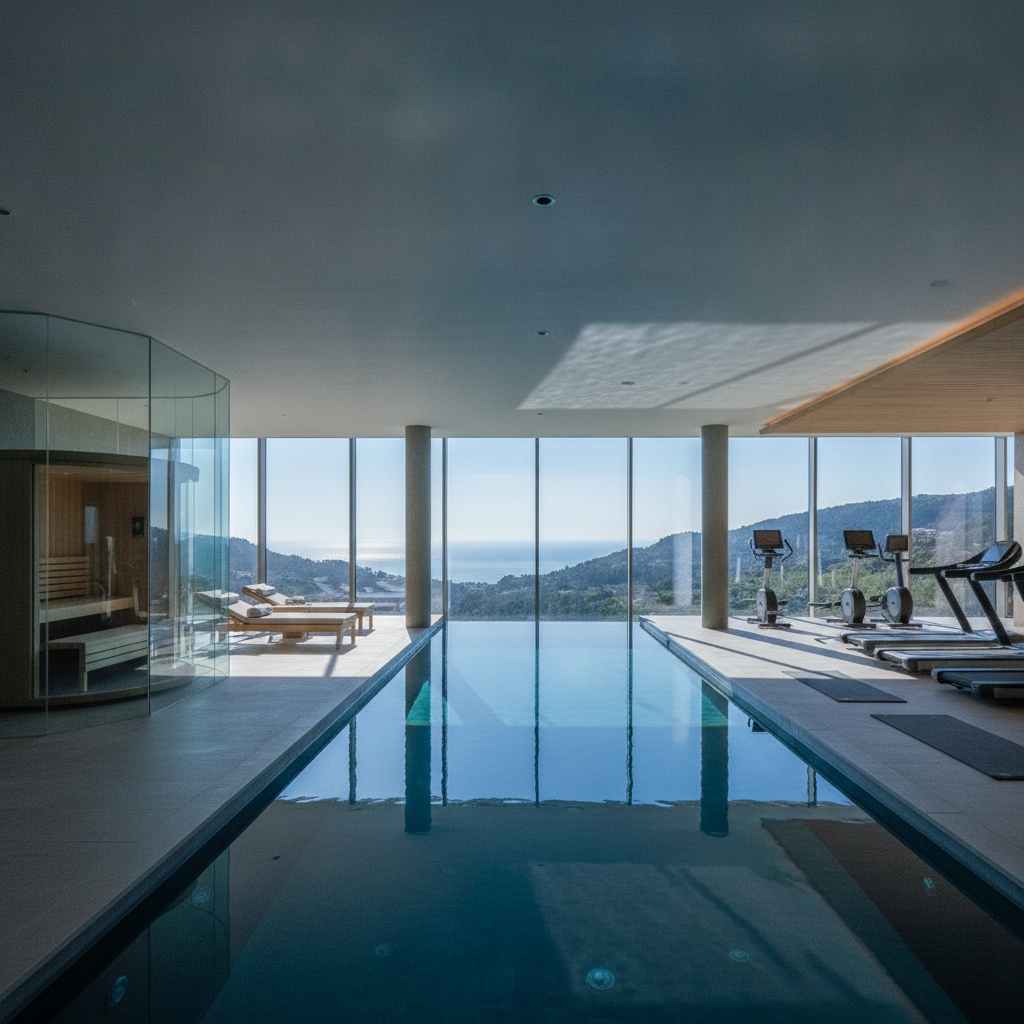
For hotel General Managers, Spa & Wellness Directors, and property owners, the hardest part of a wellness upgrade is rarely the design — it's the capital stack. Choosing among the many financing options for hotel wellness amenities can feel more complicated than the renovation itself, especially when cold plunges, saunas, and contrast-therapy suites are competing for budget against routine capital expenditures. This guide breaks down how equipment loans, SBA programs, FF&E facilities, bank debt, and vendor plans actually work for wellness projects, and how to match the right structure to your property's size, ownership model, and revenue goals.
TL;DR — The Bottom Line
Financing options for hotel wellness amenities generally fall into eight categories: equipment financing/leasing, FF&E or renovation loans, SBA 7(a) and SBA 504 loans, conventional bank term loans, business lines of credit, property refinancing, vendor/manufacturer financing, and PACE or green financing. The best fit depends on whether you're installing standalone equipment, renovating multiple rooms, or financing a property-wide wellness redevelopment. Equipment financing typically runs 5%–20%, SBA 7(a) loans 7%–11%, and conventional hotel loans 6.5%–10%, so matching term length to the useful life of the equipment — and treating the project as a revenue driver rather than a discretionary spa cost — is the key to getting approved on favorable terms.
Quick Facts
- Equipment financing rates (2026): approximately 5%–20%
- Conventional hotel loan rates: approximately 6.5%–10%
- SBA 7(a) hotel loan rates: approximately 7%–11%, up to ~$5 million
- Typical lender equity requirement: 25%–35% for conventional construction financing
- Wellness-forward hotel revenue advantage: $561 TRevPOR vs. $335 for minor-wellness properties, a 67.5% gap
Financing Options for Hotel Wellness Amenities: Why This Decision Matters Now
Wellness is no longer a side amenity bolted onto a spa menu — it's becoming a measurable revenue category. Industry data shows major wellness-forward hotels reporting roughly $561 in total revenue per available room (TRevPOR), compared with about $335 for properties with minor wellness programming, a difference of 67.5%.[4] That gap is exactly why lenders, vendors, and ownership groups are increasingly willing to underwrite wellness equipment as a growth investment rather than a cosmetic upgrade. Still, the financing options for hotel wellness amenities you choose will shape your monthly cash flow, your balance sheet, and how quickly you can expand the program to additional rooms or floors.
Because hotel lending is highly dependent on borrower quality, property cash flow, and leverage, there is no single "best" answer. A boutique independent property converting three suites into cold plunge rooms has very different financing needs than a 400-key resort building a dedicated recovery floor. The sections below walk through each major category of financing options for hotel wellness amenities so you can match the structure to your project size, ownership type, and timeline.
What Counts as a Hotel Wellness Amenity Investment?
Before comparing financing options for hotel wellness amenities, it helps to define what's actually being financed. Lenders and vendors typically separate these projects into three buckets: standalone equipment (a plunge system, sauna, or chiller unit), renovation-linked installations (plumbing, electrical, HVAC, and build-out work tied to the equipment), and property-wide wellness redevelopment (a dedicated floor, spa expansion, or hydrothermal circuit). The bucket your project falls into determines whether you should be shopping for equipment financing, a renovation loan, or property-level capital.
Yes. A standalone unit is usually financed as equipment, with terms tied to its useful life and resale value. A multi-room build-out with plumbing, electrical, and construction costs is more often financed as an FF&E or renovation facility, which requires a detailed scope, contractor bids, and a property-level repayment analysis.
This distinction matters because mixing the two — trying to finance construction costs through a short equipment loan, or vice versa — is one of the fastest ways to get a financing application declined or mispriced.
Equipment Financing and Leasing for Plunge, Sauna, and Recovery Systems
For most HotelPlunge customers installing in-suite or recovery-room equipment, equipment financing or leasing is the most direct path. Reported 2026 rate ranges for equipment financing run approximately 5%–20%, depending heavily on credit profile, the resale value of the equipment, and the strength of the vendor relationship.[1][2] Equipment financing is attractive because repayment terms are structured to match the useful life of the asset — a chiller or filtration system financed over five years, for example, rather than folded into a 20-year mortgage.
- Best for: cold plunge systems, saunas, chillers, filtration and controls, and recovery equipment packages
- Typical structure: fixed monthly payments, often with a smaller down payment than a conventional loan
- Key advantage: preserves operating cash while matching debt service to the equipment's productive life
- Watch for: total cost of financing once fees, installation charges, and service agreements are included
Vendors that offer financing directly — or that coordinate with third-party equipment lenders — can often move faster than a bank term loan, which matters when a GM wants a wellness suite open before a seasonal demand window.
SBA Loans, Bank Financing, and Conventional Hotel Debt
For independently owned and owner-operated properties, SBA programs are among the most commonly used financing options for hotel wellness amenities when the project is bundled with other improvements. SBA 7(a) loans can cover acquisition, renovation, equipment, and working capital, with reported maximum loan amounts up to approximately $5 million and rates in the range of 7%–11%.[1][2] SBA 504 loans may apply when the project involves substantial fixed assets or owner-occupied real estate improvements, though eligibility depends on the ownership and operating structure of the hotel.
Conventional bank term loans remain an option for established properties with stable cash flow, generally pricing between 6.5% and 10%. Banks will emphasize debt service coverage ratio (DSCR), existing leverage, operating history, and sponsor liquidity — meaning a hotel with thin margins or recent performance disruptions may find bank underwriting more conservative than SBA or equipment financing routes. Conventional hotel construction financing has also tightened, with rates reportedly around 6.25%–7.25% and lenders commonly requiring 25%–35% equity, a meaningfully stricter standard than during 2020–2022.[7]
FF&E Facilities, Renovation Loans, and Property-Level Capital
When a wellness project expands beyond standalone equipment into multiple rooms, changing areas, or supporting HVAC and plumbing work, an FF&E loan or renovation facility is usually the more appropriate financing option. These facilities combine equipment and related construction costs into a single structure, but they typically require a detailed scope of work, contractor bids, a line-item budget, and a property-level repayment analysis before approval.
For larger or multi-property owners, two additional routes come into play:
- Property refinance or cash-out refinance: appropriate for hotel-wide wellness redevelopment, since it adds mortgage-level debt against the asset — generally uneconomical for a single amenity installation but efficient for a comprehensive wellness floor or spa relaunch
- CMBS or property-level refinancing: relevant mainly for larger, stabilized hotels undertaking substantial capital programs rather than a single amenity project[1][9]
The table below summarizes how each financing route aligns with different project sizes.
| Financing Route | Best Use Case | Typical Rate Range | Main Consideration |
|---|---|---|---|
| Equipment financing/leasing | Plunge systems, saunas, chillers, controls | ~5%–20% | Pricing tied to credit and equipment resale value |
| SBA 7(a) | Independent, owner-operated hotels | ~7%–11% | Personal guarantees and documentation required |
| Conventional bank term loan | Stable, established properties | ~6.5%–10% | Emphasis on DSCR and operating history |
| FF&E / renovation facility | Multi-room build-outs, spa expansions | Varies by lender | Requires detailed scope and contractor bids |
| Vendor/manufacturer financing | Fast installation, standardized packages | Varies by vendor | Compare fees, warranties, and lien terms |
Vendor Financing, Lines of Credit, and Alternative Paths
Not every property needs — or qualifies for — a bank or SBA loan. Vendor or manufacturer financing has become a popular route among HotelPlunge customers because it simplifies procurement: the equipment provider arranges payment terms directly, often reducing upfront cash needs and speeding up installation. The trade-off is that hotels should compare total cost, embedded fees, warranty coverage, service obligations, and any lien terms carefully, since convenience can come at a premium compared with a bank facility.
Business lines of credit are useful for phased rollouts — for example, launching a single cold plunge suite before expanding to additional floors — or for covering seasonal cash needs, ongoing maintenance, and launch marketing. Lines of credit offer flexible draws and repayment, though they typically carry variable rates that can run higher than term debt over a multi-year horizon.
Vendor or manufacturer financing combined with equipment leasing is typically the fastest route, since it avoids the longer underwriting timelines associated with SBA loans or property-level refinancing, and can often be arranged directly through the equipment supplier.
PACE or green financing is a more specialized option worth exploring for energy-efficient chillers, heat pumps, or filtration systems, since repayment can sometimes align with the property's energy savings. Availability and eligibility vary significantly by jurisdiction, so this is best confirmed with a local program administrator before building it into a capital plan.
How to Choose the Right Financing Option for Your Property
With so many financing options for hotel wellness amenities available, the decision usually comes down to a short, repeatable process. Use the following steps to narrow the field before approaching any lender or vendor.
- Define the scope and bucket of the project. Determine whether you're financing standalone equipment, a renovation-linked installation, or a property-wide wellness redevelopment.
- Build a revenue and occupancy case. Lenders respond better to a documented ROI story — projected rate premiums, ancillary spa revenue, or occupancy lift — than to a request framed purely as a cosmetic upgrade.
- Match the loan term to the asset's useful life. Equipment financing over 3–7 years for hardware; longer amortization for renovation-heavy projects involving plumbing, electrical, or structural work.
- Compare at least three financing types side by side. Request quotes from a vendor financing program, an equipment lender, and either an SBA lender or your existing bank relationship.
- Review total cost, not just the headline rate. Factor in fees, installation costs, service agreements, and any prepayment penalties before committing.
- Confirm eligibility requirements early. SBA and conventional bank products often require specific documentation, personal guarantees, or ownership structures — confirm these before investing time in an application.
Working through these steps before contacting a lender dramatically shortens the time it takes to secure financing options for hotel wellness amenities that actually fit the property's cash flow and ownership structure.
Avoiding Common Financing Mistakes With Hotel Wellness Projects
Even experienced operators run into avoidable friction when financing wellness amenities. The most common mistakes include:
- Treating the project as discretionary spa spend instead of a revenue-generating asset, which weakens the case presented to any lender
- Mismatching loan term and equipment life — financing a five-year chiller over a 20-year mortgage term, or vice versa
- Skipping a documented ROI case, which is increasingly important given that wellness-forward hotels report significantly higher TRevPOR than minor-wellness properties[4]
- Underestimating total project cost by financing only the equipment and forgetting plumbing, electrical, permitting, or service costs
- Not comparing vendor financing against bank or SBA alternatives, which can mean paying a convenience premium unnecessarily
Properties working with a hotel-specific wellness partner, such as HotelPlunge, often avoid these pitfalls because the scope, equipment specification, and installation requirements are defined clearly from the outset — which makes it far easier to present a clean, bankable request to any lender.
Frequently Asked Questions About Financing Options for Hotel Wellness Amenities
What are the main financing options for hotel wellness amenities?
The main categories are equipment financing or leasing, FF&E or renovation loans, SBA 7(a) and SBA 504 loans, conventional bank term loans, business lines of credit, property refinancing, vendor or manufacturer financing, and PACE or green financing. The right choice depends on project size, ownership structure, and whether the amenity is standalone equipment or part of a larger renovation.
Can I use an SBA loan to finance a cold plunge or sauna installation?
Yes. SBA 7(a) loans can cover equipment, renovation, and working capital for independently owned and owner-operated hotels, with reported loan amounts up to approximately $5 million and rates around 7%–11%.[1][2] SBA 504 loans may also apply for projects involving substantial fixed assets.
Is it better to lease or buy hotel wellness equipment?
Leasing or equipment financing is often preferred because it matches monthly payments to the useful life of the asset and preserves operating cash. Buying outright may make sense for properties with strong liquidity, but most hotels find financing more capital-efficient, especially when phasing a wellness rollout across multiple rooms.
How much equity do lenders typically require for a hotel wellness renovation?
For conventional hotel construction financing, lenders commonly require 25%–35% equity, with rates currently pricing around 6.25%–7.25%.[7] Equipment-only financing and vendor programs generally require less upfront equity than full renovation facilities.
Do wellness amenities actually generate enough revenue to justify financing?
Industry data suggests they can. Major wellness-forward hotels reported approximately $561 TRevPOR compared with $335 for properties with minor wellness programming — a 67.5% difference — supporting the case for financing wellness amenities as a revenue investment rather than a discretionary expense.[4]
Final Thoughts on Financing Options for Hotel Wellness Amenities
There is no single correct answer to which financing options for hotel wellness amenities are "best" — the right structure depends on whether you're installing a single cold plunge suite, renovating a full spa floor, or redeveloping an entire property around recovery and wellness. What matters most is approaching the decision with a clear scope, a documented revenue case, and loan terms matched to the useful life of the equipment. Properties that treat wellness amenities as measurable, revenue-generating assets — rather than discretionary spa expenses — are consistently finding it easier to secure favorable financing, whether through equipment leasing, SBA programs, conventional bank debt, or vendor-supported payment plans.
If you're evaluating financing options for hotel wellness amenities and want equipment, installation, and financing guidance built specifically for hotels, HotelPlunge works directly with General Managers, Spa & Wellness Directors, and property owners to scope projects that are easier to finance and faster to bring online. Explore HotelPlunge's hotel wellness equipment options to start building a financeable, revenue-focused wellness program for your property.