Measuring Guest Satisfaction with Hotel Cold Plunge Stays
October 13, 2026 · 13 min read
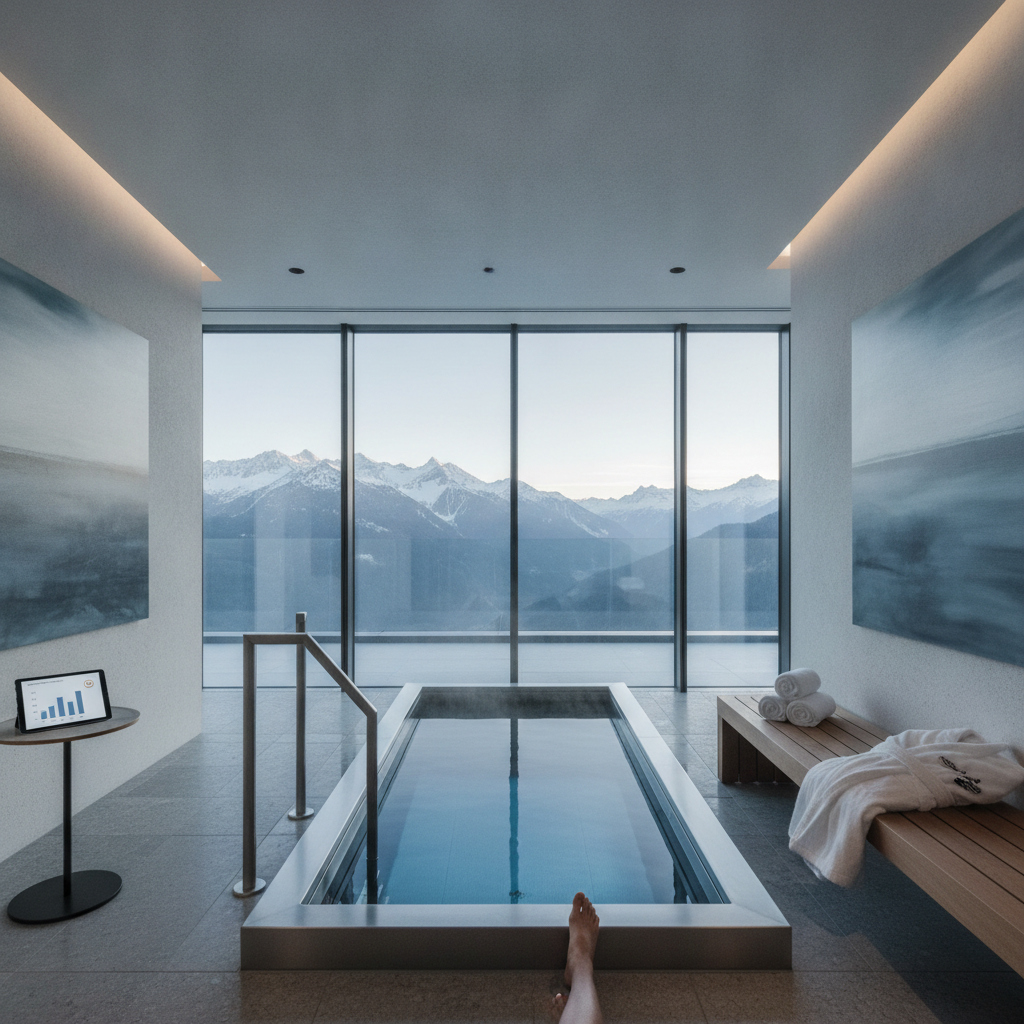
As cold therapy moves from spa basements into private guest suites, hoteliers are discovering a gap: there is no established playbook for guest satisfaction with hotel cold plunge amenities. Enthusiastic anecdotes and five-star reviews are encouraging, but they are not a measurement system. For general managers, spa directors, and owners investing in in-suite cold plunge units, building a disciplined way to track satisfaction is now as important as choosing the equipment itself.
TL;DR — The Bottom Line
Guest satisfaction with hotel cold plunge amenities should be measured as an operational discipline, not an afterthought, using a six-dimension framework that covers experience quality, usability, physical tolerance, trust and safety, reliability, and commercial value. Hotels that combine short post-use surveys, checkout questions, usage data, and maintenance logs get a far more accurate picture than those relying on online reviews alone, and this data directly supports pricing, retention, and expansion decisions. Properties working with HotelPlunge can build this measurement system in alongside installation rather than retrofitting it later.
Quick Facts
- Measurement dimensions: 6 (experience, usability, tolerance, trust/safety, reliability, commercial value)
- Recommended survey touchpoints: 3 (immediate post-use, checkout, 7–14 days post-stay)
- Core scorecard questions: 10 standardized items, including NPS
- Commercial-grade cold plunge system cost range: roughly $5,000–$26,000 depending on tier1
- Service and maintenance plan range: roughly $279–$999 every four weeks2
What Is Guest Satisfaction with Hotel Cold Plunge Amenities, Really?
When owners ask about guest satisfaction with hotel cold plunge amenities, they often mean one thing: did guests like it? That question is too narrow. Satisfaction in a hospitality wellness context is multidimensional — it includes whether the experience matched marketing promises, whether the unit was easy to operate without staff help, whether the water temperature and timing felt appropriate, and whether the guest trusted the cleanliness and safety of the equipment. A guest can rate the plunge itself highly while still feeling dissatisfied because instructions were confusing or the unit was out of service during their stay.
This is why treating guest satisfaction with hotel cold plunge experiences as a single star rating misses most of the useful signal. A property needs to know which part of the experience is driving the score, because the fix for a confusing control panel is completely different from the fix for an uncomfortable entry temperature.
Across early hospitality cold-therapy deployments, usability and clear instructions tend to matter as much as the water temperature itself. Guests who understand exactly how long to stay in, how to exit safely, and what to expect physically report higher satisfaction even at more moderate temperatures than guests who are given a sophisticated unit with no guidance.

Why Measuring Guest Satisfaction with Hotel Cold Plunge Amenities Matters Now
Cold plunging has shifted from a niche recovery practice into a mainstream luxury hospitality expectation, with resorts increasingly building hydrotherapy circuits that combine cold water, sauna, and heat.3 At the same time, the industry is moving wellness out of the basement spa and into the guest room itself, with private suites now featuring saunas, steam, soaking tubs, and cold plunge units.4 That shift raises the stakes: when a wellness amenity lives inside a $500-plus-per-night suite rather than a shared spa, guests expect it to work flawlessly, feel private, and justify the premium.
Without a formal way to measure guest satisfaction with hotel cold plunge amenities, properties are flying blind on a capital investment. A unit that sits unused, breaks down quietly, or generates confused one-star mentions in reviews can quietly erode the ROI case that justified installing it in the first place. Measurement is what turns an amenity bet into an amenity strategy.
The Six Dimensions of Guest Satisfaction with Hotel Cold Plunge Experiences
HotelPlunge recommends evaluating guest satisfaction with hotel cold plunge amenities across six distinct dimensions rather than a single aggregate score. Each dimension points to a different operational owner — engineering, housekeeping, spa staff, or revenue management.
| Dimension | What to measure | Example metrics |
|---|---|---|
| Experience quality | Comfort, perceived luxury, privacy | 1–5 satisfaction score; privacy rating |
| Usability | Ease of understanding and operating the unit | Setup time; help requests; unassisted completion rate |
| Physical tolerance | Appropriateness of temperature, duration, entry/exit | Comfort score; abandonment rate; repeat-use intention |
| Trust and safety | Confidence in sanitation, instructions, screening | Safety-confidence score; incident rate; sanitation complaints |
| Reliability | Equipment uptime and functionality | Out-of-service hours; maintenance events; room-move requests |
| Commercial value | Influence on booking, spend, and loyalty | Booking attribution; rate premium; review mentions; repeat bookings |
Properties that only track overall star ratings typically miss the reliability and trust dimensions entirely — yet these are often what separate a five-star amenity review from a complaint about a "broken hot tub."
Building a Guest Satisfaction Scorecard for In-Suite Cold Plunges
A standardized scorecard is the most reliable way to track guest satisfaction with hotel cold plunge amenities consistently across properties, seasons, and guest segments. HotelPlunge recommends a ten-item instrument delivered at three touchpoints: immediately after first use (via in-room tablet or QR code), at checkout, and optionally seven to fourteen days after departure to capture how the experience shaped overall memory of the stay.
- Overall satisfaction: "How satisfied were you with the in-suite cold plunge?"
- Expectation match: "How well did the experience match what was promised?"
- Ease of use: "How easy was it to understand and operate?"
- Temperature and duration: "Were the temperature options and suggested exposure times appropriate?"
- Privacy: "Did the in-suite format improve your experience?"
- Cleanliness and confidence: "How confident were you in the unit's cleanliness and water quality?"
- Safety clarity: "Were the instructions and contraindications clear?"
- Recovery or relaxation value: "Did the experience contribute to how you felt during your stay?"
- Repeat intent: "Would you use the plunge again at this property?"
- Advocacy: a Net Promoter Score or likelihood-to-recommend question.
This instrument is deliberately short — under two minutes to complete — because response rates for in-room wellness surveys drop sharply after the first ninety seconds. Properties measuring guest satisfaction with hotel cold plunge amenities for the first time should expect to iterate on wording after the first quarter of data.
Immediately after first use captures the freshest impression of comfort and usability, while a checkout survey captures overall value, and a 7–14 day follow-up reveals whether the experience became part of the guest's lasting memory of the stay — a strong predictor of repeat bookings and referrals.
Key Metrics and Benchmarks to Track Over Time
Survey scores alone are not enough. A complete view of guest satisfaction with hotel cold plunge amenities blends subjective feedback with objective operational data:
- Usage rate: percentage of eligible stays in which the guest actually uses the unit.
- Completion rate: percentage of users who complete the suggested session without early exit.
- Help-request rate: frequency of calls to the front desk or engineering about operation.
- Out-of-service hours: total downtime per unit per month.
- Incident rate: any reported discomfort, near-miss, or medical concern.
- Review mention rate: percentage of online reviews that reference the cold plunge, and their sentiment.
- Rebooking correlation: whether guests who used the plunge are more likely to return within 12 months.
Because there is not yet a widely published industry benchmark specifically for in-room units, HotelPlunge recommends that properties establish their own 90-day baseline before setting improvement targets. Comparing a single property against its own historical data is more reliable than chasing an external number that may not reflect in-suite deployments.
Common Causes of Low Guest Satisfaction with Hotel Cold Plunge Units
When properties investigate complaints or soft scores, a handful of root causes appear repeatedly:
- Unclear instructions: guests unsure how long to stay submerged or how to adjust temperature.
- Temperature mismatch: units set too extreme for a general leisure audience rather than offering moderate, guided options.5
- Maintenance lapses: cloudy water, odor, or a unit that is simply out of service during the stay.
- Safety ambiguity: no visible screening information for guests with cardiovascular conditions, pregnancy, or other contraindications.
- Mismatched marketing: the amenity description sets expectations the in-room experience does not deliver.
Notably, the industry is already trending away from "extreme cold as the only selling point" toward moderate temperatures, shorter guided exposure, and contrast cycles — a shift that tends to improve, not dilute, guest satisfaction with hotel cold plunge amenities because it makes the experience accessible to a wider range of guests, not just athletes and biohackers.5
Turning Satisfaction Data into Revenue and Loyalty
Measuring guest satisfaction with hotel cold plunge amenities is not an academic exercise — it is a direct input into commercial decisions. Properties that track the six dimensions consistently can answer questions that matter to ownership:
- Does the cold plunge suite command a measurable rate premium versus standard rooms?
- Do guests who use the plunge show higher repeat-booking rates within 12 months?
- Which guest segments (business travelers, wellness tourists, couples) report the highest satisfaction, and should marketing target them more directly?
- Is review sentiment around the amenity improving or declining quarter over quarter?
This data also informs expansion decisions. A property with strong guest satisfaction with hotel cold plunge amenities in a pilot suite has a far stronger internal business case for rolling the amenity out to additional rooms than one relying on manager intuition. Hotels working with a partner like HotelPlunge can build this feedback loop into the initial deployment, rather than trying to retrofit measurement after guests have already formed opinions.
Yes. Properties that track satisfaction alongside booking and rate data can identify whether the amenity supports a sustainable rate premium, whether it should be bundled into a wellness package, or whether it functions better as a differentiator than a direct upcharge.
How Often Should You Measure Guest Satisfaction with Hotel Cold Plunge Amenities?
Measurement cadence matters as much as the questions themselves. HotelPlunge recommends the following operating rhythm:
- Daily: log equipment status, temperature readings, and sanitation checks.
- Per-use: trigger a short satisfaction prompt immediately after guests complete a session.
- Per-stay: include one or two cold plunge questions in the standard checkout survey.
- Monthly: review aggregate scores, help-request volume, and downtime against the prior month.
- Quarterly: cross-reference satisfaction trends with review sentiment, rebooking rates, and maintenance costs.
- Annually: use the full year of guest satisfaction with hotel cold plunge data to inform renovation, expansion, or vendor decisions.
Properties that skip the monthly and quarterly review steps often end up reacting only to loud complaints rather than catching the slow erosion of satisfaction that precedes them.
Frequently Asked Questions
What does guest satisfaction with hotel cold plunge actually measure?
It measures how well an in-suite cold plunge experience meets guest expectations across six areas: experience quality, usability, physical tolerance, trust and safety, reliability, and commercial value — captured through structured surveys and operational data rather than general impressions.
What is a good survey response rate for in-room wellness amenities?
Because there is no universal public benchmark for in-suite cold plunge surveys yet, hotels should establish their own 90-day baseline. In practice, short, well-timed prompts delivered immediately after use tend to outperform generic post-stay emails sent days later.
How is guest satisfaction with hotel cold plunge different from a spa satisfaction survey?
Spa satisfaction surveys typically measure staff interaction and treatment quality in a shared facility. In-suite cold plunge measurement must additionally capture self-service usability, unit reliability, and privacy, since there is no attendant guiding the guest through the experience in real time.
Does cold plunge satisfaction actually affect hotel reviews and bookings?
Emerging hospitality wellness trends suggest private, in-room recovery amenities are increasingly influencing guest choice and perceived value, particularly among wellness-focused travelers, though hotel-specific public benchmarks are still developing.3,4 Tracking satisfaction internally lets a property connect the amenity directly to its own review sentiment and repeat-booking data.
What should a hotel do if cold plunge satisfaction scores are low?
Start by segmenting the score by dimension rather than treating it as one number. Low usability scores point to instructional signage or onboarding fixes; low reliability scores point to maintenance scheduling; low trust scores point to visible sanitation and safety communication. Each dimension has a different, specific fix.
Conclusion: Make Measurement Part of the Amenity
Guest satisfaction with hotel cold plunge amenities should never be assumed from enthusiasm alone. As private, in-suite wellness experiences become a standard feature in premium hospitality, the properties that win will be the ones that treat satisfaction measurement as seriously as they treat installation and design — tracking experience quality, usability, safety, reliability, and commercial value together, on a consistent cadence. That discipline is what separates a cold plunge that quietly becomes a liability from one that becomes a defensible, revenue-generating signature amenity.
HotelPlunge works with hotel operators to build in-suite cold plunge programs that include the measurement framework from day one — not bolted on after the first disappointed guest. If your property is evaluating or already operating in-suite cold plunge units, visit HotelPlunge to discuss how a structured satisfaction program can protect your investment and strengthen your guest experience strategy.
Sources: 1. Industry pricing analysis of commercial cold plunge manufacturers (Plunge, Morozko, ROCEAN, Ice Barrel), 2024–2025 market review. 2. Commercial cold-therapy service and maintenance provider rate comparison, 2025. 3. Global Wellness Institute, "Global Wellness Economy Monitor," globalwellnessinstitute.org. 4. Cornell University SC Johnson College of Business, Center for Hospitality Research, wellness amenity research, hotelschool.cornell.edu. 5. Hospitality cold-therapy safety and operations guidance, industry trade publications, 2025.
Sources
- globalwellnessinstitute.org (globalwellnessinstitute.org)
- hotelschool.cornell.edu (hotelschool.cornell.edu)