Hotel Spa Design with Cold Plunge: A Modern Blueprint
October 12, 2026 · 9 min read
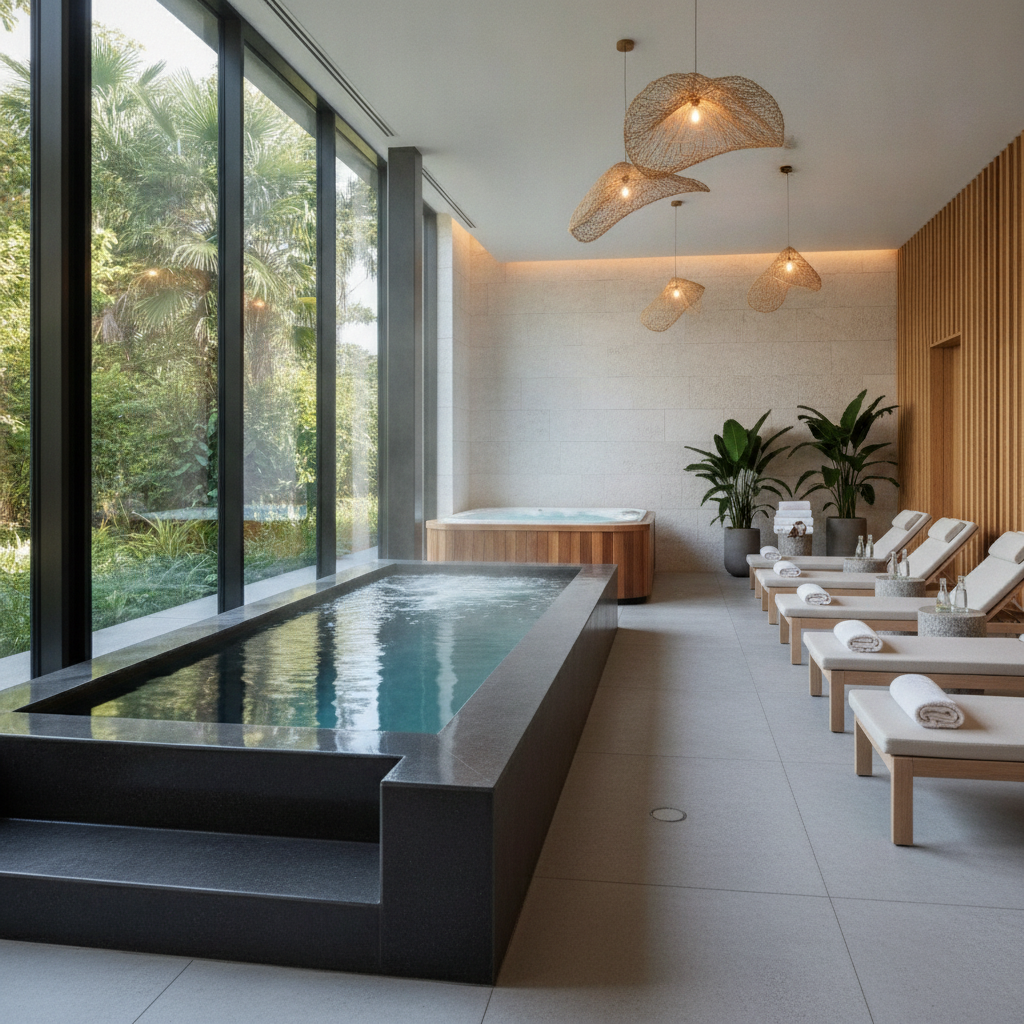
Hotel spa design with cold plunge is no longer a question of whether to install a cold tub — it is a question of how to engineer a complete hydrothermal experience that guests remember, spa directors can operate reliably, and owners can monetize year-round. As wellness moves from amenity to expectation, properties that treat the cold plunge as an isolated fixture are leaving revenue, differentiation, and guest satisfaction on the table. This guide focuses specifically on the architecture, equipment standards, and spatial planning decisions that separate a thoughtfully designed spa-level cold plunge circuit from a tub bolted into a corner of the locker room.
TL;DR — The Bottom Line
Effective hotel spa design with cold plunge treats cold exposure as one stage in a sequenced hot-cold-rest circuit, not a standalone feature. Success depends on commercial-grade chillers and filtration, deliberate spatial planning for flow and safety, ADA-conscious access, and clear separation from in-room wellness offerings. Properties that get this right report longer spa dwell times, stronger guest wellness scores, and a defensible premium amenity that supports both leisure and wellness-traveler segments.
What Is Hotel Spa Design with Cold Plunge?
Hotel spa design with cold plunge describes the integrated planning of architecture, mechanical systems, and guest flow around a cold-immersion feature within a hotel's wellness facility. Unlike a residential cold tub or an in-room installation, spa-level design has to account for continuous multi-guest use, staff oversight, water treatment compliance, and integration with adjacent heat-based experiences like saunas and steam rooms. The goal is not simply to install cold water — it is to create a sequence that feels intentional, safe, and premium from the moment a guest enters the thermal suite.
Done well, hotel spa design with cold plunge becomes a signature differentiator. Done poorly — a single undersized tub with no rest area, no signage, and no capacity planning — it becomes an underused liability that drags down utilization numbers and guest reviews.
Quick Facts
- Guest priority: 79% of guests say wellness is a priority when choosing travel and lodging, according to Accor's consumer research across six countries.
- Hydrothermal growth: 365 new thermal bathing projects opened globally between 2020 and 2025, with over 250 more in development, per EHL Hospitality Business School.
- Market trajectory: Global hydrotherapy-related revenue is estimated at $28.3 billion in 2025, with projections reaching $68.5 billion by 2035.
- Design shift: The Global Wellness Institute's 2026 hydrothermal outlook highlights growth in snow rooms, experience showers, 12–15°C cold rooms, and shorter guided contrast cycles over extreme ice-bath endurance formats.
Building the Hot-Cold-Rest Circuit: The Core of Modern Hotel Spa Design
The single most important principle in hotel spa design with cold plunge is sequencing. A cold plunge placed in isolation, without a preceding heat source or a following rest zone, asks guests to do all the thermal work themselves. A well-designed circuit does the work for them.
A typical sequence looks like this:
- Heat exposure — sauna, steam room, hammam, or warm soaking pool (10–15 minutes)
- Brief cold exposure — plunge, cold shower, or cold room (30 seconds to 3 minutes)
- Seated rest or thermal lounge (10–20 minutes)
- Repeat for 2–3 cycles
- Hydration station and final relaxation period
This structure matters commercially as much as experientially. Guests who move through a full circuit spend significantly more time in the spa than those who sample a single treatment, which increases opportunities for retail sales, treatment upsells, and food-and-beverage spend in adjacent lounge areas. It also mirrors what the Global Wellness Institute describes as a shift toward guided, moderate contrast cycles rather than extreme-temperature endurance experiences — a format that is more approachable for a broader range of hotel guests, including first-time users.
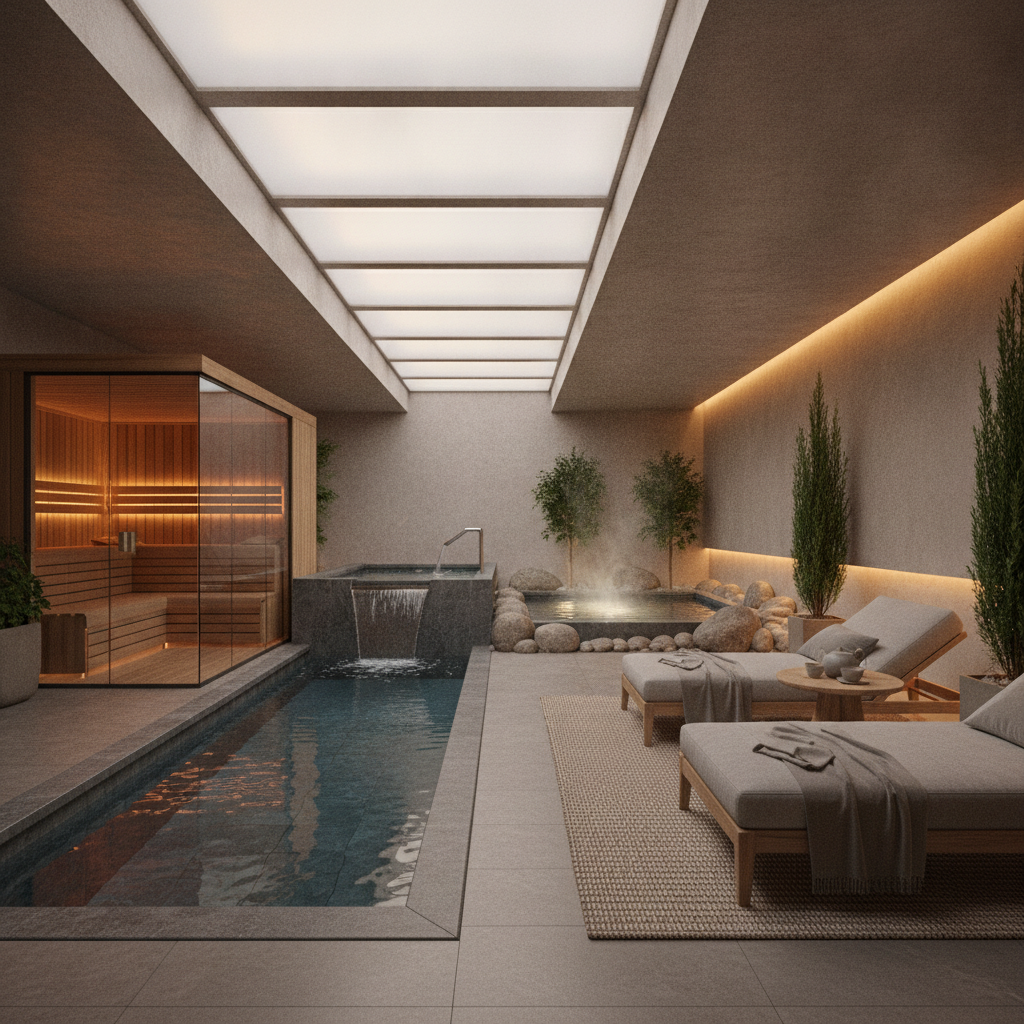
Not strictly, but pairing is strongly recommended. Data on hydrothermal facility growth shows the strongest guest engagement comes from circuits that combine heat and cold rather than cold-only installations. Even a single infrared sauna or steam unit paired with one plunge can dramatically improve perceived value compared to a standalone tub.
Commercial-Grade Equipment Standards for Cold Plunge Spa Design
Residential-grade cold tubs are not built for 40–150 daily uses across multiple guests, which is why equipment specification is a cornerstone of hotel spa design with cold plunge. Spa directors evaluating systems should require, at minimum:
- Durable, nonporous vessel construction rated for continuous commercial use
- Commercial-grade circulation and filtration systems
- Water disinfection appropriate for shared, multi-guest immersion
- A dedicated chiller sized for guest volume and rapid temperature recovery between uses
- Automatic temperature monitoring with visible readouts for staff and guests
- An emergency shutoff accessible to trained staff
- Adequate drainage and overflow management for cleaning and emergencies
- Service access to pumps, filters, controls, and refrigeration components without disrupting guest areas
- Noise and heat-rejection management in the equipment room
Chiller sizing deserves particular attention. A unit that can cool a single residential tub overnight will not keep pace with a spa seeing back-to-back guest cycles throughout the day. Commercial buyer guidance consistently emphasizes matching chiller BTU capacity and recovery speed to anticipated peak-hour usage, not average daily volume — a distinction that determines whether guests experience consistent water temperature or a gradually warming, less effective plunge by mid-afternoon.
Spatial Planning: Layout and Flow for Cold Plunge Zones
Spatial planning is where many otherwise well-intentioned renovations fall short. The footprint required for hotel spa design with cold plunge extends well beyond the basin itself. Architects and spa directors should plan for:
- Slip-resistant flooring throughout the plunge zone and adjacent wet areas
- Handholds and safe, graduated entry/exit geometry
- Dry towel and robe storage positioned for easy access without crossing wet paths
- Clear circulation space around the vessel to prevent congestion during peak hours
- Seating immediately adjacent to the plunge for post-immersion recovery
- A dedicated warm-up or thermal-rest zone separate from the plunge itself
- Staff sightlines where supervision is warranted for safety
- Privacy controls for premium suites or gender-specific facilities
- Accessible routes and transfer provisions for guests with mobility needs
- Drainage capacity sufficient for routine cleaning and emergency emptying
Before any installation begins, equipment and engineering guidance recommends confirming floor loading capacity, electrical supply, water supply, drainage, ventilation, and maintenance access — details that are far cheaper to resolve on paper than after tile is laid. Properties exploring full renovations should also consult HotelPlunge early in the design phase, since equipment dimensions, drainage requirements, and electrical load can materially change architectural drawings.
Safety, Accessibility, and Compliance in Hotel Spa Design with Cold Plunge
Safety is not an afterthought in hotel spa design with cold plunge — it is a design input from day one. Cold immersion carries real physiological considerations, including cold shock response, and hotel liability exposure is higher than in a private residential setting because spa staff cannot monitor every guest continuously.
Core safety and compliance elements include:
- Posted maximum recommended immersion times and medical contraindication signage
- Visible, functioning emergency shutoff and call-for-help systems
- Non-slip surfaces rated for wet commercial environments
- Accessible entry and exit options, including transfer benches where feasible
- Documented water-testing and disinfection logs consistent with local health codes
- Staff training on cold-water safety protocols and guest screening questions
Accessibility planning deserves particular emphasis. Many properties that rush cold plunge installations overlook transfer provisions entirely, which can exclude guests with mobility limitations from a flagship amenity — a gap that is both a guest-experience problem and, in many jurisdictions, a compliance risk.
Hotels typically post contraindication guidance recommending that guests with cardiovascular conditions, uncontrolled blood pressure, pregnancy, or certain circulatory disorders consult a physician before use. Clear signage and a brief screening prompt at spa check-in reduce liability and help staff flag higher-risk situations.
Spa-Level Cold Plunge vs. In-Room Wellness: Where Each Fits Your Property
It's worth distinguishing spa-level hotel spa design with cold plunge from the growing category of in-room or in-suite cold plunge installations, since the two serve different guest segments and operational models. In-room systems prioritize privacy, convenience, and a direct revenue-per-room opportunity. Spa-level design, by contrast, is built around shared experience, social wellness, and the hot-cold-rest circuit described earlier in this guide.
Many of the strongest-performing properties use both: a signature spa circuit as the flagship wellness destination for day visitors, spa members, and group bookings, paired with select in-suite installations in premium rooms for guests who want a private option. Neither model replaces the other — spa-level design builds brand reputation and group/event revenue, while in-room options drive incremental nightly rate and loyalty among wellness-focused travelers.
For GMs weighing both, the planning question isn't