Portable Cold Plunge for Hotel Use: Flexible Options Guide
October 11, 2026 · 13 min read
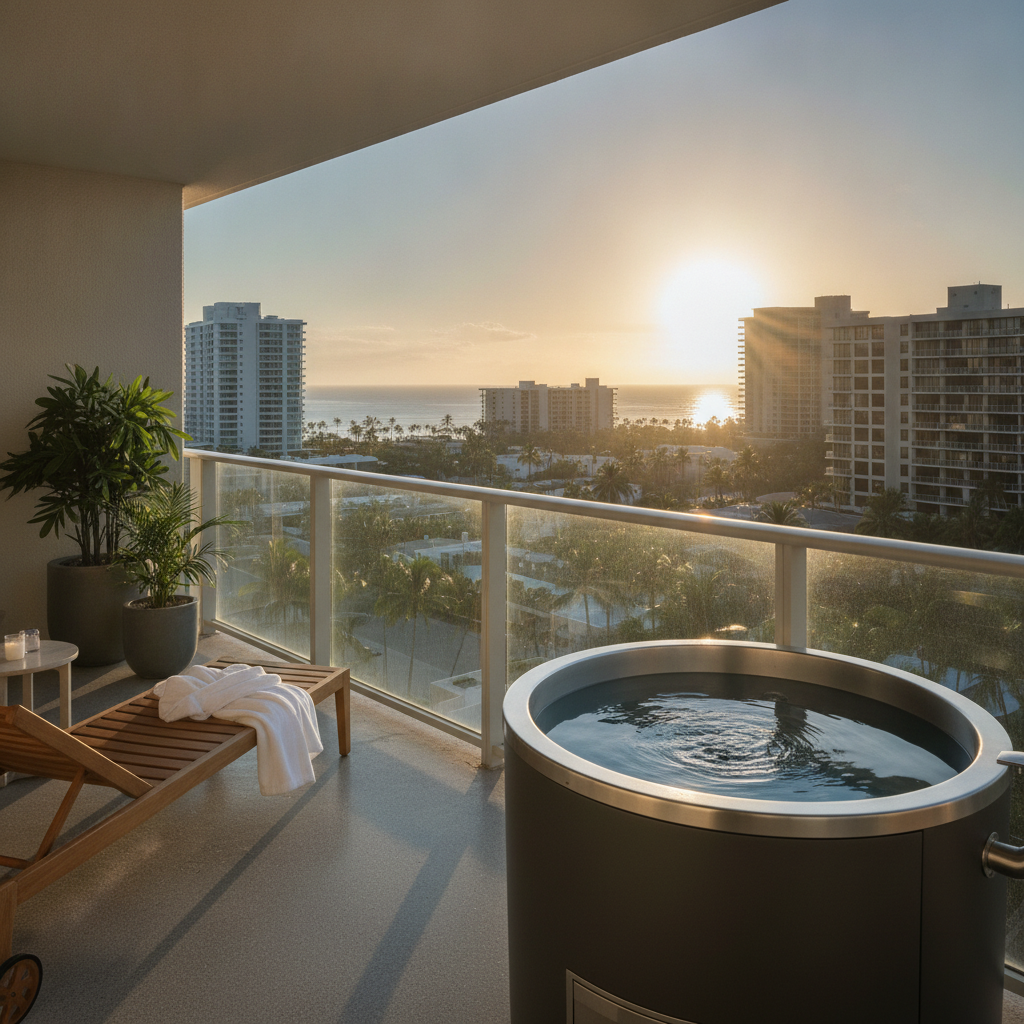
A portable cold plunge for hotel use has become the fastest, lowest-risk way for general managers, spa directors, and property owners to test cold-water therapy before committing to a permanent build-out. Rather than greenlighting a six-figure spa renovation on guesswork, properties are now piloting demand with equipment that can be rolled into a suite, a pool deck, or a fitness studio in under an hour — and rolled back out just as quickly if it does not perform.
This guide is written for operators who already understand the benefits of cold therapy and simply need a clear, practical map of the portable equipment landscape: what it costs, what it requires operationally, and which option fits which property type. If your team is evaluating a portable cold plunge for hotel use as a pilot, a seasonal activation, or a permanent-but-flexible shared amenity, this is the comparison you need.
TL;DR — The Bottom Line
A portable cold plunge for hotel use ranges from roughly $300 inflatable tubs to $25,000+ commercial recirculating units, and the right choice depends on whether the equipment will be used by one guest at a time or by the general public. Shared hotel facilities require filtration, disinfectant residual, and documented turnover procedures that personal-use tubs were never designed to meet, so the safest path for most properties is a tiered rollout: pilot small, validate demand, then upgrade to commercial-grade equipment for shared spaces.
What Is a Portable Cold Plunge for Hotel Use?
A portable cold plunge for hotel use is any cold-water immersion unit that can be deployed, relocated, or removed without permanent plumbing, structural changes, or dedicated mechanical rooms. This category spans everything from a $300 inflatable tub chilled with ice to a $15,000 wheeled recirculating system with built-in filtration. What unites them is flexibility — the equipment follows the program, not the other way around.
For hotels, the appeal is obvious. A permanent plunge installation involves plumbing, drainage, electrical capacity, waterproofing, and often weeks of contractor scheduling. A portable cold plunge for hotel use sidesteps nearly all of that, which is why it has become the entry point for properties that are curious about cold therapy but not yet ready to allocate capital-improvement budget to it.
No. Inflatable tubs are one category within the broader portable cold plunge market. Portable options also include rigid shell tubs with external chillers and wheeled commercial recirculating units — all of which avoid permanent installation but differ significantly in durability, hygiene control, and guest-facing polish.
Why Flexible Wellness Programs Favor a Portable Cold Plunge for Hotel Use
Hotel wellness budgets are increasingly structured around pilots rather than single large bets. Instead of asking "should we build a cold-plunge terrace," directors are asking "will our guests actually use one, and how often?" A portable cold plunge for hotel use answers that question with real usage data instead of a market-research estimate.
One documented 2025 hotel wellness example describes portable cold plunges, red-light panels, and compression equipment delivered directly to guest rooms by staff, used during the stay, and then removed — effectively functioning as a wellness room-service model rather than a fixed amenity.[3] That pattern is spreading quickly because it requires no renovation, no dedicated square footage, and no permanent staffing model to test.
Flexibility also matters for seasonal and event-driven properties. A ski lodge may only want cold plunge availability during peak winter months; a golf resort might want it only for a wellness retreat weekend. A portable cold plunge for hotel use can be stored off-season and activated on demand, which a plumbed-in installation simply cannot do.
Portable Cold Plunge for Hotel Use: Comparing the Main Options
Not all portable equipment is created equal. The table below breaks down the primary categories hotels are actually deploying today, along with where each one fits best.
| Option | Best Use | Advantages | Main Limitations |
|---|---|---|---|
| Inflatable tub with external chiller | Pilot programs, suites, low-volume use | Lowest entry cost, compact storage, fast deployment | Durability, slower cooling, weaker guest perception |
| Rigid portable tub with chiller | Boutique spas, wellness rooms, mobile activations | Better appearance and durability than inflatables | Needs floor protection, drainage planning, adequate power |
| Portable recirculating commercial unit | Shared spa or fitness area | Stronger hygiene control, repeat-use capability | Higher cost, heavier, requires service contracts |
| Fill-and-drain tub | Staff-controlled single-use experiences | Simple water-management concept | Labor-intensive at hotel volume |
| In-room portable service | Premium suites, paid add-on packages | Differentiated guest experience | Requires delivery, setup, and liability controls |
| Modular wellness station | Seasonal or event-based programming | Combines plunge, sauna, compression, red light | Needs coordinated staffing and power planning |
A hotel-focused 2026 comparison places entry-level inflatable or portable units in the roughly $300–$1,500 range, with water temperatures typically reaching 45–55°F when supported by ambient cooling or a compact chiller.[1] That price band makes a basic portable cold plunge for hotel use accessible even to independent boutique properties without dedicated spa capital.
Commercial Hygiene Standards Every Portable Cold Plunge for Hotel Use Must Meet
This is the section most procurement decisions get wrong. A tub designed for a single household user is not automatically appropriate for dozens of hotel guests per week. Shared-use environments carry real regulatory and liability obligations.
In practice, this means a shared portable cold plunge for hotel use needs:
- Continuous or high-capacity filtration
- Water disinfection scaled to bather load
- Documented water testing logs
- Drainage and cleaning procedures between sessions
- Anti-slip entry and exit surfaces
- Clear guest screening rules (cardiac conditions, intoxication, pregnancy, etc.)
- Accessible entry options where required
Fill-and-drain units can work for tightly staffed, single-user experiences — such as an in-room service where housekeeping drains and sanitizes the tub after each guest — but they become operationally unmanageable at real hotel volume because every cycle demands draining, cleaning, disinfecting, refilling, and re-chilling before the next guest.[2]
Matching a Portable Cold Plunge for Hotel Use to Your Property Type
The right equipment tier depends heavily on property size, guest profile, and how the amenity will be marketed. A 40-room boutique inn and a 400-room resort should not be shopping from the same catalog page.
Boutique and Independent Hotels
An inflatable or rigid portable tub with a compact chiller is usually the right starting point. It allows a boutique property to introduce a portable cold plunge for hotel use as a bookable spa-room feature or in-suite upgrade without major capital exposure, and it can be repositioned or retired easily if guest uptake is lower than expected.
Mid-Size Full-Service Hotels
These properties often benefit most from a portable recirculating commercial unit placed in a fitness center or spa annex. It delivers better hygiene control and more consistent temperature than entry-level tubs while still avoiding a full plumbing renovation.
Luxury and Resort Properties
Larger resorts frequently layer options: a permanent installation in the primary spa, plus a portable cold plunge for hotel use reserved for premium suites, event activations, or seasonal wellness retreats where flexibility matters more than fixed infrastructure.
Yes. Many independent properties start with a single portable unit managed by front-desk or housekeeping staff, offered as a scheduled in-suite or wellness-room add-on rather than a full spa service — a model that keeps staffing and liability requirements manageable.
How to Pilot a Portable Cold Plunge for Hotel Use Program
Properties that succeed with cold therapy almost always start with a structured pilot rather than a full rollout. Here is a practical sequence many hotels follow.
- Define the pilot scope. Decide whether the portable cold plunge for hotel use will be tested in-room, in a shared wellness space, or at a seasonal pool-deck activation.
- Select equipment matched to volume. Choose an inflatable or rigid portable tub for single-user, staff-managed experiences; choose a recirculating unit if multiple guests will use it per day without draining between each session.
- Build the hygiene protocol first. Establish disinfectant testing, cleaning logs, and turnover procedures before the equipment arrives, not after a guest complaint.
- Train a small staff team. Front-desk, spa, or housekeeping staff should know setup, safety screening, and emergency procedures before the pilot launches.
- Run a fixed test window. Four to eight weeks is typical — long enough to capture both weekday and weekend demand patterns.
- Track usage and feedback. Booking rates, guest satisfaction scores, and add-on revenue will tell you whether to expand, relocate, or upgrade the program.
This approach lets a hotel validate real guest behavior before committing to a permanent installation — which is precisely the strategic value of a portable cold plunge for hotel use over a fixed system.
Cost Considerations for a Portable Cold Plunge for Hotel Use
Budget conversations are often where pilots stall, so it helps to see the full pricing landscape in one place.
Quick Facts
- Entry-level portable units: approximately $300–$1,500[1]
- Chiller-equipped portable systems: commonly $1,200–$3,500[4][5]
- Commercial recirculating systems: roughly $6,000–$25,000+ depending on capacity[2]
- Typical portable unit temperature range: 45–55°F[1]
- Recommended shared-use turnover time: one hour or less per CDC Model Aquatic Health Code guidance[2]
- Disinfectant residual targets: free chlorine 2.0–7.0 ppm or bromine 4.0–10.0 ppm[2]
Entry-level portable units in the $300–$1,500 range are suitable for single-guest or staff-managed pilots, but they are not engineered for continuous multi-guest turnover.[1] Chiller-equipped portable systems in the $1,200–$3,500 band add faster, more consistent cooling and are a common choice for premium in-suite packages.[4][5] Once a property decides to deploy a portable cold plunge for hotel use in a shared, unsupervised space, budgeting should shift toward the $6,000–$25,000+ commercial tier, where filtration and disinfection systems are built in rather than added after the fact.[2]
A portable cold plunge for hotel use lets properties validate guest demand for a fraction of the cost of a permanent installation, which is why it has become the preferred first step for wellness programs in 2026.
Operational and Staffing Realities to Plan For
Even the best portable equipment creates work. Someone has to deliver it, set it up, monitor water quality, supervise entry and exit, clean it, and store it. Properties that treat a portable cold plunge for hotel use as "equipment only" tend to underestimate labor needs and see the program quietly fade after a few months.
A realistic staffing model assigns a named owner — often the spa director or a senior wellness attendant — responsible for scheduling, water testing documentation, and guest screening. For in-room delivery models, housekeeping or a dedicated wellness-service role typically handles transport, setup, and post-use sanitation, mirroring the room-service style approach already used by several 2025-era hotel wellness programs.[3]
It varies by volume, but a modest in-suite or wellness-room pilot serving a handful of bookings per day often requires a few hours of combined setup, monitoring, and cleaning time daily — significantly less than operating a full spa circuit, but still a real labor line that should be budgeted from day one.
Frequently Asked Questions
What is a portable cold plunge for hotel use?
It is a cold-water immersion unit — inflatable, rigid, or wheeled commercial-grade — that can be set up, moved, or stored without permanent plumbing, allowing hotels to offer cold therapy in guest rooms, wellness rooms, or event spaces without a full renovation.
How much does a portable cold plunge for hotel use cost?
Entry-level inflatable units run roughly $300–$1,500, chiller-equipped portable systems commonly cost $1,200–$3,500, and commercial recirculating units suitable for unsupervised shared use range from about $6,000 to $25,000 or more depending on capacity.[1][2][4][5]
Are portable cold plunges safe for multiple hotel guests to share?
Only if the unit includes continuous filtration and a disinfectant residual appropriate for bather load. The CDC Model Aquatic Health Code treats non-drained cold plunges as spas and recommends a turnover time of one hour or less with chlorine or bromine levels maintained within regulated ranges.[2] Basic personal-use tubs typically cannot meet this standard without significant modification.
Can a small boutique hotel offer a portable cold plunge without a dedicated spa team?
Yes. Many boutique and independent properties successfully run a staff-managed, single-user portable cold plunge for hotel use as a scheduled in-suite or wellness-room experience, which keeps staffing and compliance requirements manageable compared to an unsupervised shared facility.
How long should a hotel pilot a portable cold plunge before investing in permanent equipment?
A four-to-eight-week pilot window is typical, long enough to capture weekday and weekend demand patterns, booking rates, and guest feedback before deciding whether to expand, relocate, or upgrade to a permanent commercial installation.
Conclusion: Start Flexible, Scale With Confidence
The hotels winning in cold-therapy wellness right now are not necessarily the ones with the biggest capital budgets — they are the ones making smart, staged decisions. A portable cold plunge for hotel use gives general managers, spa directors, and owners a low-risk way to test guest demand, learn real operational requirements, and build a business case before committing to permanent construction. From inflatable pilots in a single suite to recirculating commercial units in a shared wellness room, the right starting point depends entirely on your property's size, guest profile, and staffing capacity.
If your team is ready to compare portable cold plunge equipment built specifically for hotel operations — not repurposed home products — HotelPlunge can help you evaluate the right tier for your property and plan a pilot that actually generates usable data. Explore the full range of commercial-ready solutions at HotelPlunge and start your flexible wellness rollout with confidence.