How to Maintain a Hotel Cold Plunge: A GM's Full Guide
September 14, 2026 · 13 min read
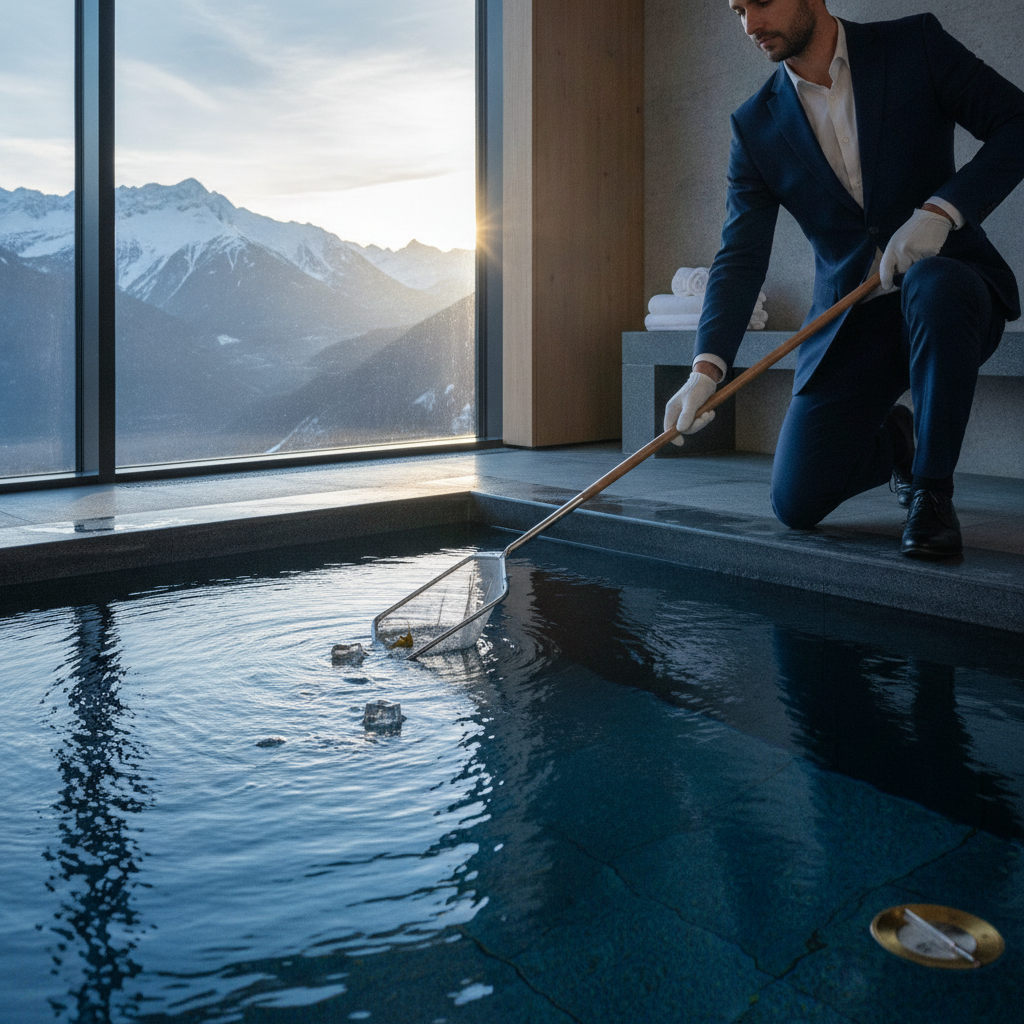
Learning how to maintain a hotel cold plunge properly has become a core operational competency for general managers, spa directors, and property owners — not just a maintenance afterthought. As cold therapy moves from boutique novelty to mainstream wellness amenity, hotels are discovering that a poorly maintained plunge creates the same liabilities as a poorly maintained pool: bacterial growth, guest injury risk, equipment failure, and regulatory exposure. This guide focuses specifically on the operational mechanics of upkeep — water chemistry, filtration, cleaning cadence, safety protocols, and staff documentation — so your property can run a cold plunge program that is safe, compliant, and reliable day after day.
TL;DR — The Bottom Line
Maintaining a hotel cold plunge means treating it like a regulated pool/spa asset: test sanitizer and pH daily, keep chlorine at 3–10 ppm (or bromine ≥4 ppm) and pH between 7.2–7.8, run filtration at least several hours daily with full turnover roughly hourly in high-use units, clean filters weekly, deep-clean the system monthly, and log everything. Properties that follow a documented cadence avoid the two most common failure points: cloudy/contaminated water and unplanned chiller downtime.
Quick Facts
- Ideal pH range: 7.2–7.8
- Free chlorine target: 3–10 ppm (bromine ≥4 ppm)
- Recommended water turnover: full cycle through filtration roughly once per hour in high-use commercial units
- Full water change interval: every 3–4 weeks (light use) to every 3–4 months (heavier use with strong filtration)
- Operating temperature range: 40–59°F (4–15°C)
- Recommended immersion limit: approximately 5 minutes per session
What "How to Maintain a Hotel Cold Plunge" Really Means for Your Property
When property owners ask how to maintain a hotel cold plunge, they're usually picturing a simple wipe-down and occasional water change. In reality, a commercial cold plunge used by dozens of guests per week behaves chemically and biologically much like a small pool or spa — and public health authorities increasingly treat it that way. The core disciplines of hotel cold plunge maintenance are: sanitation chemistry, filtration and circulation, mechanical upkeep of chillers and pumps, guest safety protocols, and documentation.
Unlike a residential ice bath, a hotel unit sees constant bather load, varying guest hygiene habits, and continuous operation — often 12 to 18 hours a day. That combination accelerates organic contamination (skin cells, oils, sweat, lotion residue) far faster than most owners expect. According to public health guidance referenced in commercial spa operating manuals, a single guest entering water without a pre-rinse shower can introduce measurable organic load, which is why many operators now require a rinse station before plunge access.1
Water Chemistry Standards: The Daily Backbone of Cold Plunge Maintenance
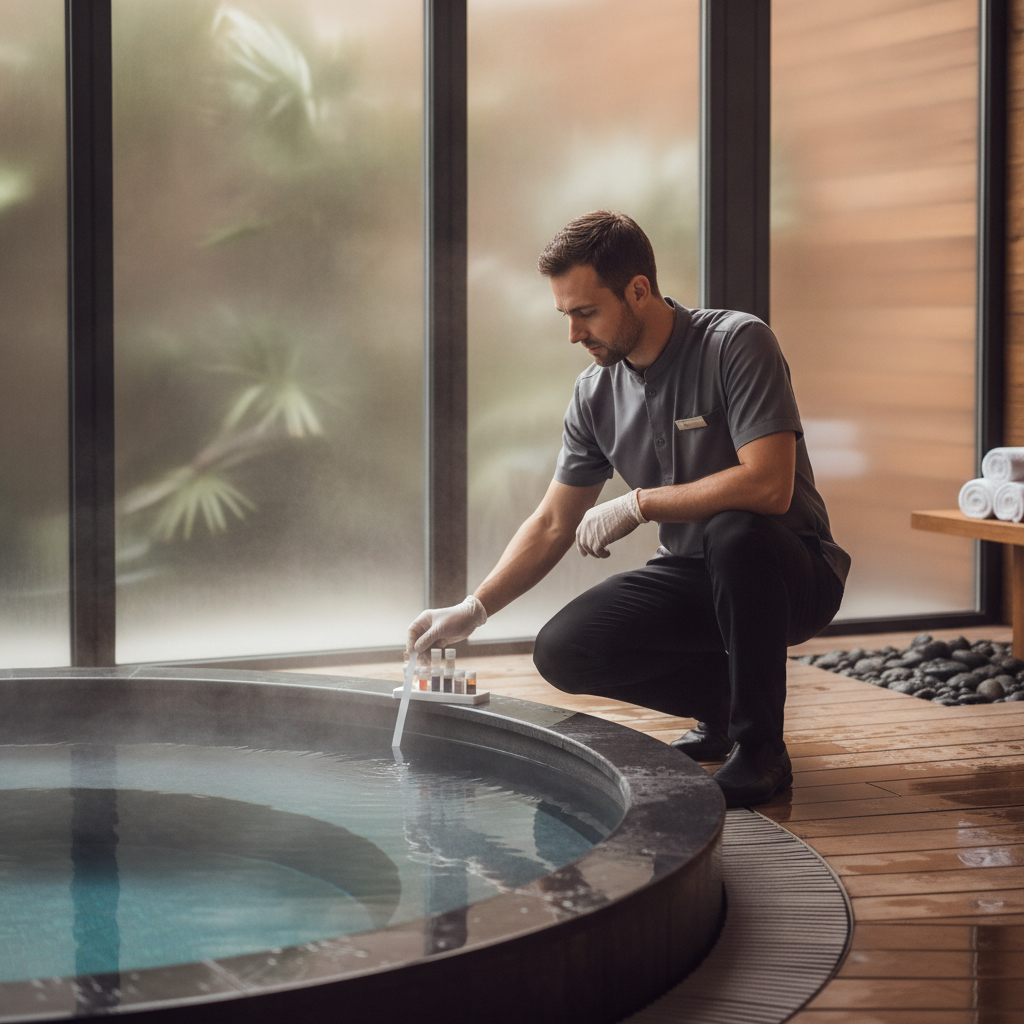
If you take one thing away from this guide, it should be this: water chemistry is the daily backbone of how to maintain a hotel cold plunge safely. Cold water actually slows chemical reaction rates compared to a warm spa, which means sanitizer can behave differently and requires more frequent verification, not less.
- Sanitizer levels: Free chlorine should generally sit between 3–10 ppm in a regulated commercial cold plunge; bromine-based systems should maintain at least 4 ppm residual. UV and ozone systems are excellent supplemental tools but do not replace the need for a measurable chemical residual.1
- pH balance: Keep pH between 7.2 and 7.8. Outside this range, sanitizer efficacy drops sharply, and guests may experience skin or eye irritation.
- Total alkalinity: Target 80–120 ppm to keep pH stable between tests.
- Calcium hardness: Maintain roughly 100–250 ppm to prevent corrosion of metal fittings or scale buildup on chiller components.
Daily testing of chlorine/bromine and pH is the minimum standard; many hospitality operators now run a weekly broader panel covering alkalinity, hardness, and total dissolved solids (TDS) to catch slow chemical drift before it becomes visible in the water. Retaining these logs — some municipalities recommend up to two years — is essential both for health inspections and for protecting the property in the event of a guest complaint.
Chlorine or bromine levels and pH should be tested at minimum once daily before the plunge opens to guests, with a more detailed chemistry panel (alkalinity, hardness, TDS) run weekly. High-traffic properties often test twice daily — before opening and mid-afternoon.
Filtration and Mechanical Maintenance for Hotel Cold Plunges
Water chemistry alone can't compensate for a filtration system that isn't circulating properly. Understanding how to maintain a hotel cold plunge mechanically means paying close attention to three components: the strainer, the fine filter, and the chiller/pump unit itself.
Strainers and coarse debris filters
Hair and large debris collect here first. These should be checked daily in high-use units — a clogged strainer forces the pump to work harder, shortening its lifespan and reducing circulation efficiency.
Fine filtration (cartridge or sand)
Most commercial-grade cold plunges use a 5-micron (or finer) cartridge filter. In a hotel setting with daily guest turnover, these should be rinsed weekly and deep-cleaned monthly using a filter-cleaning solution to dissolve oils and lotion residue that plain water rinsing won't remove.
Chiller and pump inspection
Refrigeration components should be inspected quarterly by a qualified technician, checking refrigerant levels, condenser coils (dust and lint buildup reduces cooling efficiency), and electrical connections. Circulation should move the entire volume of water through filtration and disinfection roughly once per hour in a high-use commercial plunge — smaller or lower-traffic units can run filtration on a scheduled 4–8 hour daily cycle instead of continuously.
Daily, Weekly, and Monthly Maintenance Schedules
One of the most common questions property owners ask HotelPlunge is simply how to maintain a hotel cold plunge on a repeatable schedule without overburdening housekeeping or spa staff. The answer is a tiered routine assigned to specific roles.
Daily tasks (5–10 minutes)
- Test and record free chlorine/bromine and pH before the plunge opens to guests.
- Visually inspect water clarity and skim any surface debris.
- Confirm filtration and chiller are running and displaying normal readings.
- Wipe down control panels, handrails, and entry steps.
- Confirm pre-rinse showers or hygiene signage is visible and functioning.
Weekly tasks
- Rinse or clean fine filter cartridges.
- Run a broader chemistry panel: alkalinity, hardness, TDS.
- Inspect fittings, gaskets, and seals for early signs of leaks.
- Wipe the waterline to remove biofilm buildup before it becomes visible scum.
Monthly and quarterly tasks
- Deep clean plumbing lines with an oxidizing solution to break down biofilm inside pipework.
- Replace filter cartridges rather than continuing to rinse aging media.
- Drain and scrub the vessel fully, inspecting for cracks, corrosion, or wear at seams.
- Schedule professional chiller/pump servicing.
- Depending on bather load, perform a full water change — light-use properties can often stretch to 3–4 weeks between changes, while heavier-use plunges with strong filtration may go 3–4 months if chemistry and TDS readings remain within range.
It depends on bather load and filtration strength. Lightly used, well-filtered systems can go 3–4 weeks between full changes, while high-traffic commercial units with strong chemical treatment can sometimes extend to 3–4 months, provided daily testing and TDS monitoring stay within acceptable ranges.
Temperature Control and Guest Safety Protocols
Beyond water chemistry, safe operation is central to how to maintain a hotel cold plunge responsibly. Most commercial units operate between 40–59°F (4–15°C), a range that delivers the physiological benefits guests expect while remaining manageable for short, supervised sessions.
- Session limits: Recommend roughly 5-minute immersion sessions to reduce risk of cold shock, especially for unaccompanied or first-time guests.
- Signage: Post clear contraindication notices covering cardiovascular conditions, pregnancy, and certain medications, along with guidance to enter gradually rather than submerge immediately.
- Accessibility: Ensure ADA-compliant steps, handrails, and clearances so guests of all mobility levels can enter and exit safely.
- Staff training: Train front desk, spa, and housekeeping staff to recognize signs of guest distress (shivering that doesn't stop, confusion, bluish lips) and to know the property's emergency response procedure.
Temperature accuracy also protects your equipment. A chiller struggling to hold set temperature is often the earliest warning sign of a failing compressor or dirty condenser coil — catching this during routine checks prevents a guest-facing outage.
Staff Training, Documentation, and Compliance
Even the best water chemistry program fails without consistent staff execution. Properties that master how to maintain a hotel cold plunge treat documentation as seriously as a pool operator would treat health department logs.
- Assign a named staff owner (often a spa technician or facilities lead) responsible for daily testing and logging.
- Keep testing logs on file — many municipal guidelines recommend retention for up to two years — in case of a health inspection or guest incident review.
- Create a one-page laminated SOP near the plunge covering chemical ranges, session limits, and emergency contacts.
- Cross-train at least two staff members per shift so maintenance doesn't lapse during vacations or turnover.
As one operations consultant frequently notes to hospitality clients: "A cold plunge without a logbook is a liability, not an amenity." That single mindset shift — from decorative feature to regulated asset — is what separates properties with reliable programs from those constantly troubleshooting cloudy water or guest complaints.
Common Cold Plunge Maintenance Mistakes to Avoid
Across hospitality properties, a handful of avoidable errors account for most of the maintenance headaches related to how to maintain a hotel cold plunge:
- Testing infrequently. Skipping daily tests until water "looks" off means bacteria or pH drift has already had time to build.
- Ignoring the waterline. Biofilm accumulates at the surface line first; weekly wiping prevents visible rings and odor.
- Delaying filter replacement. Rinsing an aging cartridge indefinitely reduces filtration efficiency long before it becomes obviously dirty.
- No pre-rinse requirement. Guests entering without a quick shower introduce significantly more organic load, straining sanitizer levels faster than expected.
- Reactive chiller servicing. Waiting for a breakdown instead of scheduling quarterly inspections leads to guest-facing downtime during peak demand periods.
Avoiding these five mistakes resolves the majority of complaints hotels report about cold plunge reliability and water clarity.
Building a Maintenance Program: Step-by-Step
For properties setting up a formal routine for the first time, here is a practical sequence for establishing how to maintain a hotel cold plunge from day one:
- Step 1 — Assign ownership: Designate a primary and backup staff member responsible for daily testing and logging.
- Step 2 — Set chemical baselines: Test and record starting pH, sanitizer, alkalinity, and hardness before opening the plunge to guests.
- Step 3 — Build the testing log: Create a daily/weekly log template (digital or paper) that captures date, reading, initials, and corrective action taken.
- Step 4 — Schedule mechanical checkpoints: Calendar weekly filter checks, monthly deep cleans, and quarterly chiller servicing with a qualified vendor.
- Step 5 — Post guest-facing signage: Include session limits, contraindications, and hygiene expectations (like pre-rinsing) at the plunge entrance.
- Step 6 — Train and cross-train staff: Run a short onboarding session covering chemistry ranges, emergency response, and where logs are kept.
- Step 7 — Review monthly: Have the GM or spa director review logs monthly to spot chemistry drift, filter replacement patterns, or recurring service issues.
Properties exploring turnkey equipment options as part of this process can review commercial-grade systems and support resources at HotelPlunge, which is designed specifically around hospitality-grade water management rather than residential use.
Frequently Asked Questions
How often should a hotel test cold plunge water chemistry?
Free chlorine or bromine and pH should be tested at least once daily before guest access, with a broader panel covering alkalinity, hardness, and TDS run weekly. High-traffic properties often test twice daily to stay ahead of chemical drift.
What is the correct pH and sanitizer level for a hotel cold plunge?
Maintain pH between 7.2 and 7.8, free chlorine between 3–10 ppm, or bromine at 4 ppm or higher. These ranges mirror standard pool and spa guidance and protect both guest comfort and equipment components from corrosion or scaling.
How often does a hotel cold plunge need a full water change?
Light-use plunges with solid filtration can often go 3–4 weeks between full changes, while heavier-use commercial units with strong chemical treatment may extend to 3–4 months, guided by ongoing TDS and clarity checks rather than a fixed calendar date alone.
What temperature should a hotel cold plunge be kept at?
Most commercial cold plunges operate between 40–59°F (4–15°C). Properties typically set the temperature toward the higher end of that range for first-time or unaccompanied guests and reserve the coldest settings for supervised or advanced-use sessions.
Who is responsible for maintaining a hotel cold plunge?
Most properties assign a named spa technician or facilities staff member as the primary owner, with a cross-trained backup. The general manager or spa director typically reviews testing logs monthly to confirm compliance and catch early signs of equipment wear.
Conclusion: Treat Your Cold Plunge Like a Regulated Amenity
Guests now expect cold plunge access with the same reliability as a fitness center or pool — clear water, safe temperatures, and no unexpected closures. Mastering how to maintain a hotel cold plunge isn't about complicated science; it's about consistency: daily testing, weekly filter care, monthly deep cleaning, and documented staff accountability. Properties that build this routine into standard operating procedure avoid the costly surprises — cloudy water, chiller failures, guest complaints — that undermine an otherwise strong wellness offering.
If your property is evaluating equipment built for hospitality-grade reliability and easier ongoing maintenance, explore the commercial cold plunge systems and support resources available through HotelPlunge to see how a purpose-built solution can simplify your maintenance program from day one.