Integrating Cold Plunge Into Existing Hotel Spa: A Guide
October 18, 2026 · 13 min read
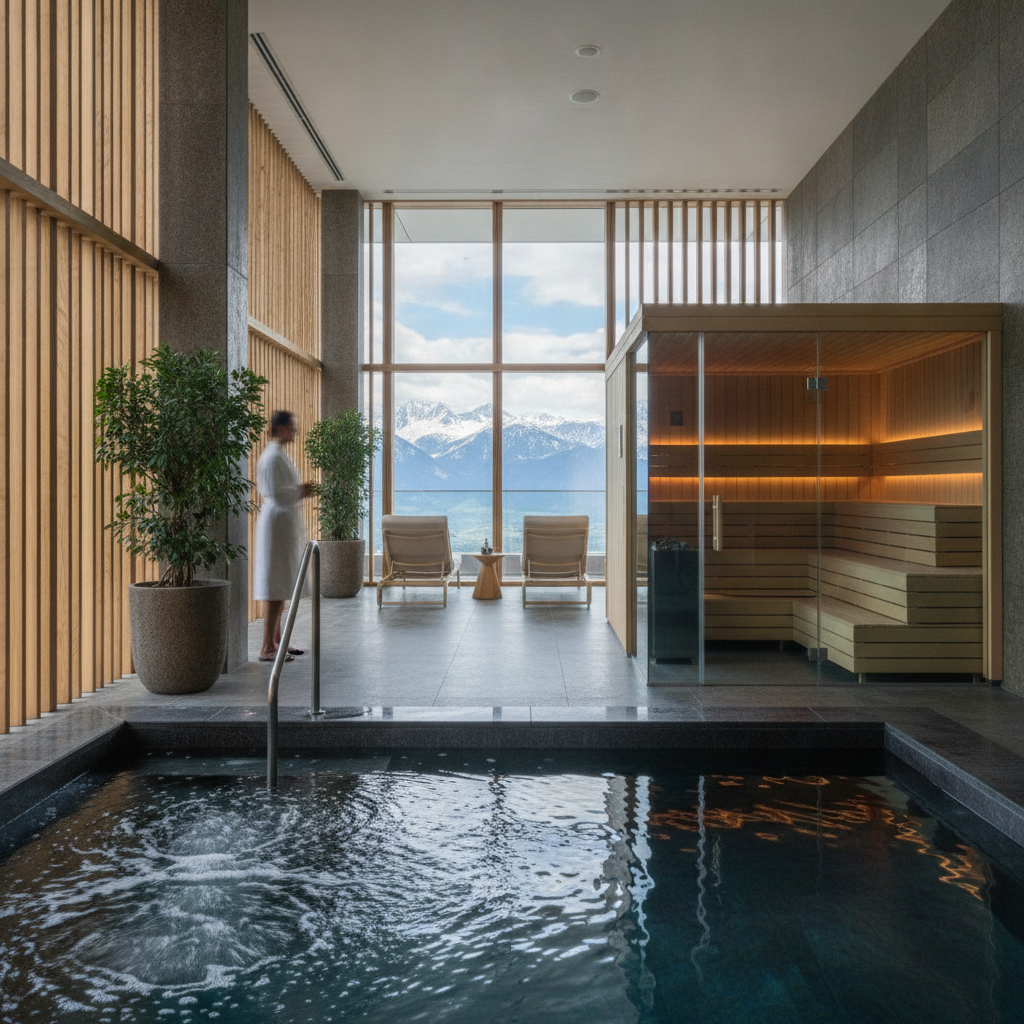
For hotel general managers and spa directors evaluating new revenue amenities, integrating cold plunge into existing hotel spa infrastructure is quickly becoming one of the lowest-friction, highest-impact upgrades available in hospitality wellness. Unlike ground-up spa construction, integration leverages the plumbing, drainage, staffing, and guest flow you already have — if it's planned correctly. This guide focuses specifically on the operational and infrastructure mechanics of fitting a cold plunge into a spa that already exists, rather than building a new wellness wing from scratch.
TL;DR — The Bottom Line
Integrating cold plunge into existing hotel spa facilities works best when the unit is placed inside a deliberate thermal circuit (sauna, steam, or treatment flow), uses commercial-grade recirculating equipment rather than fill-and-drain tubs, and is supported by staff protocols, water-treatment compliance, and clear guest signage. Done well, the retrofit can be completed in weeks, not months, and positions the plunge as a premium, bookable experience rather than a novelty fixture.
Why Integrating Cold Plunge Into Existing Hotel Spa Operations Makes Strategic Sense
Hotel spas are under pressure to generate measurable revenue, not just support the room rate. The wellness economy reached $6.8 trillion in 2024, growing 7.9% year over year, according to the Global Wellness Institute.1 Wellness tourism alone accounted for roughly $893.9 billion in 2024, representing 13.2% of total global wellness spending.1 Within that growth, hotel and resort spa revenue climbed from $50.4 billion in 2019 to nearly $79 billion in 2024 — a 56.4% increase — while the number of hotel and resort spas expanded from roughly 64,000 to nearly 88,000 properties globally.2
That expansion means competition for the same wellness-motivated traveler is intensifying. A cold plunge, when properly folded into an existing hydrothermal circuit, gives a property a differentiated, Instagrammable, and medically credible amenity without the capital burden of a new spa build. This is precisely why integrating cold plunge into existing hotel spa layouts has become a priority conversation for GMs rather than a niche wellness-director request.
The broader cold-plunge equipment market itself is projected to grow from approximately $354.6 million in 2025 to $659.9 million by 2033, reflecting sustained commercial and residential demand.3 For hotels, the opportunity is not simply owning a plunge — it's weaving it into an operation that already has staffing, treatment menus, and guest flow patterns in place.
What Integrating a Cold Plunge Into an Existing Hotel Spa Actually Requires
Many properties assume integrating cold plunge into existing hotel spa space simply means finding an empty corner and plumbing in a tub. In practice, successful integration touches five interconnected systems: physical layout, mechanical/plumbing infrastructure, water treatment compliance, staff workflow, and guest communication. Skipping any one of these creates friction later — a plunge with no clear circulation plan becomes a bottleneck; a plunge with no trained attendant becomes a liability; a plunge with no water-treatment protocol becomes a compliance risk.
The strongest integrations treat the cold plunge as an extension of the existing thermal journey rather than a standalone novelty. Common configurations include:
- Sauna → cold plunge → quiet recovery lounge
- Steam room → cool-down shower → plunge
- Fitness center → plunge → hydration station
- Treatment suite → guided contrast-therapy nook
Each configuration reuses existing drainage, ventilation, and staff sightlines, which is the core advantage of integrating cold plunge into existing hotel spa footprints versus building new wet-area square footage.
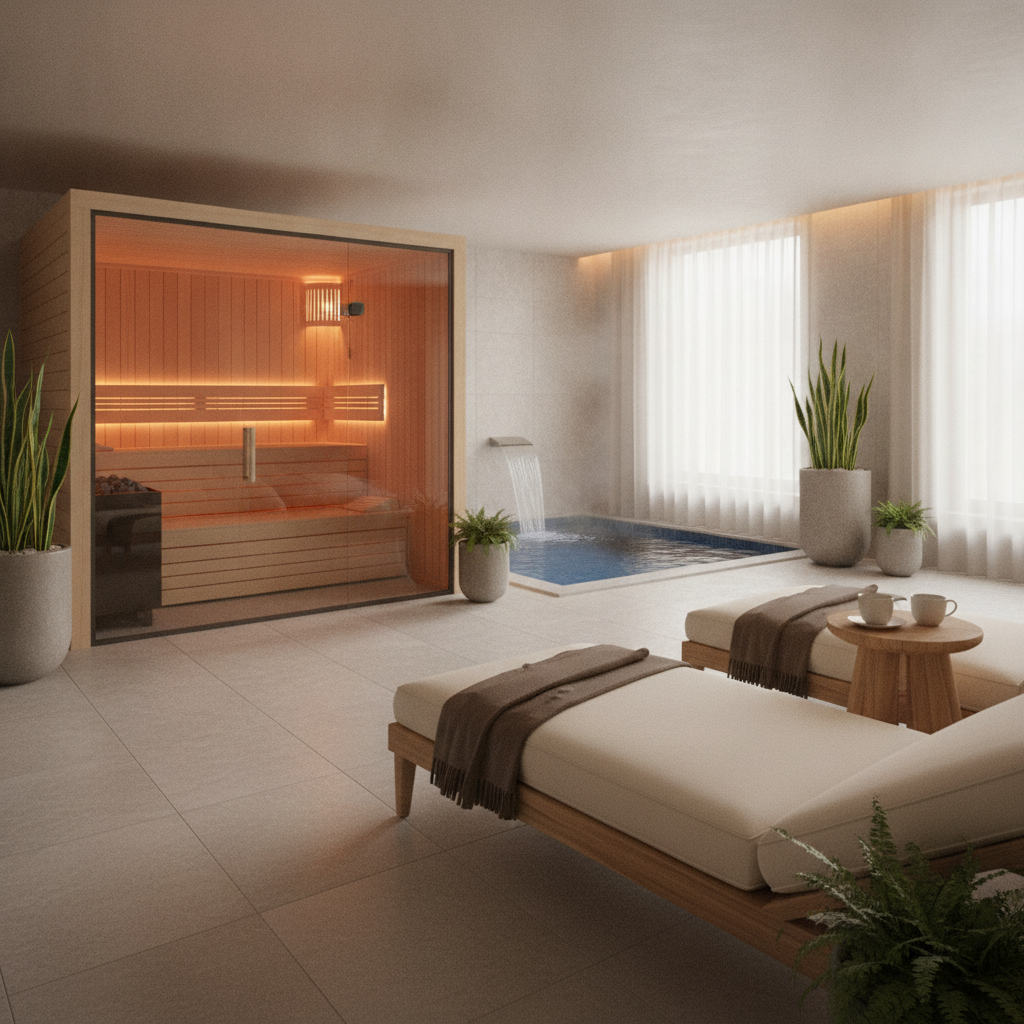
Yes, but the project scope expands. Without existing drainage, filtration, or water-treatment infrastructure nearby, the hotel will need to budget for new plumbing runs and electrical capacity, which changes this from a pure integration project into a hybrid renovation. Properties with an existing sauna, steam room, or hydrotherapy pool have a significant head start.
Mapping the Guest Journey Within Your Current Spa Layout
One of the most overlooked steps in integrating cold plunge into existing hotel spa design is guest-flow mapping. Spa directors often focus on equipment specifications before walking the actual guest path from locker room to treatment room to relaxation lounge. A cold plunge inserted into the wrong point in that path can create congestion, noise bleed into treatment rooms, or awkward sightlines for staff monitoring guest safety.
Before selecting a location, walk the existing circuit at peak occupancy and ask:
- Where does natural dwell time already occur? Guests linger near saunas, steam rooms, and relaxation lounges — these are natural candidates for plunge placement.
- Is there direct floor drainage nearby? Retrofitting drainage into finished stone or tile floors is the single biggest cost driver in integration projects.
- Can staff maintain a clear sightline without hovering? Discreet supervision is essential for guest safety, particularly for cardiovascular risk guests.
- Will plunge noise or splash affect adjacent treatment rooms? Acoustic and moisture buffers matter more in retrofits than new builds.
- Is there room for a controlled exit path to a towel or hydration station? Guests exiting cold water need a short, safe, non-slip route to recovery.
When these five questions are answered honestly, the right location for integrating cold plunge into existing hotel spa layouts usually reveals itself — often in underused corners adjacent to saunas or steam rooms that were originally designed with excess drainage capacity.
Technical and Infrastructure Considerations for Existing Spa Retrofits
The mechanical reality of integrating cold plunge into existing hotel spa facilities centers on one decision: recirculating versus fill-and-drain systems. For any property with regular guest traffic, a commercial-grade, hard-plumbed recirculating system with continuous filtration and a maintained sanitizer residual is the baseline standard.4 Fill-and-drain tubs are only appropriate where staff can fully drain, clean, disinfect, and refill the vessel between each guest — a labor model that rarely survives contact with real hotel staffing ratios.
Procurement and engineering teams evaluating integration projects should specify:
- Commercial-duty circulation pumps and filtration sized to vessel volume and turnover rate
- Reliable, fast-recovery chiller systems rated for continuous commercial cycling
- Anti-entrapment drain covers meeting current safety standards
- Automated or semi-automated water-treatment dosing
- Remote monitoring with alerts for temperature or chemistry drift
- Accessible service panels for filters, pumps, and chiller components
- Step-free or assisted entry/exit for ADA considerations
- Noise and vibration isolation, especially near treatment rooms
- Manufacturer support and verified parts availability
- Compatibility with your property's existing preventive-maintenance software
This is also where choosing a hospitality-specific partner matters. HotelPlunge designs commercial systems specifically for retrofit scenarios, meaning the mechanical footprint, drainage requirements, and service access are engineered around what already exists on your property rather than requiring you to rebuild around the equipment.
Quick Facts
- Global wellness economy (2024): $6.8 trillion, up 7.9% year over year1
- Wellness tourism spending (2024): approximately $893.9 billion1
- Hotel/resort spa revenue growth: $50.4B (2019) to ~$79B (2024), up 56.4%2
- Hotel/resort spa count growth: ~64,000 to nearly 88,000 properties2
- Cold-plunge market projection: $354.6M (2025) to $659.9M (2033)3
Staff Training and Operational Workflow Integration
Equipment selection is only half the project. Integrating cold plunge into existing hotel spa operations also means folding it into your current staffing model, booking system, and treatment menu without creating new bottlenecks. Spa directors should treat the plunge like any other wet-area asset that requires a documented operating procedure, not a self-serve novelty.
Key operational elements to formalize include:
- Pre-use screening: A brief verbal or written health questionnaire covering cardiovascular conditions, pregnancy, and Raynaud's phenomenon, consistent with standard spa intake practices.
- Time-of-use limits: Posted and enforced immersion guidelines, typically 1–4 minutes depending on water temperature.
- Attendant coverage: Either a dedicated attendant during peak hours or integration into existing sauna/steam monitoring rotations.
- Cleaning and water-testing logs: Documented at intervals consistent with local health code and manufacturer guidance.
- Booking integration: Whether the plunge is complimentary, bundled with treatments, or sold as a standalone timed session through your existing spa software.
Staff training is where many integration projects stall — not because the equipment fails, but because front-line therapists and attendants were never given a clear script for guiding guests through the experience. A 15-minute onboarding module covering safety screening, time limits, and the "why" behind contrast therapy dramatically improves both safety outcomes and guest satisfaction scores.
Not necessarily. Most properties successfully integrate plunge supervision into existing sauna, steam, or pool attendant rotations rather than hiring a dedicated role. The key is documenting a clear monitoring protocol so coverage doesn't fall through the cracks during shift changes.
Compliance, Safety, and Water Treatment in an Existing Facility
Because a cold plunge is a shared-water aquatic feature, it typically falls under the same regulatory umbrella as spas, hot tubs, and therapy pools in most jurisdictions. Integrating cold plunge into existing hotel spa facilities means your local health department will likely classify it alongside your existing wet-area assets, which can actually simplify permitting if your property already has an established aquatic-facility license.
Baseline compliance considerations generally include:
- Maintained disinfectant residual (commonly chlorine or bromine) consistent with model aquatic health code guidance4
- Regular water chemistry logging (pH, sanitizer level, temperature)
- Anti-entrapment drain covers and dual suction outlets where required
- Posted capacity limits and safety signage
- Emergency shut-off accessibility
- ADA-compliant access where feasible within the existing footprint
Because requirements vary by state, county, and municipality, the integration project should begin with a call to your local health authority before equipment is ordered — not after installation. Many delays in cold plunge retrofits stem from permitting surprises that could have been resolved in a single pre-application conversation.
In most jurisdictions, yes — shared-water cold plunges are typically regulated as aquatic facilities subject to water-quality, signage, and safety-equipment rules similar to spas and therapy pools, though exact requirements vary by local health authority.
Measuring Success After Integrating Cold Plunge Into Existing Hotel Spa Space
Once installed, the integration project shifts into an operating phase that should be measured like any other spa asset. Rather than treating the plunge as a static amenity, track it against clear usage and revenue indicators:
| Metric | Why It Matters |
|---|---|
| Daily/weekly usage sessions | Confirms the plunge is being discovered and used, not just admired |
| Attachment rate to spa treatments | Shows whether the plunge increases average spend per visit |
| Guest satisfaction scores (post-visit survey) | Flags friction points in signage, wait times, or staff guidance |
| Membership or day-pass conversion | Measures whether the amenity drives recurring local revenue |
| Maintenance downtime hours | Tracks equipment reliability against your preventive-maintenance plan |
Properties that review these metrics quarterly tend to refine pricing, signage, and staffing far faster than those that install equipment and move on. Integrating cold plunge into existing hotel spa operations is not a one-time project — it's an ongoing operational line item that deserves the same scrutiny as a treatment room or fitness center.
As one industry observation puts it: a cold plunge succeeds in a hotel spa not because of its temperature, but because of how seamlessly it fits the guest's existing path through the facility.
Common Mistakes When Integrating a Cold Plunge Into an Existing Hotel Spa
Across hospitality wellness projects, a handful of avoidable errors repeat themselves:
- Choosing residential-grade equipment: Lifestyle products built for home use rarely withstand daily multi-guest commercial cycling.
- Ignoring acoustic separation: Splash and guest reactions can disrupt adjacent treatment rooms if placement isn't planned.
- Underestimating drainage costs: Retrofitting floor drains into finished spa floors is frequently the largest line item in the budget.
- Skipping staff training: Equipment without a documented protocol leads to inconsistent guest experiences and safety gaps.
- Treating it as free: Many properties under-monetize the amenity by failing to bundle it into paid packages or membership tiers.
Avoiding these pitfalls is largely a matter of sequencing: plan the guest journey and compliance pathway before finalizing equipment specs, not after.
Frequently Asked Questions
How long does it take to integrate a cold plunge into an existing hotel spa?
Timelines vary by infrastructure, but properties with existing drainage and wet-area plumbing near the installation site can often complete integration in four to eight weeks, including permitting, equipment installation, and staff training. Projects requiring new plumbing or electrical runs typically take longer.
What is the most important factor when integrating cold plunge into existing hotel spa layouts?
Placement within the existing guest circulation path is the single most important factor. A plunge positioned within a natural thermal circuit — near a sauna, steam room, or treatment flow — sees significantly higher usage than one placed in an isolated or hard-to-find location.
Do hotel cold plunges require continuous water filtration?
For any facility with regular guest turnover, yes. Commercial, recirculating systems with continuous filtration and a maintained sanitizer residual are the standard expectation for shared-water hotel amenities, consistent with model aquatic health code guidance.
Can an existing hotel spa pool or hydrotherapy area be converted instead of adding a new vessel?
In some cases, yes. Properties with an underused hydrotherapy pool or whirlpool can sometimes retrofit a dedicated cold zone within that existing footprint, reducing new construction needs. An engineering assessment is required to confirm chiller capacity and plumbing compatibility.
How does integrating a cold plunge into an existing hotel spa affect staffing costs?
Most properties fold plunge supervision into existing sauna, steam, or pool attendant duties rather than adding headcount, provided clear monitoring protocols and shift coverage are documented in advance.
Final Thoughts: Making Integration Work for Your Property
Integrating cold plunge into existing hotel spa operations is less about the vessel itself and more about disciplined planning across layout, mechanical infrastructure, compliance, staffing, and guest communication. Properties that treat the plunge as a fully integrated extension of their current wellness circuit — rather than a bolt-on novelty — consistently see higher usage, stronger guest satisfaction, and better returns on the investment. Given the scale of growth in wellness tourism and spa revenue industry-wide, the properties that move deliberately now are positioning themselves ahead of a market that is only getting more competitive.
If your team is evaluating how integrating cold plunge into existing hotel spa space could work for your property, HotelPlunge specializes in commercial-grade systems engineered specifically for hospitality retrofits — from site assessment through staff onboarding. Reach out to HotelPlunge to discuss how your existing spa layout, plumbing, and staffing model can support a seamless, revenue-generating cold plunge integration.
1 Global Wellness Institute, "Global Wellness Economy Monitor 2024," https://globalwellnessinstitute.org
2 Global Wellness Institute, Spa Industry Research, https://globalwellnessinstitute.org
3 Industry market research estimate on cold plunge/cold therapy equipment market sizing, https://www.grandviewresearch.com
4 U.S. Centers for Disease Control and Prevention, Model Aquatic Health Code, https://www.cdc.gov