Integrating Cold Plunge into Hotel Spa Services Guide
October 26, 2026 · 13 min read
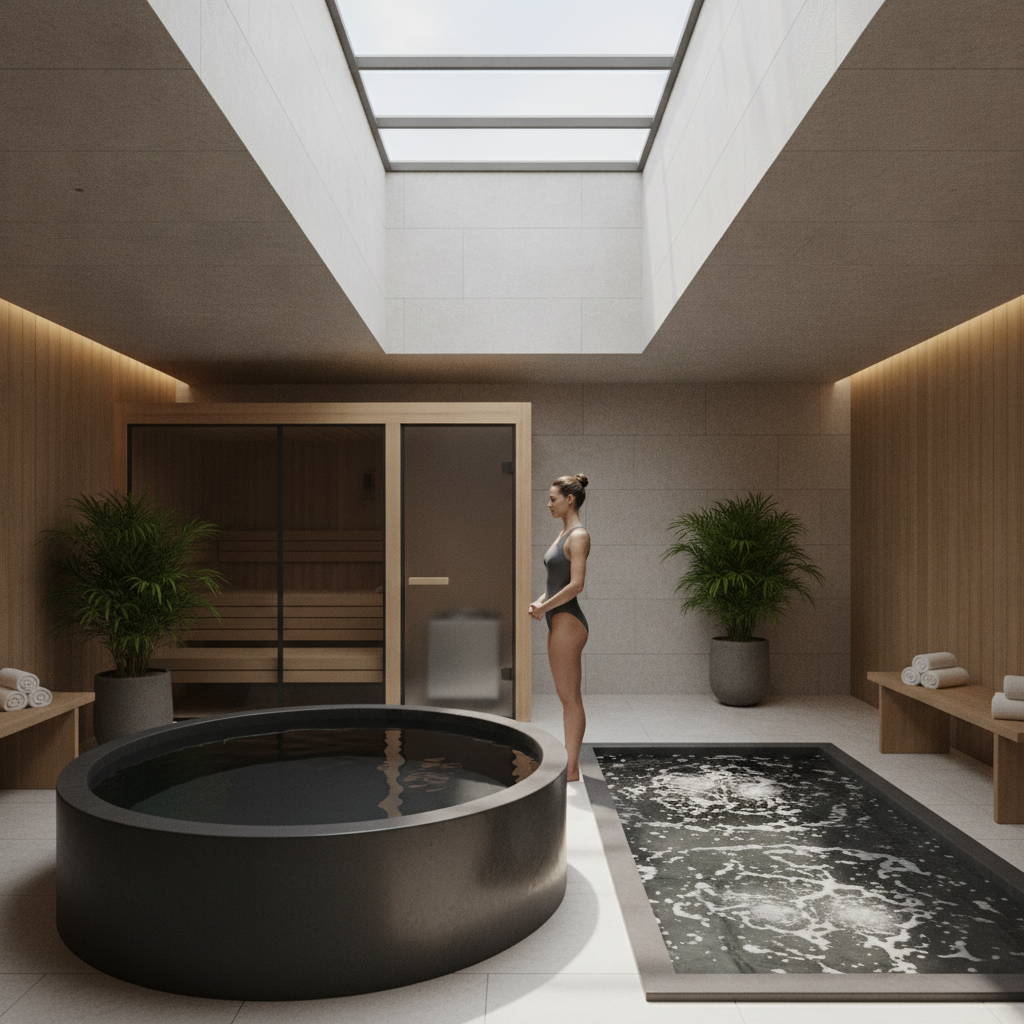
Integrating cold plunge into hotel spa services is quickly shifting from a novelty discussion to a core operational question for general managers, spa directors, and property owners. The challenge isn't whether cold immersion belongs in hospitality — guest demand and wellness tourism data already answer that — but how to weave it into a spa that already has treatment menus, staffing patterns, booking systems, and a brand identity. This guide focuses specifically on that integration process: menu design, staff workflow, physical layout within an existing footprint, hygiene protocols, and packaging strategy, rather than equipment selection or new-build suite design.
TL;DR — The Bottom Line
Integrating cold plunge into hotel spa services works best when it's treated as an operations and programming project rather than a standalone equipment purchase. The most successful properties fold cold immersion into existing thermal circuits, recovery services, and treatment menus, train current spa staff to supervise and sell it, and price it as a bookable add-on rather than an unsupervised amenity. Done this way, cold plunge integration increases spa utilization and revenue per guest without requiring a full spa renovation.
Quick Facts
- Global wellness economy (2024): $6.8 trillion, up 7.9% from 2023
- Wellness tourism spending (2024): approximately $893.9 billion across 1.24 billion trips
- Average spend per international wellness trip: $1,637, 38% higher than the average international tourist
- Global spa sector value (2023): approximately $137 billion
- Number of spas worldwide (2024): approximately 201,861, up from 175,482 in 2019
What Does Integrating Cold Plunge into Hotel Spa Services Actually Mean?
At its core, integrating cold plunge into hotel spa services means making cold immersion a native part of how your spa already operates — not an isolated tub tucked into a corner. It involves four interconnected layers: programming (how cold plunge appears on the treatment menu), operations (who supervises it, when, and how it's booked), space (where it physically sits relative to existing wet and dry zones), and commercial strategy (how it's priced and cross-sold). Properties that skip any of these layers tend to end up with an underused, awkwardly positioned tub rather than a revenue-generating amenity.
For spa directors evaluating this decision, the practical question isn't "should we have a cold plunge?" — most competitive sets already do, or are planning to — but "how do we fold this into our existing massage, sauna, steam, and relaxation offerings without disrupting what already works?" That reframing is the foundation of successful integration.
Why Existing Spas Are the Natural Home for Cold Plunge Therapy
The wellness tourism data makes a strong commercial case for integrating cold plunge into hotel spa services rather than treating it as a separate guest-room or poolside novelty. The global wellness economy reached $6.8 trillion in 2024, growing 7.9% year over year, and wellness tourism alone generated roughly $893.9 billion across 1.24 billion trips. International wellness travelers spent an average of $1,637 per trip — 38% more than the average international tourist — and wellness tourism spending sat at 136% of its 2019 level, meaning demand has expanded well past pre-pandemic baselines.
These travelers are already seeking out hotel spas for massage, sauna, and steam. An existing spa with a loyal guest flow, trained therapists, and established booking infrastructure is a far more efficient launch point for cold plunge than building a new facility from scratch. The spa sector itself was valued at approximately $137 billion in 2023, and the number of spas worldwide grew from roughly 175,482 in 2019 to about 201,861 in 2024 — a sign that competition for wellness-seeking guests is intensifying, and differentiation matters.
In most cases, cold plunge can be integrated directly into your current spa footprint — near existing sauna, steam, or hydrotherapy areas — without requiring a separate building or major renovation. The key is positioning it within your current wet zone and adjusting staff workflow, not constructing new square footage.
Building Cold Plunge Into Your Existing Spa Treatment Menu
One of the most overlooked aspects of integrating cold plunge into hotel spa services is menu architecture. Cold immersion rarely performs well as a standalone line item; it performs well as a complement to services your guests are already booking. Consider three menu integration patterns:
- Contrast circuit add-on: Pair cold plunge with existing sauna or steam access as a timed, guided circuit (heat, cold, rest, repeat) sold as a self-contained experience or bundled with a treatment.
- Recovery enhancement: Offer cold immersion as a post-massage or post-fitness add-on, positioned as a way to extend the benefits of a service the guest has already purchased.
- Standalone timed session: Sell supervised, booked time slots for guests who want cold plunge access without a full spa treatment, useful for fitness-focused or shorter-stay guests.
The table below illustrates how several hotels have structured menu integration using services they already offered before adding cold plunge.
| Package Name | Existing Service Paired | Added Cold Plunge Element | Typical Price Add |
|---|---|---|---|
| Thermal Reset Circuit | Sauna or steam room | 3-minute guided cold immersion, repeated twice | $25–$45 per session |
| Recovery Massage Plus | 60-minute deep tissue massage | Post-massage cold plunge, 2–3 minutes | $20–$35 add-on |
| Athlete's Reset | Personal training or fitness class | Guided contrast session with stretching | $40–$60 package |
| Day Spa Access Pass | Pool and lounge day pass | Self-select timed cold plunge slot | $15–$25 add-on |
Properties that approach integrating cold plunge into hotel spa services this way see it function as a revenue multiplier on services guests were already purchasing, rather than a new standalone cost center.
Where Cold Plunge Fits in Your Spa's Physical Layout
Layout decisions determine whether cold plunge feels like a natural extension of your spa or an afterthought. The strongest placements sit within or immediately adjacent to the existing wet zone — close to sauna, steam, or hydrotherapy pools — so staff can supervise multiple services from a single sightline. Key layout priorities include:
- Clear separation between wet and dry areas to protect treatment rooms and relaxation lounges from splash and humidity
- Slip-resistant flooring and adequate drainage around the immersion area
- Visual and acoustic privacy, especially in co-ed or mixed-use wellness circuits
- Proximity to towels, robes, hydration stations, and seating for rewarming
- Sightlines that allow spa attendants to monitor usage without constant one-on-one supervision
For most properties, integrating cold plunge into hotel spa services does not require moving walls or expanding square footage — it requires re-sequencing an existing wet zone so cold immersion sits logically between heat exposure and rest.
Training Spa Staff to Deliver Cold Plunge Experiences Safely
Staff readiness is often the deciding factor in whether integrating cold plunge into hotel spa services succeeds operationally. Your existing massage therapists, estheticians, and spa attendants don't need to become cold-therapy specialists, but they do need baseline competency in three areas:
- Guest screening: Recognizing contraindications such as cardiovascular conditions, pregnancy, or certain medications that warrant a conversation before a guest enters cold water.
- Session guidance: Explaining recommended immersion times, breathing techniques, and safe entry and exit procedures.
- Emergency response: Knowing how to respond if a guest experiences dizziness, shows signs of cold shock, or needs assistance exiting the plunge.
Many properties address this with a short internal certification — typically a few hours of training plus a reference guide posted at the station — rather than sending staff to external courses. The goal is confidence, not clinical expertise.
Not typically. Most hotels train existing staff internally on screening, timing, and emergency protocols rather than requiring formal third-party certification, though some premium properties do invest in structured contrast-therapy training programs for added credibility and consistency.
Hygiene, Safety, and Compliance When Integrating Cold Plunge into Hotel Spa Services
Cold plunge water quality and hygiene protocols need to sit within your spa's existing sanitation framework rather than operate as a separate system. Properties integrating cold plunge into hotel spa services typically apply the same rigor used for hot tubs and pools: filtration and sanitation systems appropriate for commercial, multi-user water; posted water-quality testing schedules; and clear signage on maximum session length and health contraindications.
Local health department requirements for shared immersion water vary by jurisdiction, so spa directors should confirm commercial water-treatment standards with local authorities before finalizing equipment and protocols. Building this verification into the integration plan early avoids costly retrofits later.
Properties that treat cold plunge hygiene as an extension of existing pool and hot-tub compliance programs, rather than a separate system, typically move through local approval processes faster.
Packaging, Pricing, and Cross-Selling Cold Plunge With Existing Spa Services
Commercially, integrating cold plunge into hotel spa services works best when it's priced to encourage attachment to existing revenue streams rather than compete with them. Three pricing approaches tend to perform well:
- Add-on pricing: A modest fee layered onto an existing treatment booking, which has a low barrier to guest acceptance since the base purchase decision is already made.
- Bundled package pricing: A combined price for a circuit experience (sauna, cold plunge, rest) sold as its own line item, often positioned as a premium relaxation package.
- Access membership or day-pass pricing: Recurring local guests or long-stay guests purchase timed access, which smooths demand across slower spa hours.
Front desk and spa reception staff play an underrated role here — training them to mention cold plunge availability at the point of treatment booking (not just on the printed menu) materially increases attachment rates. This is one of the simplest operational changes a property can make when integrating cold plunge into hotel spa services, and it requires no capital investment at all.
Measuring the Impact After Integrating Cold Plunge into Hotel Spa Services
Once cold plunge is live, spa directors should track a small set of metrics to evaluate whether the integration is performing: attachment rate (percentage of spa bookings that include a cold plunge add-on), utilization by time slot, guest satisfaction scores specific to the new offering, and incremental revenue per spa visit. Comparing these figures across the first 60–90 days against pre-launch spa revenue benchmarks gives a clear read on whether menu placement, staff cross-selling, or pricing needs adjustment.
Guest feedback channels — post-stay surveys, spa comment cards, and online reviews — are particularly useful here because cold plunge is highly visible and guests tend to mention it specifically when it's a positive differentiator. Properties that actively monitor this feedback loop can refine session length, staff scripting, and package composition within the first quarter of launch.
For hotels evaluating commercial-grade equipment built for this kind of operational integration, HotelPlunge's hotel wellness equipment is designed around the realities of existing spa workflows rather than residential use. Spa directors exploring layout and staffing questions can also review HotelPlunge's hospitality-focused resources for additional operational context.
Frequently Asked Questions
Is cold plunge therapy suitable for all hotel spa guests?
No. Guests with certain cardiovascular conditions, uncontrolled high blood pressure, pregnancy, or specific medications should consult a physician before cold immersion. Spa staff integrating cold plunge into hotel spa services should include basic screening questions at check-in to flag these cases.
How much space is needed to add cold plunge to an existing spa?
Many commercial units fit within a footprint similar to a single treatment room or a corner of an existing wet zone, often requiring as little as 20–40 square feet depending on the model and surrounding clearance for towels and seating.
Can cold plunge be added without closing the spa for renovation?
In most cases, yes. Because integrating cold plunge into hotel spa services typically involves re-sequencing an existing wet zone rather than structural changes, many properties install equipment during off-peak hours or a short scheduled closure rather than a full renovation.
What's the difference between a contrast-therapy circuit and a standalone cold plunge offering?
A contrast-therapy circuit pairs cold immersion with existing heat sources like sauna or steam in a structured, timed sequence, while a standalone offering sells cold plunge access on its own, typically as a shorter, lower-priced add-on for guests who aren't using the full thermal circuit.
Who should supervise cold plunge sessions in a hotel spa?
Existing spa attendants or wellness staff, after brief internal training on screening, timing, and emergency response, are typically sufficient. Specialized external certification is not required in most jurisdictions, though it can add a premium positioning benefit.
Final Thoughts
Integrating cold plunge into hotel spa services is ultimately an operations and programming exercise, not just a hardware decision. Properties that succeed treat it the way they would treat adding a new massage modality: they build it into the menu, train existing staff, fit it into the current layout, align it with hygiene protocols already in place, and price it to support — not compete with — existing revenue. Given that wellness tourism now represents nearly $894 billion in annual spending and continues to outpace pre-pandemic levels, the properties that integrate cold plunge thoughtfully into their current spa operations are positioned to capture a growing, higher-spending guest segment without the cost or disruption of a ground-up wellness build.
If your property is ready to move from planning to execution, HotelPlunge works with hotel spa teams to specify commercial-grade cold plunge equipment built for existing spa environments. Reach out to start mapping how cold plunge fits into your current treatment menu, staffing model, and spa layout.