Top Hotel Guest Recovery Amenities for Guest Well-Being
October 17, 2026 · 13 min read
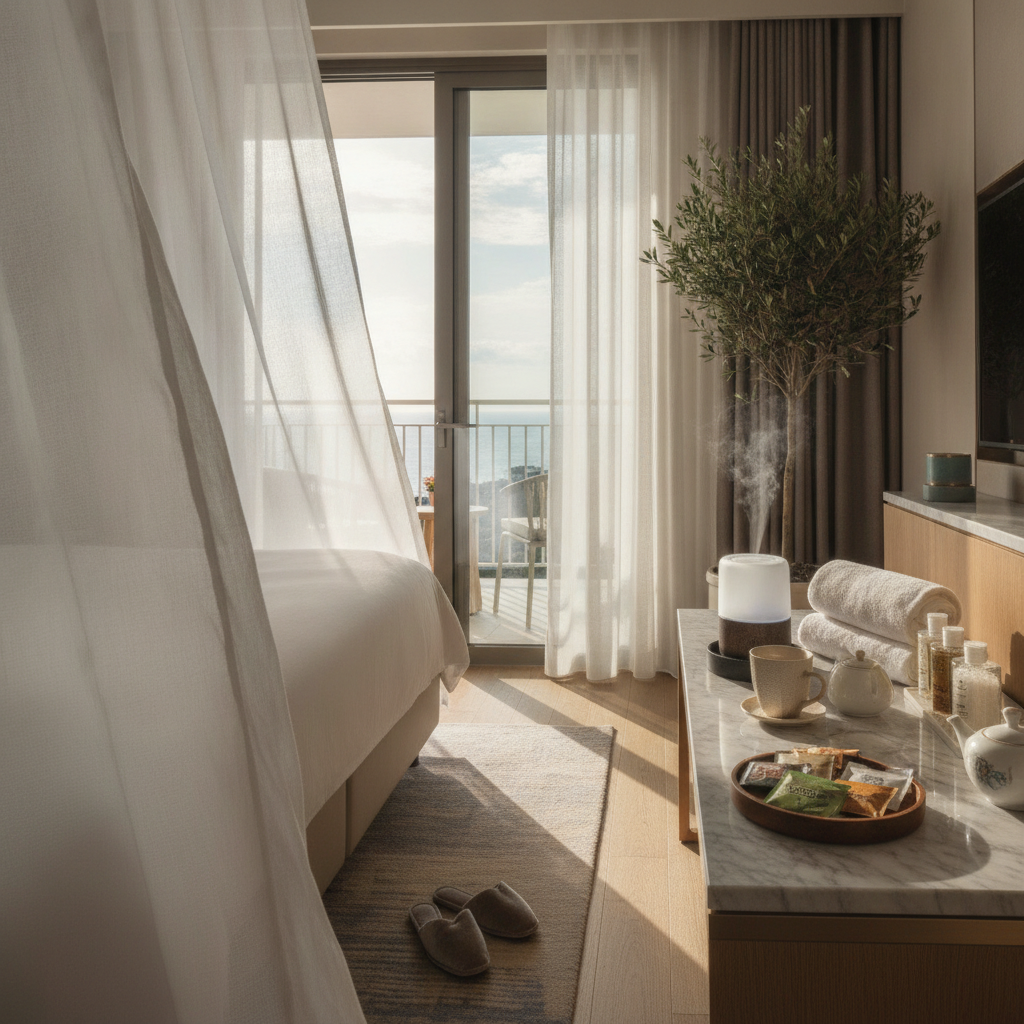
Hotel guest recovery amenities have moved from a quiet line item on the spa menu to a headline feature in how travelers choose where to stay. Guests no longer want a single sauna tucked behind the gym — they want a coordinated system of tools that helps them sleep better, train harder, and leave feeling restored. For General Managers, Spa & Wellness Directors, and property owners, understanding how to build and operate hotel guest recovery amenities is quickly becoming a core revenue and reputation strategy, not a wellness side project.
TL;DR — The Bottom Line
Hotel guest recovery amenities — cold plunges, saunas, sleep programs, compression therapy, and guided recovery circuits — are now measurable revenue drivers, not just spa perks. Properties with strong wellness and recovery facilities are reporting meaningfully higher GOPPAR and ADR growth, and the wellness tourism market is projected to top $1.4 trillion by 2027. The winning strategy bundles multiple modalities into a managed, staffed, and bookable experience rather than installing isolated equipment.
Quick Facts
- Wellness tourism market size (2022): $651 billion globally
- Projected wellness tourism market (2027): Over $1.4 trillion
- GOPPAR advantage for wellness-focused hotels: Approximately 4–6% higher year over year
- ADR growth for wellness-focused hotels: Approximately 2–3% higher year over year
- Travelers who sleep better in hotels than at home: Roughly two-thirds of those surveyed
What Are Hotel Guest Recovery Amenities?
At its core, the term describes any amenity designed to actively restore a guest's body or mind, rather than simply pamper it. Traditional spa treatments like massages and facials are relaxing, but hotel guest recovery amenities are built around a specific outcome: better sleep, reduced muscle soreness, lower stress, or improved readiness for the next day. This distinction matters because it changes how hotels design, staff, and market these spaces.
A property offering hotel guest recovery amenities typically combines several categories:
- Thermal therapy spaces (saunas, infrared cabins, contrast circuits)
- Sleep-focused rooms, rituals, and in-room tools
- Fitness recovery equipment (compression boots, percussion devices, red-light panels)
- Guided programming (breathwork, meditation, recovery coaching)
- Supporting infrastructure such as booking systems, hydration stations, and trained staff
Because hotel guest recovery amenities span physical equipment and operational programming, the strongest implementations treat them as an integrated guest journey rather than a collection of machines in a room.
Why Hotel Guest Recovery Amenities Matter for Revenue and Reputation
The business case for hotel guest recovery amenities is no longer theoretical. According to HotStats' comparison of hotel performance data for the first half of 2024 versus the first half of 2025, properties with significant wellness facilities achieved approximately 4–6% higher GOPPAR and 2–3% stronger ADR growth than comparable hotels without them. That is a meaningful margin in an industry where operators fight over single-digit percentage gains.
Demand data backs this up. The Global Wellness Institute, as cited by Hotels Magazine, valued the global wellness tourism market at $651 billion in 2022, with projections exceeding $1.4 trillion by 2027. Hotels that fail to offer credible hotel guest recovery amenities risk losing an increasingly large and high-spending segment of travelers to competitors who do.
Sleep is a particularly powerful driver. Hilton's 2025 Travel Trends reporting found that roughly two-thirds of surveyed American travelers said they sleep better in hotels than at home — a surprising statistic that hotels can actively reinforce through dedicated recovery programming rather than leaving to chance.
Hotels with substantial wellness facilities are seeing roughly 4–6% higher GOPPAR and 2–3% greater ADR growth than properties without them, based on HotStats' year-over-year performance comparisons.
Sleep Recovery: The Amenity Guests Didn't Know They Wanted
Sleep tourism has quickly become one of the fastest-growing subsets of hotel guest recovery amenities. Rather than treating sleep as something that simply happens in a comfortable bed, leading properties are building entire evening rituals around it.
Effective sleep-focused hotel guest recovery amenities include:
- Dedicated quiet floors or sleep suites with enhanced soundproofing
- Circadian-friendly lighting and full blackout capability
- Pillow menus and temperature-regulating bedding
- White-noise or sound-masking machines
- Evening recovery kits with eye masks, magnesium soaks, or mobility tools
- Guided breathing or meditation audio accessible via in-room tablets
One of the most promising combinations pairs thermal recovery with sleep support — an evening heat-and-cool circuit timed several hours before bedtime, followed by a wind-down ritual in the room. This kind of sequencing turns isolated hotel guest recovery amenities into a single, memorable evening experience that guests are likely to mention in reviews and return visits.
Hotels aren't medical providers, so claims should stay general, but guest-reported outcomes are strong. Hilton's 2025 travel trends data found about two-thirds of surveyed American travelers already report sleeping better in hotels than at home, and properties that add structured evening recovery routines frequently see this reflected in guest satisfaction scores and repeat bookings.
Thermal and Contrast Recovery Spaces
Thermal therapy remains the most recognizable category of hotel guest recovery amenities, and for good reason — heat and cold exposure are tactile, photogenic, and easy for guests to understand without a long explanation. Dry saunas, infrared cabins, and warm relaxation lounges are relatively simple to operate and can serve both spa guests and general hotel traffic, which improves the return on the physical space.
The commercial opportunity lies in sequencing, not just equipment. Hotels that pair heat exposure with a cooling element — whether that is a cold plunge, a chilled mist room, or simply a cool-down lounge — create a contrast circuit that guests increasingly expect from premium wellness properties. Supporting protocols matter just as much as the equipment itself:
- Clear time limits and posted usage guidance
- Staff trained to supervise peak hours and sanitation
- Private booking windows for couples or small groups
- Hydration stations placed directly adjacent to thermal spaces
- Optional guided sessions for first-time visitors
Fitness and Soft-Tissue Recovery Tools
Fitness-oriented travelers represent a fast-growing segment seeking hotel guest recovery amenities that go beyond a treadmill and a hot tub. Compression therapy boots, percussion massage guns, red-light therapy panels, and foam rolling stations are relatively low-cost additions that significantly expand a property's recovery offering without requiring major construction.
| Amenity | Typical Guest Use Case | Operational Complexity |
|---|---|---|
| Compression boots | Post-flight leg fatigue, post-workout soreness | Low — portable, easy to sanitize |
| Red-light therapy panels | Skin recovery, muscle recovery, circadian support | Low to moderate — requires dedicated space and scheduling |
| Percussion massage devices | Quick self-service muscle release | Low — minimal training required |
| Guided stretch or mobility sessions | Pre- or post-workout preparation | Moderate — requires trained staff |
These tools are particularly effective when positioned near the fitness center rather than exclusively inside the spa, since they capture athletic and business travelers who may never book a traditional treatment but will readily use self-service hotel guest recovery amenities between meetings or workouts.
Building a Recovery Amenity Program: Protocols, Staffing, and Technology
Equipment alone does not create a successful recovery program. The hotels seeing the strongest results treat hotel guest recovery amenities as a managed operational system, similar to food and beverage or housekeeping, with clear protocols and accountable staff.
- Audit guest demand first. Review spa utilization data, guest survey feedback, and competitive sets to identify which recovery modalities are most requested before purchasing equipment.
- Design for flow, not just function. Map how a guest moves from check-in to a recovery session to a warm-down area, ensuring signage, booking, and staff touchpoints support that journey.
- Write clear usage protocols. Define time limits, contraindication guidance, and sanitation schedules for every piece of equipment, especially thermal and immersion-based amenities.
- Train staff on both operation and messaging. Frontline teams should be able to explain benefits in general, non-medical terms and know when to refer guests to a licensed professional.
- Implement booking and access controls. Digital scheduling reduces overcrowding, protects equipment lifespan, and creates a premium, members-club feel for in-demand hotel guest recovery amenities.
- Package and promote. Bundle recovery amenities into evening rituals, fitness packages, or loyalty-tier perks so they appear in pre-arrival marketing, not just the spa directory.
Installing equipment without protocols. A cold plunge, sauna, or compression station without clear time limits, sanitation schedules, and trained staff oversight quickly becomes a liability and a maintenance burden rather than a guest-pleasing hotel guest recovery amenity.
Measuring the ROI of Hotel Guest Recovery Amenities
Because wellness spending is harder to track than room revenue, many operators underestimate the financial upside of hotel guest recovery amenities. A more complete measurement approach looks at several data points together:
- Direct revenue: Treatment bookings, day-pass sales, and recovery package upsells
- ADR influence: Rate premiums for recovery-equipped rooms or suites
- Length of stay and repeat visitation: Whether recovery-focused guests book longer or return more frequently
- Review sentiment: Mentions of sleep quality, sauna, or recovery spaces in guest reviews
- GOPPAR impact: HotStats' year-over-year data suggests wellness-forward hotels can see a 4–6% advantage
Properties that track these metrics consistently find that hotel guest recovery amenities pay for themselves faster when bundled into packages rather than sold à la carte, since bundling increases both perceived value and actual utilization rates.
Choosing the Right Partners and Equipment
The market for recovery equipment has grown crowded, ranging from consumer-facing brands to commercial-grade manufacturers built specifically for high-traffic hospitality environments. For General Managers and Spa Directors evaluating suppliers, a few questions help separate durable, hotel-ready solutions from residential products repackaged for commercial use:
- Is the equipment rated for continuous, multi-guest daily use rather than single-household use?
- Does the manufacturer provide installation support, maintenance plans, and warranty coverage suited to hospitality operations?
- Can the supplier document sanitation and filtration standards appropriate for shared-use settings?
- Does the partner understand hotel procurement timelines, staffing realities, and liability considerations?
This is where a hospitality-focused partner matters more than a general wellness brand. HotelPlunge works specifically within the hotel operating environment, helping properties plan recovery amenities that fit real staffing models, booking systems, and guest safety requirements rather than simply shipping a product and leaving the operational details to the property. For GMs comparing options, starting with a clear-eyed look at available hotel-grade recovery equipment before committing to a layout or budget tends to produce better long-term outcomes than designing the space first and sourcing equipment later.
Frequently Asked Questions
What are hotel guest recovery amenities?
Hotel guest recovery amenities are equipment, spaces, and programs designed to help guests physically and mentally recover — including thermal therapy, sleep support tools, fitness recovery equipment like compression boots and red-light panels, and guided wellness routines.
Which hotel guest recovery amenities offer the best return on investment?
Sleep-focused programming and multi-use thermal spaces tend to deliver strong returns because they appeal to a broad guest base, not just spa visitors. HotStats data shows hotels with substantial wellness facilities achieving roughly 4–6% higher GOPPAR, and bundling amenities into packages generally improves utilization and revenue compared to standalone offerings.
Do small or mid-size hotels need a full wellness department to offer recovery amenities?
No. Many effective hotel guest recovery amenities, such as compression boots, red-light panels, or a single contrast-therapy space, can be managed by existing fitness or front-desk staff with clear protocols, rather than requiring a dedicated spa department.
How do hotels make recovery amenities safe for guests?
Safety comes from protocols, not just equipment: posted time limits, contraindication guidance, trained staff supervision, regular sanitation, and access-controlled booking systems. Properties should avoid making medical claims and instead focus on general wellness benefits and clear usage instructions.
What trends are shaping the future of hotel guest recovery amenities?
Growth areas include sleep tourism, contrast therapy circuits that pair heat and cold, portable fitness recovery tools, and guided or app-based recovery programming. The Global Wellness Institute projects the broader wellness tourism market will exceed $1.4 trillion by 2027, suggesting continued investment in this category.
Final Thoughts: Building a Recovery Experience Guests Remember
The hotels winning the wellness conversation are not necessarily the ones with the most expensive equipment — they are the ones treating hotel guest recovery amenities as a coordinated guest experience, backed by clear protocols, trained staff, and thoughtful packaging. Whether a property starts with a single contrast-therapy space, a sleep-focused suite, or a fitness recovery corner, the goal is the same: give guests a tangible reason to feel better by the time they check out than when they checked in.
For GMs, Spa Directors, and owners ready to move from scattered equipment purchases to a genuine recovery strategy, the next step is evaluating which hotel guest recovery amenities fit your property's guest mix, space, and staffing model. Visit HotelPlunge to explore hospitality-grade recovery solutions built specifically for hotel operations, from planning through installation and ongoing support.