Health Benefits of Cold Water Immersion for Hotel Guests
October 15, 2026 · 13 min read
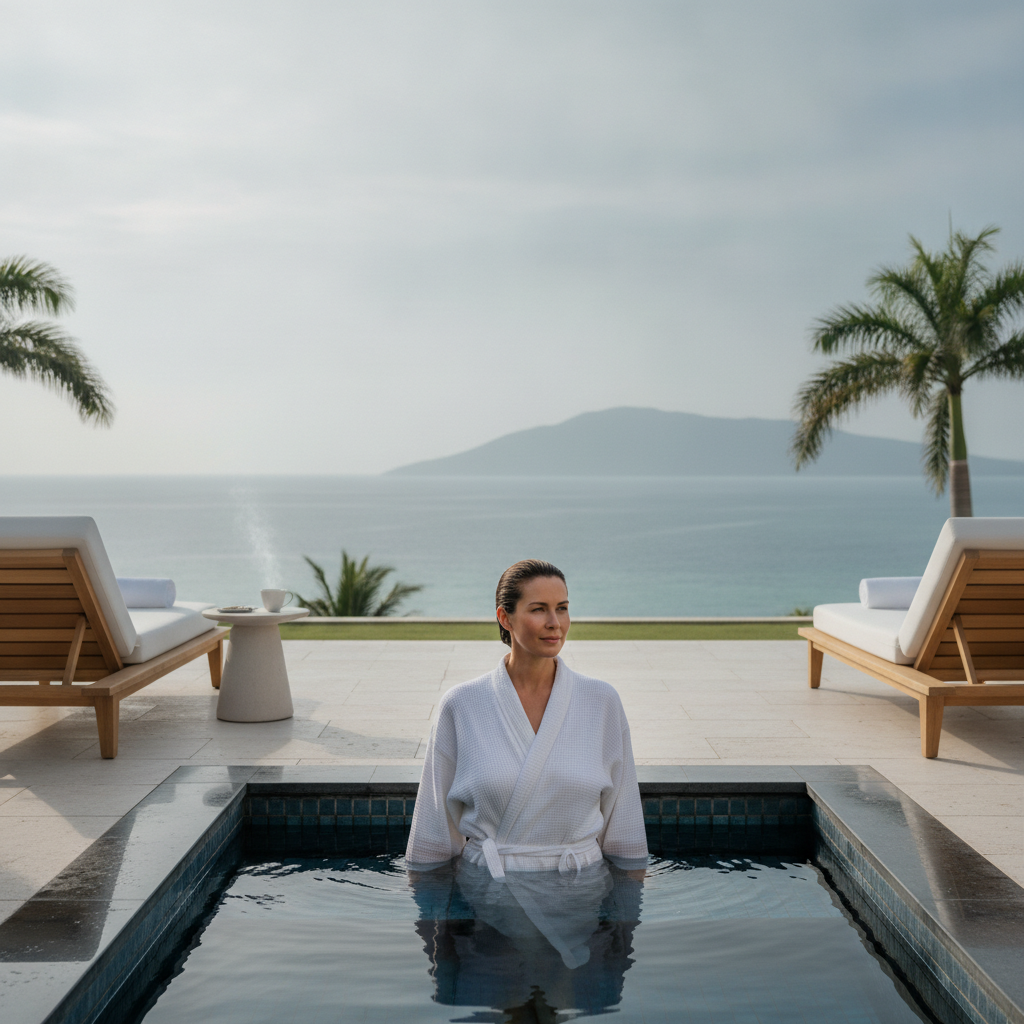
The health benefits of cold water immersion for hotel guests have become one of the most discussed wellness topics in hospitality, as travelers increasingly seek recovery-focused amenities alongside traditional spa services. But separating credible science from marketing hype matters—both for guest trust and for property liability. This guide translates the latest peer-reviewed research into practical, honest language that hotel general managers, spa directors, and property owners can use when evaluating or communicating cold water immersion as a guest amenity.
TL;DR — The Bottom Line
The strongest evidence for the health benefits of cold water immersion for hotel guests points to delayed stress reduction (roughly 12 hours post-immersion), modest sleep and quality-of-life improvements, and support for exercise recovery—not immune-boosting or mood-curing claims. A 2025 meta-analysis of 3,177 participants found measurable, but limited, benefits, while also highlighting real cold-shock risks that require screening and supervision. Hotels should market cold water immersion as an optional recovery experience, not a medical treatment.
Quick Facts
- Study size: 3,177 participants across 11 studies in a 2025 systematic review
- Stress reduction timing: Significant effect appears ~12 hours after immersion, not immediately
- Recommended beginner temperature: 10–15°C (50–59°F)
- Recommended beginner session length: 1–2 minutes
- Temperature caution threshold: Below 4°C (40°F) requires specialized protocols and supervision
- Immunity/mood evidence: No consistent improvement found in current research
Understanding the Science Behind Cold Water Immersion
Before a property invests in equipment or guest messaging, it helps to understand exactly what cold water immersion is and what it physiologically does. This foundation protects hotels from both underselling a genuinely useful amenity and overselling an unproven one.
When a guest steps into cold water, the body undergoes an immediate "cold-shock" response: heart rate spikes, breathing quickens, and blood pressure rises sharply within seconds.[8] This is a normal physiological reaction, but it is also the primary reason hotels must treat cold water immersion with the same seriousness as a sauna or pool—screening guests, setting clear time limits, and avoiding unsupervised extreme-cold exposure.
Understanding the health benefits of cold water immersion for hotel guests starts with recognizing that this is a wellness practice with a growing but still developing evidence base—not a clinically validated therapy. That distinction should guide every piece of guest-facing content a property produces.
An ice bath is one specific, more extreme form of cold water immersion, typically using ice to reach temperatures below 10°C (50°F). Hotel cold plunges usually operate in a more moderate, guest-friendly range of 10–15°C to balance comfort with physiological benefit.
The Health Benefits of Cold Water Immersion for Hotel Guests: What Research Confirms
A 2025 systematic review and meta-analysis—one of the largest of its kind, covering 3,177 participants across 11 studies—offers the most rigorous current look at the health benefits of cold water immersion for hotel guests and the general population alike.[1][2] Its findings are more nuanced than most wellness marketing suggests, which is precisely why hotels should lean on them.
The review found a statistically significant reduction in perceived stress approximately 12 hours after cold water immersion, while the immediate post-plunge effect on stress was not significant.[1][2] This is a meaningful detail for hospitality teams: guests should not be told a plunge will instantly "melt away stress." Instead, the realistic and defensible health benefit of cold water immersion for hotel guests is a delayed calming effect that may support a better evening, a more restful mindset, or improved next-day wellbeing.
A complementary 2025 scoping review identified recurring guest-reported themes: physical and psychological wellbeing, a sense of connection with nature, social bonding (notably when plunges are shared or group-based), and personal growth or accomplishment.[5] However, the same review cautioned that optimal temperature, duration, and frequency for these wellbeing effects remain scientifically undefined.[5] That uncertainty is actually useful for hotels—it supports offering flexible, guest-controlled exposure rather than rigid, one-size-fits-all protocols.
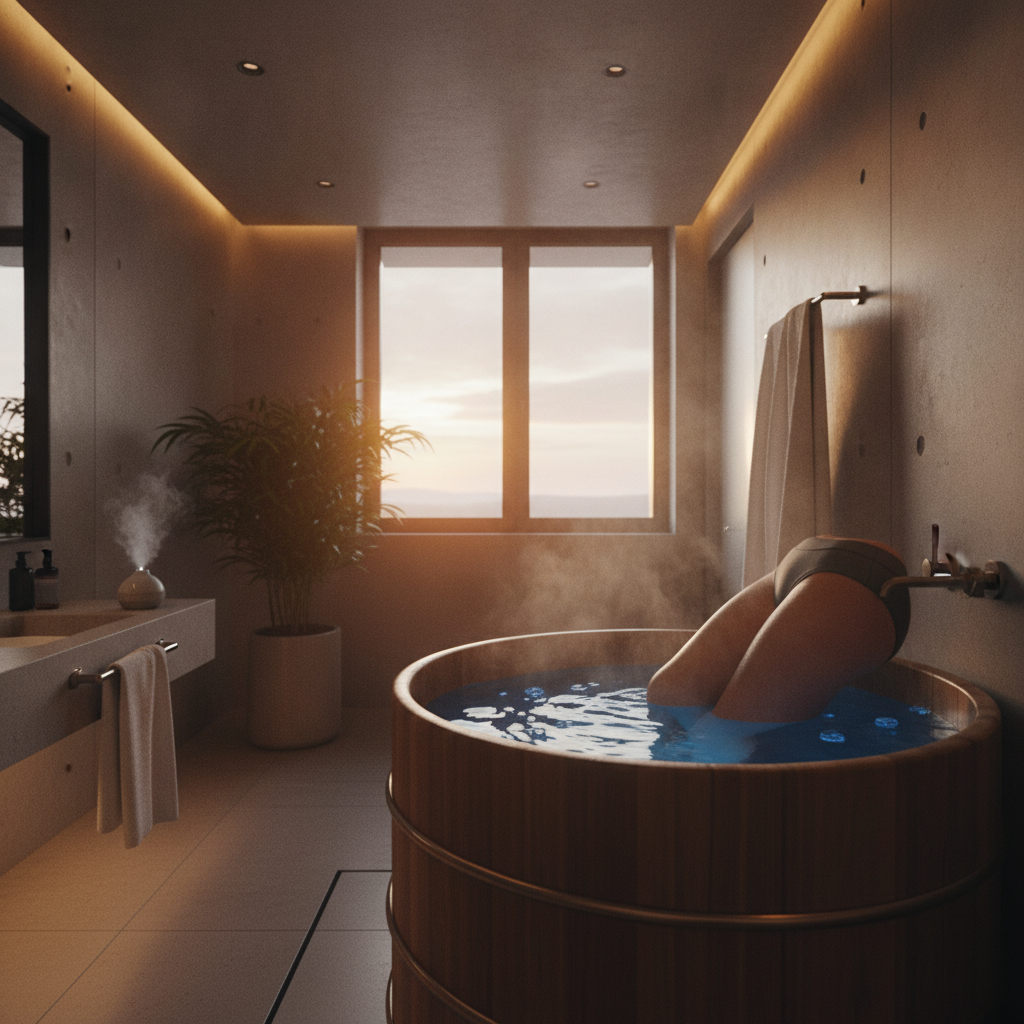
Taken together, these findings support a conservative but genuinely compelling marketing position: the health benefits of cold water immersion for hotel guests are real, measurable, and worth offering—provided expectations are set accurately.
Sleep Quality and Cold Water Immersion: What Guests Can Realistically Expect
Sleep is one of the most requested wellness outcomes among hotel guests, particularly business travelers and those adjusting to time-zone changes. The research on cold water immersion and sleep is encouraging but not uniform.
The 2025 meta-analysis found improvements in sleep quality associated with cold water immersion, though the effect was not consistent across all participants.[1] Harvard Health Publishing, summarizing this evidence, noted that men—but not women—in the analyzed studies reported better sleep following cold water exposure.[6] This gender variation is an important nuance that hotels should reflect honestly in guest communications rather than promising universal sleep improvement.
Quality-of-life scores offer a related and slightly more robust signal. Cold showers, one form of cold exposure within the broader evidence base, were associated with higher overall quality-of-life ratings compared with regular showers.[6] For hotels, this suggests that even guests unwilling to try a full cold plunge may benefit from simpler cold-exposure options, such as a cold-finish shower feature paired with existing in-room amenities.
No. Current research shows a possible, but inconsistent, sleep benefit—stronger in some studies for men than women. Hotels should describe sleep improvement as a potential benefit of cold water immersion, not a guaranteed outcome.
Framing matters here. Rather than claiming cold water immersion "cures insomnia" or "guarantees deep sleep," properties can accurately state that the health benefits of cold water immersion for hotel guests may include improved sleep quality and overall quality of life when the practice is paired with a broader evening wind-down routine—dim lighting, reduced screen time, and a comfortable room temperature.
Exercise Recovery: A Natural Wellness Amenity for Active Travelers
Among all the health benefits of cold water immersion for hotel guests, exercise recovery has the longest track record of supporting evidence, largely because of decades of sports-science research. Cold water immersion is widely used by athletes to help manage delayed-onset muscle soreness and reduce perceived recovery time following intense exertion.
This makes cold plunges a particularly strong fit for hotels that attract golf travelers, marathon participants, ski guests, corporate wellness retreats, and fitness-focused boutique properties. A guest who completes an early-morning run or an intense hotel gym session is a natural candidate for a post-workout plunge, positioned as a recovery ritual rather than a medical intervention.
That said, hotel-specific evidence remains thinner than the broader sports-recovery literature, and protocols vary widely between studies—differences in water temperature, immersion duration, and timing after exercise all affect outcomes. For this reason, the most defensible guest-facing claim is that cold water immersion "supports post-exercise recovery" rather than stronger assertions like "reduces inflammation" or "prevents injury," which are not consistently supported by current research.
What Cold Water Immersion Does Not Do: Avoiding Overpromising to Guests
Responsible wellness marketing requires acknowledging the limits of the evidence. Current research does not establish consistent improvements in immunity or mood from cold water immersion.[6] Individual studies and popular wellness content sometimes suggest stronger effects, but hotels that repeat those claims expose themselves to reputational and potential legal risk.
Similarly, cold water immersion should not be marketed as a treatment for anxiety, depression, or any diagnosed medical condition. The honest, evidence-aligned health benefits of cold water immersion for hotel guests are stress reduction over several hours, potential sleep and quality-of-life improvements, and exercise-recovery support—a meaningful but bounded set of claims.
Hotels that resist the temptation to overstate benefits actually build more durable guest trust. A spa director who says, "research suggests this may support recovery and relaxation, though results vary by individual," sounds more credible—and is more legally defensible—than one promising a cure-all.
Safety First: Protecting Hotel Guests During Cold Water Immersion
Because cold water immersion triggers an involuntary cold-shock response—rapid increases in heart rate, breathing rate, and blood pressure—safety protocols are not optional.[8] This is one of the most important operational realities behind the health benefits of cold water immersion for hotel guests: the benefits are real, but so are the risks if the experience is poorly managed.
- Screen guests before use. Basic intake questions should flag cardiovascular conditions, pregnancy, uncontrolled blood pressure, and other contraindications.
- Set conservative temperature ranges. For beginners, clinical guidance commonly suggests 10–15°C (50–59°F) rather than extreme sub-4°C (40°F) water, which requires specialized protocols and supervision.[4]
- Limit session duration. One to two minutes is a widely cited starting point for new users, with longer sessions reserved for experienced guests.[4]
- Provide clear signage and waivers. Guests should understand the cold-shock response before entering the water, not discover it mid-immersion.
Clinical guidance generally recommends 10–15°C (50–59°F) for beginners, with sessions of about one to two minutes. Water below 4°C (40°F) should only be used with specialized protocols and direct supervision.[4]
These precautions do not diminish the appeal of the amenity—they protect it. Hotels that document screening procedures and operate within conservative, well-communicated parameters are far better positioned to deliver the health benefits of cold water immersion for hotel guests without exposing the property to avoidable incidents.
Positioning Cold Water Immersion as a Guest Experience, Not a Medical Treatment
The most successful hospitality deployments of cold water immersion treat it as an elevated, optional wellness ritual—similar to how spas position hot stone massage or infrared sauna—rather than a clinical service. This framing aligns naturally with the current evidence, which supports modest, delayed, individually variable benefits rather than dramatic medical outcomes.
Practically, this means pairing cold water immersion with complementary experiences: a sauna session beforehand for contrast therapy, a guided breathing routine, or a quiet space for the post-plunge period when stress-reduction effects are believed to build over the following hours.[1][2] Guests on a spa day, athletes finishing a workout, or travelers winding down for the evening are all reasonable audiences for this amenity.
For properties exploring how to bring this amenity in-room without a full spa build-out, solutions like HotelPlunge convert existing guest-room tubs into controlled cold plunge experiences, allowing properties to offer the health benefits of cold water immersion for hotel guests at a room level rather than requiring a dedicated wellness facility. This approach lets general managers test guest demand and refine protocols before committing to larger spa infrastructure.
Whatever the delivery model, the guiding principle should remain constant: communicate the health benefits of cold water immersion for hotel guests accurately, support the experience with sensible safety procedures, and let the evidence—not marketing enthusiasm—define the promise.
Frequently Asked Questions
What are the proven health benefits of cold water immersion for hotel guests?
Current evidence supports delayed stress reduction (significant roughly 12 hours after immersion), potential improvements in sleep quality and overall quality of life, and support for post-exercise recovery. Evidence does not currently support immune-boosting or mood-curing claims.[1][2][6]
Is cold water immersion safe for all hotel guests?
No. Cold water immersion triggers a cold-shock response that increases heart rate, breathing rate, and blood pressure.[8] Guests with cardiovascular conditions, pregnancy, or other health concerns should be screened before use, and hotels should offer conservative temperature and duration guidelines.
How cold should the water be for a hotel cold plunge experience?
Clinical guidance commonly recommends 10–15°C (50–59°F) for beginners, with sessions of about one to two minutes. Temperatures below 4°C (40°F) should be reserved for supervised, specialized protocols.[4]
Does cold water immersion actually improve sleep for hotel guests?
It may, but the evidence is mixed. A 2025 analysis found sleep quality improvements overall, though Harvard Health noted the effect appeared stronger for men than women in the studies reviewed.[6] Hotels should describe this as a potential, not guaranteed, benefit.
Can hotels legally claim cold water immersion has medical benefits?
Hotels should avoid medical claims entirely. The responsible approach is to describe the health benefits of cold water immersion for hotel guests using cautious, evidence-aligned language—stress reduction, potential sleep support, and recovery—while avoiding language suggesting treatment, cure, or prevention of any disease.
Conclusion: A Credible Wellness Amenity, Communicated Honestly
The health benefits of cold water immersion for hotel guests are genuine but specific: delayed stress reduction, possible sleep and quality-of-life gains, and support for exercise recovery. These are meaningful outcomes that justify thoughtful investment—provided hotels pair the amenity with proper screening, conservative protocols, and accurate guest communication rather than sweeping wellness claims.
Properties that get this balance right position themselves at the credible edge of hotel wellness, offering guests a differentiated, evidence-respecting experience rather than another unverified trend. If your property is evaluating how to bring the health benefits of cold water immersion for hotel guests into your rooms without a full spa renovation, explore HotelPlunge's in-room cold plunge solutions to see how existing guest-room infrastructure can support this amenity responsibly and effectively.