What Is Cold Therapy for Hotels? A Full Wellness Guide
October 7, 2026 · 13 min read
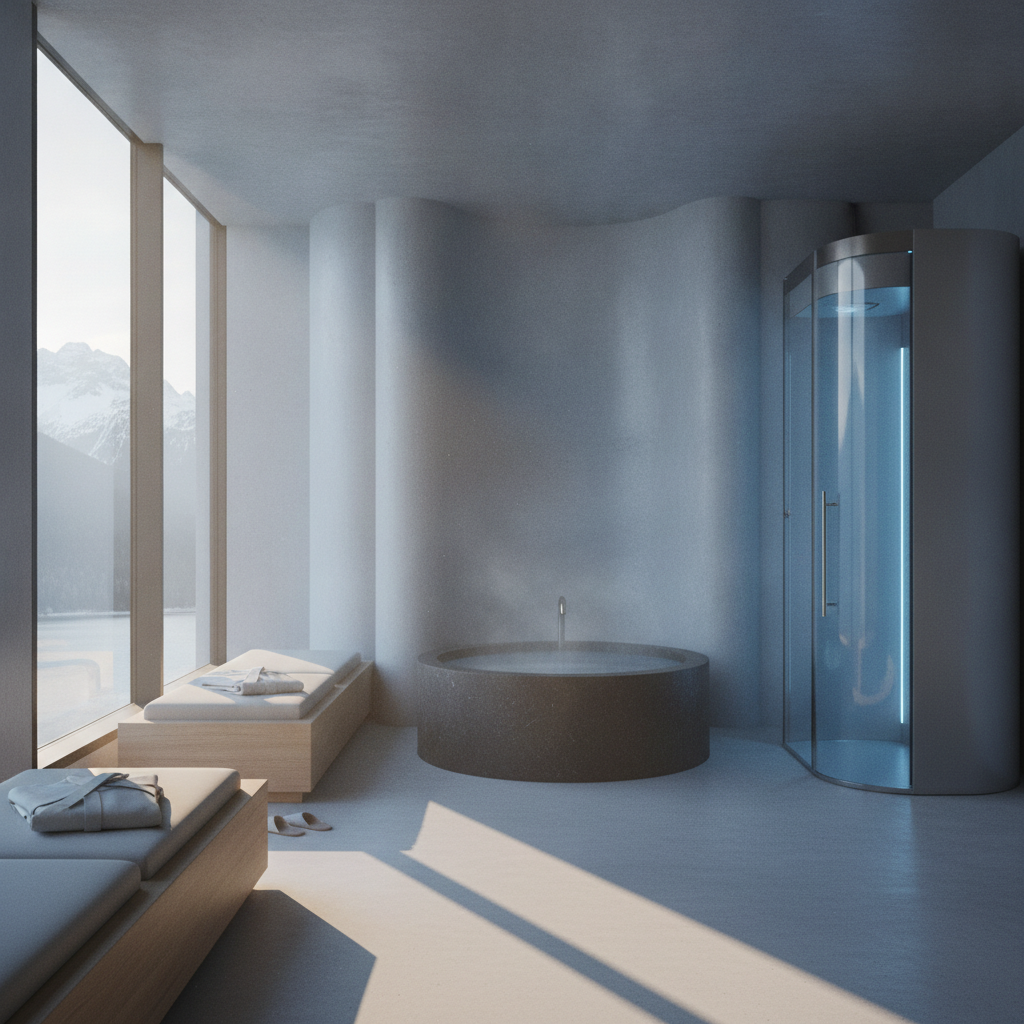
What is cold therapy for hotels? At its core, cold therapy for hotels refers to the intentional use of cold-water immersion, cold plunges, and hot-cold contrast circuits as a guest wellness amenity — designed to deliver a short, controlled physiological experience rather than a clinical medical treatment. As recovery-focused travel and biohacking culture reshape guest expectations, hotel leaders need a clear, evidence-based understanding of what this amenity actually is, what it can realistically deliver, and where the risks lie before committing capital or staff time to it.
TL;DR — The Bottom Line
Cold therapy for hotels means offering brief, supervised cold-water immersion (typically below 60°F) as a guest wellness experience, often paired with heat and rest. The strongest business case is guest differentiation and recovery-oriented hospitality — not unproven medical claims. Evidence supports short-term benefits like perceived muscle recovery and alertness, but hotels should avoid marketing cold therapy as a cure for illness, anxiety, or chronic disease, and must build in medical screening and supervision protocols because cold-water immersion carries real cardiovascular and drowning risks.
What Is Cold Therapy for Hotels?
So, what is cold therapy for hotels, exactly? In practical terms, it's the deliberate exposure of guests to cold water — typically through a plunge pool, barrel, or chilled soaking tub — for a short, time-limited period, usually one to five minutes. Unlike a spa treatment that relies on touch or product application, cold therapy is a physiological intervention: it works by triggering the body's natural cold-shock and sympathetic nervous system response. For hotels, this translates into a guest-facing amenity that sits somewhere between fitness recovery, luxury spa ritual, and experiential wellness.
Understanding what is cold therapy for hotels also means understanding what it is not. It is not cryotherapy (which uses extremely cold air in a chamber), and it is not a substitute for medical cold-pack treatment used in physical therapy clinics. In a hospitality context, cold therapy almost always refers to immersion-based plunges, often positioned alongside saunas, steam rooms, or infrared panels as part of a broader thermal or recovery circuit.
Quick Facts
- Typical plunge temperature: Below 60°F (15.6°C), with beginner ranges around 50–59°F (10–15°C)
- Recommended first-time exposure: Roughly 1–2 minutes
- Primary guest-reported benefit: Perceived post-exercise recovery and alertness
- Key risk factor: Cardiovascular strain from the "cold shock" response
- Common pairing: Sauna, steam room, or hot-cold contrast circuits
The Science Behind Cold Therapy: What Happens in the Body
To answer what is cold therapy for hotels from a guest-safety standpoint, operators need a basic grasp of the physiology involved. When a guest enters cold water, the body responds almost instantly with what's known as the "cold shock" response: breathing rate spikes, blood vessels near the skin constrict to preserve core temperature, blood pressure rises, and the heart works harder to circulate blood.[1] This is a normal, expected reaction — but it's also exactly why cold therapy for hotels should be treated as a higher-risk wet amenity rather than a passive spa feature.
For most healthy adults, this response is brief and self-limiting. The sympathetic nervous system activation can produce a genuine sense of alertness or invigoration, which is part of why guests find cold plunges compelling. However, if exposure is prolonged, water is colder than recommended, or a guest has an underlying health condition, that same response can escalate into hyperventilation, dizziness, loss of motor control, or in rare cases, cardiac events or drowning.[1][2]
No. Cold therapy for hotels typically refers to water immersion in a plunge pool or tub, while cryotherapy uses extremely cold, dry air inside an enclosed chamber. They trigger overlapping but distinct physiological responses and require different equipment, staffing, and safety protocols.
Types of Cold Therapy Hotels Can Offer
Not every property needs the same answer to what is cold therapy for hotels, because the amenity can take several forms depending on space, budget, and guest profile:
- Standalone cold plunge pools: Dedicated plunge basins, often chilled to 39–55°F, used in spas or fitness-adjacent wellness areas.
- In-suite cold plunge tubs: Smaller-format units placed in guest rooms or suites for private, on-demand access.
- Hot-cold contrast circuits: Alternating sauna or steam sessions with cold immersion, mirroring traditional Nordic and Scandinavian bathing rituals.
- Snow showers or cold-mist stations: Lower-intensity cold exposure used as a transitional step for guests new to the practice.
- Recovery lounges: Multi-modality spaces that combine cold plunges with compression therapy, red-light panels, and rest areas.
Across all of these formats, the underlying definition of what is cold therapy for hotels stays consistent: a brief, cold-water-based physiological experience designed to complement — not replace — a hotel's broader wellness and spa program.
What the Research Supports — and What It Doesn't
Any honest explanation of what is cold therapy for hotels has to separate guest-reported experience from clinically established outcomes. The research base is strongest for short-term, exercise-adjacent effects and weakest for long-term health claims.
Better-supported, plausible benefits
- Exercise recovery: Cold immersion may reduce perceived muscle soreness and temporarily limit swelling after strenuous activity — relevant for hotels serving runners, cyclists, golfers, and active leisure travelers.[2]
- Short-term alertness and mood lift: The sympathetic nervous system response can produce temporary invigoration, though this should be described as a short-term physiological effect rather than a guaranteed therapeutic outcome.[1]
- Ritual and perceived resilience: Many guests value the mental challenge and sense of accomplishment tied to cold exposure, supporting brand positioning even where clinical evidence is incomplete.
Claims that require caution
Current evidence does not support marketing cold plunges as a proven way to prevent illness, treat depression or anxiety, produce substantial weight loss, meaningfully improve immunity, prevent cardiovascular disease, "detoxify" the body, or cure chronic inflammation.[1][2] Hotels that overstate these outcomes risk guest disappointment, liability exposure, and regulatory scrutiny around wellness marketing claims.
Hotels should avoid making medical or therapeutic claims about cold therapy. Because clinical evidence for many popularized benefits remains limited, marketing language should focus on guest-reported experience and short-term physiological effects rather than disease treatment or prevention.
Safety and Contraindications: Who Should Avoid Cold Therapy
Because the physiological stakes are real, any operational answer to what is cold therapy for hotels must include a safety framework, not just a product spec sheet. Cold water immersion should be treated as a higher-risk wet amenity, similar in caution level to a steam room or high-heat sauna, and staff should be trained to recognize warning signs of distress.
The Cleveland Clinic specifically identifies several groups who should seek medical clearance or avoid unsupervised cold-water immersion, including guests with:[2]
- Heart disease or a history of arrhythmia
- Uncontrolled or significant high blood pressure
- Elevated stroke risk
- Diabetes, especially with neuropathy
- Poor circulation or peripheral vascular disease
- Venous stasis or cold agglutinin disease
- Pregnancy
- Reduced sensation or impaired ability to respond to cold
In practice, this means every hotel offering cold therapy should post clear temperature and time guidance, require a liability waiver or health screening questionnaire, and train staff to supervise first-time users. Pairing a plunge with a sauna or steam room, as many thermal resorts do, increases the importance of hydration breaks and rest intervals between hot and cold exposure.
How Cold Therapy Fits Into a Hotel Wellness Program
Rather than treating cold therapy as an isolated purchase, leading properties are answering what is cold therapy for hotels by embedding it into a full recovery journey. Santa Monica Proper's private Recovery Suite, for example, pairs cold plunges at different temperatures with red-light therapy, compression boots, and a dry sauna — illustrating a broader industry shift toward complete recovery circuits rather than standalone cold tubs.[3]
This approach matters commercially: guests increasingly compare properties not on "who has a plunge" but on who offers the most complete, effortless wellness ritual. A single cold tub in a corner of the gym signals an afterthought; a programmed circuit signals genuine wellness investment. For hotels exploring this path, HotelPlunge works with general managers and spa directors to think through programming, not just equipment selection.
Quick Reference: Where Cold Therapy Fits by Property Type
| Property Type | Likely Cold Therapy Format | Primary Guest Motivation |
|---|---|---|
| Urban business hotel | In-suite or gym-adjacent plunge | Quick recovery, stress relief between meetings |
| Destination wellness resort | Full hot-cold contrast circuit | Immersive ritual, extended stay experience |
| Boutique luxury property | Private suite recovery lounge | Exclusivity, Instagrammable differentiation |
| Golf, ski, or active-lifestyle resort | Post-activity plunge near fitness facilities | Exercise and sport recovery |
Both models exist. Many properties bundle cold immersion into a broader recovery or spa package, while others offer it as a standalone paid add-on or complimentary fitness-center feature. The right approach depends on property positioning and how central wellness is to the overall guest experience.
Communicating Cold Therapy Responsibly to Guests
The final piece of understanding what is cold therapy for hotels is messaging. Because the clinical evidence is still developing, hotel marketing and signage should distinguish clearly between guest-reported experience, short-term physiological effects, and anything resembling a medical claim. Language like "guests often report feeling more alert and refreshed" is defensible; language like "proven to boost immunity and prevent illness" is not.[1]
Practical steps for responsible messaging include:
- Use experiential language. Describe sensations and rituals rather than medical outcomes.
- Publish clear guidelines. State recommended temperature ranges and exposure times near the plunge itself.
- Disclose contraindications. Include a visible list of conditions that warrant medical clearance before use.
- Train front-of-house staff. Ensure reservations and spa staff can answer basic safety questions accurately.
- Avoid absolute claims. Replace words like "cures" or "prevents" with "may support" or "guests often report."
"The strongest case for cold therapy in hotels is guest experience and differentiation — not unproven medical claims." This single principle should guide every piece of signage, spa menu copy, and sales conversation a property creates around the amenity.
Hotels that get this balance right position cold therapy as what it genuinely is: a compelling, ritual-driven wellness experience with real but bounded physiological effects. Those that overpromise risk both guest disappointment and reputational exposure. For operators researching what is cold therapy for hotels before committing budget, HotelPlunge is a useful starting point for understanding equipment categories and program design considerations together, rather than in isolation.
Frequently Asked Questions
What is cold therapy for hotels?
Cold therapy for hotels is the practice of offering brief, supervised cold-water immersion — typically below 60°F — as a guest wellness amenity. It's usually delivered through plunge pools or tubs and often paired with sauna or steam for a hot-cold contrast circuit.
Is cold therapy safe for all hotel guests?
No. Cold-water immersion carries real cardiovascular and breathing risks, and guests with heart disease, uncontrolled high blood pressure, diabetes with neuropathy, poor circulation, or who are pregnant should seek medical clearance or avoid unsupervised use.
What temperature should a hotel cold plunge be set to?
Most guidance recommends water below 60°F (15.6°C) for a true cold plunge, with beginner-friendly ranges around 50–59°F (10–15°C) and initial exposure limited to roughly one to two minutes.
Does cold therapy actually improve guest health outcomes?
Evidence is strongest for short-term effects like perceived muscle recovery and alertness after exercise. Claims about immunity, weight loss, mood disorders, or disease prevention are not yet well supported by clinical research, according to a 2025 Associated Press report on cold-water immersion science.
How does cold therapy for hotels differ from a medical cold-pack treatment?
Cold therapy for hotels refers to whole-body cold-water immersion delivered as a wellness experience, while medical cold-pack therapy is a targeted clinical treatment applied to a specific injury under medical supervision. The two should not be confused in guest-facing marketing.
Conclusion: Building a Responsible Cold Therapy Program
Answering what is cold therapy for hotels isn't just an academic exercise — it's the foundation for every downstream decision a property makes about equipment, staffing, signage, and marketing. Done well, cold therapy can be a genuine point of differentiation, tapping into recovery culture, biohacking interest, and the broader shift toward experiential hospitality. Done carelessly, it introduces real safety and reputational risk.
The properties that win in this category will be the ones that treat cold therapy as a programmed experience grounded in realistic claims, clear safety protocols, and thoughtful integration with the rest of their wellness offering — not simply a tub installed because competitors have one. If your property is evaluating whether and how to introduce cold therapy, HotelPlunge can help you think through the equipment, safety, and guest-experience decisions together, so your program is built on substance rather than hype.
Sources:
[1] Associated Press, "Cold Plunges Are Popular. The Science Hasn't Fully Caught Up," 2025. https://apnews.com
[2] Cleveland Clinic Staff, "Cold Plunge: Benefits, Risks, and Who Should Avoid It," Cleveland Clinic. https://my.clevelandclinic.org
[3] Santa Monica Proper Hotel, Recovery Suite Program Overview. https://www.proper.com