Cold Plunge Safety Guidelines for Hotels: Full Guide
November 2, 2026 · 13 min read
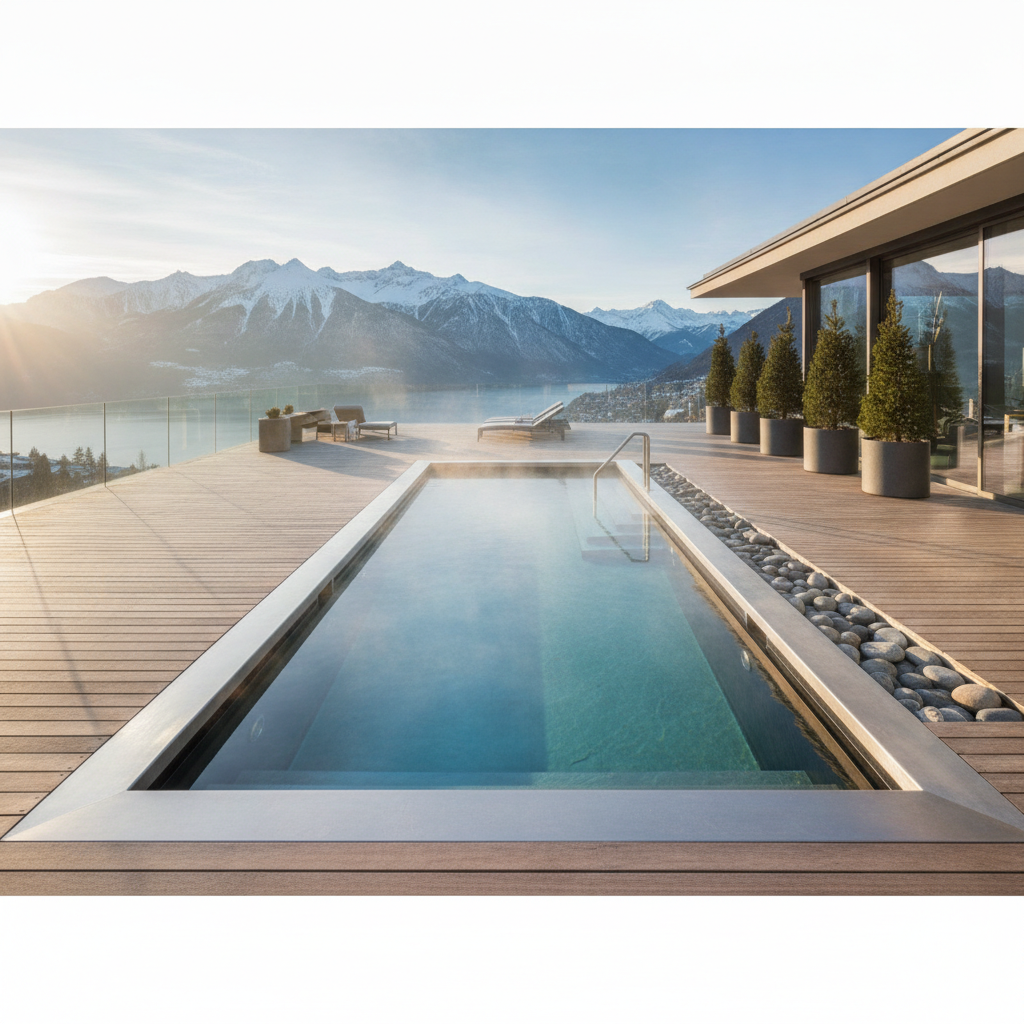
Cold plunges are moving from niche spa novelty to mainstream hotel amenity, and that shift changes the liability conversation entirely. Establishing clear cold plunge safety guidelines for hotels is no longer optional risk management, it is the operational foundation that separates a well-run wellness program from a serious incident waiting to happen. This guide walks General Managers, Spa & Wellness Directors, and property owners through a practical, defensible framework for implementing cold plunge safety guidelines for hotels across screening, supervision, facility design, and emergency response.
TL;DR, The Bottom Line
Cold plunge safety guidelines for hotels should treat plunge pools as regulated aquatic facilities, not passive spa furniture. That means written health screening, posted time and temperature limits, trained staff supervision, slip-resistant design, sanitation logs, and a rehearsed emergency response plan for cold shock, cardiovascular distress, and hypothermia. Hotels that document and practice these protocols reduce both guest injury risk and legal exposure.
Quick Facts
- Recommended beginner temperature: 50–59°F (10–15°C), avoiding anything below 40°F (4°C)[6]
- Typical safe exposure window: 1–5 minutes depending on experience and medical clearance[6]
- Regulatory classification: Washington State treats sub-59°F plunge basins as regulated spa-pool facilities[8]
- Commercial market share: Commercial settings represented roughly 61.8% of the cold-plunge tub market in 2025[5]
- Primary acute hazard: Cold shock response, involuntary gasping that can cause drowning within seconds if the face submerges[8]
Why Hotels Need Formal Cold Plunge Safety Guidelines
The global hotel and hospitality cold-plunge market was estimated at $48.4 million in 2025 and is projected to grow at roughly 7.6% annually through 2033[2]. That growth means more properties are installing plunge pools faster than many are building the operational controls to manage them safely. A tub purchase order is not a safety program, and regulators, insurers, and guests increasingly expect hotels to demonstrate that cold plunge safety guidelines for hotels are written, trained, and enforced, not improvised.
Unlike a hot tub or sauna, a cold plunge introduces an acute physiological shock the moment a guest enters the water. That shock, combined with slick wet surfaces and guests who may be unsupervised, creates a risk profile closer to a swimming pool than a spa treatment room. Hotels that fail to formalize cold plunge safety guidelines for hotels are exposed to premises liability claims, workers' compensation issues for staff who respond to incidents, and reputational damage that can outweigh any wellness-amenity revenue gained.
What Counts as a Cold Plunge Safety Guideline?
At a baseline, cold plunge safety guidelines for hotels should cover four categories: who can use the plunge, how long and at what temperature, how the space is supervised, and what happens when something goes wrong. Many operators mistakenly believe posting a single warning sign satisfies their duty of care. It does not. A defensible program requires layered controls, screening, signage, supervision, and documentation working together.
Consider the comparison below, which illustrates the gap between a minimal setup and a guideline-driven program.
| Element | Minimal / Unmanaged Approach | Guideline-Driven Program |
|---|---|---|
| Guest screening | None or verbal only | Written questionnaire with documented contraindications |
| Temperature control | Set once, rarely checked | Logged readings, calibrated sensors, posted range |
| Supervision | Unattended, guest self-serve | Defined attendant model or monitored intervals |
| Emergency response | Ad hoc staff reaction | Rehearsed protocol with escalation steps |
| Maintenance records | Informal or absent | Daily sanitation and inspection logs |

The Core Risks Behind Cold Plunge Safety Guidelines for Hotels
Before writing policy, operators need to understand exactly what they're protecting against. Four risk categories consistently drive cold plunge safety guidelines for hotels, and each requires a distinct operational response.
Cold Shock and Drowning
Sudden cold immersion triggers an involuntary gasp reflex, rapid breathing, and a spike in heart rate and blood pressure. If a guest's face or head submerges during that reflex, the result can be drowning within seconds[8]. This is the single most serious hazard a plunge pool presents, and it is precisely why cold plunge safety guidelines for hotels must prohibit underwater submersion, diving, and solitary unsupervised use in high-risk configurations.
Cardiovascular Stress
Cold water immersion can sharply elevate blood pressure and cardiac workload. Guests with cardiovascular disease, uncontrolled hypertension, circulatory disorders, or who are pregnant should seek medical advice before use[6]. Hotels are not expected to diagnose guests, but they are expected to ask the right questions and train staff on when to deny access.
Hypothermia and Delayed Symptoms
Risk does not end when a guest exits the water. Wet clothing, wind exposure, and repeated hot-cold cycling can prolong cooling and trigger confusion, impaired coordination, or abnormal breathing well after the plunge. The National Weather Service advises moving an affected person to warmth, removing wet clothing, and using dry blankets, while avoiding rapid rewarming or hot-water immersion[4].
Slips, Falls, and Musculoskeletal Injuries
Wet, cold surfaces around a plunge pool are a premises-liability magnet. Slip-resistant flooring, proper drainage, grab bars, and stable steps are non-negotiable elements of any credible cold plunge safety guidelines for hotels program.
In several jurisdictions, yes. Washington State, for example, regulates basins below 59°F as spa-pool facilities subject to design, sanitation, testing, and staffing requirements[8]. Hotels should check local health-department rules before assuming a plunge is exempt from aquatic facility regulation.
Building a Written Cold Plunge Safety Policy: A Step-by-Step Framework
Translating risk awareness into an operating document is where most properties stall. Use the following sequence to build cold plunge safety guidelines for hotels that staff can actually execute under pressure.
- Define temperature and duration standards. Set the operating range at 50–59°F for general guest use, never below 40°F without clinical supervision, and cap first-time exposure at one to five minutes[6].
- Create a guest screening questionnaire. Ask about cardiovascular conditions, pregnancy, recent surgery, Raynaud's phenomenon, and alcohol or medication use before granting access.
- Establish supervision requirements. Decide whether the amenity requires a dedicated attendant, scheduled staff check-ins, or camera-monitored access, based on a documented risk assessment.
- Install physical safety infrastructure. Slip-resistant flooring, handrails, non-slip steps, and adequate lighting are baseline requirements, not upgrades.
- Write an emergency response protocol. Document exactly what staff do for cold shock, chest pain, fainting, or disorientation, including who calls emergency services and who manages the guest until help arrives.
- Train and drill staff regularly. Tabletop walkthroughs and live drills at least quarterly keep response times fast and confident.
- Log everything. Maintenance checks, water testing, incident reports, and screening forms create the paper trail that protects both guests and the property.
Guest Screening, Signage, and Informed Consent
Screening is the single most underused tool in hotel wellness risk management. A short, well-designed questionnaire, administered at check-in to the spa or amenity, not buried in a room folder, does more to prevent serious incidents than almost any piece of equipment. Effective cold plunge safety guidelines for hotels typically require guests to confirm, in writing, that they do not have specific contraindications before first use.
Signage should reinforce, not replace, this screening. Posted rules should clearly state: maximum session length, minimum temperature, prohibition on diving or submersion, prohibition on solo use for unsupervised facilities, and a reminder that alcohol and cold plunges should never be combined. Multilingual signage matters for international resort properties, and pictograms help communicate risk even when language barriers exist.
Most hospitality risk advisors recommend a documented acknowledgment of contraindications and rules, reviewed by hotel counsel and insurance carriers, as part of a complete cold plunge safety guidelines for hotels program. A waiver does not eliminate liability but strengthens the hotel's documented duty-of-care record.
Staff Training and Emergency Response Protocols
Even the best-written guidelines fail if front-line staff cannot execute them under stress. Spa technicians, pool attendants, and even front-desk staff who may be first on scene need training in recognizing cold shock symptoms, cardiovascular distress, and early hypothermia. This training should be refreshed at least twice per year and documented with sign-off sheets.
A strong emergency response protocol within cold plunge safety guidelines for hotels includes:
- Immediate verbal check-in if a guest appears disoriented, gasping excessively, or struggling to exit the water.
- A clear chain of command for who initiates emergency services contact.
- Pre-positioned warming supplies, dry towels, robes, blankets, within arm's reach of the plunge area.
- A documented escalation path for chest pain, fainting, confusion, or loss of consciousness.
- Post-incident reporting within a defined time window, reviewed by the GM or wellness director.
Properties that integrate HotelPlunge-supported programs often build these protocols into daily shift handoffs, ensuring that cold plunge safety guidelines for hotels are reinforced every day rather than reviewed once during onboarding and forgotten. Learn more about building supervision-ready wellness amenities at HotelPlunge.
Facility Design, Water Quality, and Maintenance Standards
Design decisions made before a plunge pool ever opens determine how easy it is to enforce safety rules afterward. Non-slip entry and exit surfaces, continuous handrails, step height consistency, and glare-free lighting all reduce the chance of a fall-related incident. Drainage should prevent standing water around the plunge, and wet and dry zones should be clearly separated with flooring transitions guests can feel underfoot, not just see.
Water quality is equally central to cold plunge safety guidelines for hotels. Multi-guest plunge pools require filtration and sanitation systems capable of handling frequent turnover, along with routine water testing logged on a predictable schedule. Even single-guest or in-suite units need documented cleaning cycles between uses to prevent cross-contamination, particularly in high-occupancy resort settings where usage spikes seasonally.
Routine inspection logs, covering flooring, ladders, covers, handrails, chillers, and filtration, should be reviewed weekly by engineering or spa leadership. A missed inspection is often the detail that surfaces first in post-incident liability reviews.
Regulatory Compliance and Insurance Considerations
Regulatory treatment of cold plunges varies significantly by state and country, but the trend is toward classifying them as aquatic facilities rather than passive spa equipment. Washington State, for instance, applies spa-pool regulations, covering design, sanitation, testing, and staffing, to basins at or below 59°F[8]. Hotels operating across multiple states or countries should confirm local health-department requirements property by property, since assuming uniform rules is a common and costly mistake.
Insurance carriers are increasingly asking hospitality clients to document their cold plunge safety guidelines for hotels before underwriting wellness-amenity coverage. Properties that can produce written screening procedures, maintenance logs, staff training records, and an emergency response plan typically negotiate more favorable premiums than those relying on verbal policy alone. Engaging legal counsel and your insurance broker early, before installation, not after an incident, is one of the most cost-effective risk-management steps a property owner can take.
Not necessarily. Many general liability policies require specific disclosure of aquatic or cold-therapy amenities, and some carriers exclude incidents if documented cold plunge safety guidelines for hotels were not in place at the time of the claim. Confirm coverage terms directly with your broker before launching the amenity.
Quotable takeaway for operators building a business case: "A cold plunge without documented safety guidelines is not a wellness amenity, it is an unmanaged liability." Hotels that treat plunge pools with the same operational seriousness as a swimming pool consistently report fewer incidents and smoother insurance renewals.
Putting It All Together: A Culture of Accountability
The properties that succeed with cold plunge amenities are rarely the ones with the most expensive hardware, they are the ones with the most disciplined operations. Cold plunge safety guidelines for hotels work best when they are embedded into daily routines: shift briefings that mention temperature checks, housekeeping sign-offs on sanitation, and spa directors who treat incident drills as seriously as fire drills. This is a cultural commitment as much as a procedural one, and it is the difference between a wellness amenity guests trust and one that quietly erodes a property's risk profile.
Hotels exploring how to formalize these protocols alongside equipment selection can find operational guidance through HotelPlunge, which positions itself as a hospitality operating system for safe, measurable cold-plunge programs rather than a standalone equipment vendor.
Frequently Asked Questions
What temperature range do cold plunge safety guidelines for hotels typically recommend?
Most guidance recommends 50–59°F (10–15°C) for general guest use, with temperatures below 40°F (4°C) reserved for experienced users under closer supervision or medical clearance[6].
How long should a guest safely stay in a hotel cold plunge?
Sessions are typically limited to one to five minutes depending on the guest's experience level and health status, with longer durations discouraged without professional guidance[6].
Do hotels need to screen guests before allowing cold plunge use?
Yes. A written screening questionnaire covering cardiovascular conditions, pregnancy, recent surgery, and medication or alcohol use is a core element of responsible cold plunge safety guidelines for hotels and helps staff identify guests who should seek medical advice first.
Are cold plunges regulated like swimming pools?
In some jurisdictions, yes. Washington State, for example, classifies basins at or below 59°F as regulated spa-pool facilities subject to design, sanitation, and staffing rules[8]. Hotels should verify requirements with their local health department.
What is the biggest safety risk hotels overlook with cold plunges?
Unsupervised or solitary use combined with inadequate screening is the most commonly overlooked risk. The cold-shock response can impair a guest's ability to self-rescue within seconds, making supervision and screening, not just signage, essential components of cold plunge safety guidelines for hotels[8].
Conclusion: Make Safety the Foundation, Not an Afterthought
Cold plunges can be a genuine competitive advantage for hotels and resorts, but only when safety is engineered into the experience from day one. Implementing comprehensive cold plunge safety guidelines for hotels, covering screening, supervision, facility design, water quality, staff training, and emergency response, protects guests, staff, and the property's long-term reputation. Properties that treat these guidelines as a living operational system, reviewed and drilled regularly, will be the ones guests trust and insurers reward.
Ready to build a cold plunge program with safety designed in from the start? Visit HotelPlunge to explore operational frameworks built specifically for hospitality environments.